All posts by Ryan

NATIONAL NOVEL WRITING MONTH, Part 2

Whether or not you have committed to the herculean task of scribing 1,667 words daily for a month, you have surely shared the existential dread that comes with an incomplete paper or essay staring back at you.

During NaNoWriMo‘s campaign, accomplished authors are invited to contribute insights or pep talks for fellow writers. The following are some tips that most resonated with me. If you are stuck or could just use a break, these reflections might be helpful to you too.

Jason Reynolds
When you make it to the 3/4 mark of your novel, if you are anything like me, you’re saying one of two things to yourself:

1. I’ve come far enough… to stop. I mean, seriously, I basically wrote a whole novel. I could at least tell people I wrote a whole novel. It’d be a lie. But I wouldn’t feel bad about it. At least not too bad. Because it’s basically whole.

Or 2. I can see the end. I can actually see it. So now I’m going to teleport there. . . .

Anyway, the point is you are ready and willing to cram the next five chapters into the next five sentences.

Don’t do either of these things.

Marie Lu
Just Keep Going.

Write an entire monologue with your main character if you have to. Spend a chapter just exploring the life story of an antagonist. Write a scene with nothing but dialogue between your hero and your villain. Write a steamy love scene between your favorite couple. They don’t have to be scenes in chronological order. They don’t even have to end up in your book. But they will help you to keep going.

Andy Weir
Sometimes, when you’re writing, things come together easily and you can crank out 2,000 words in an afternoon. But other times, it’s torture just to crap out 300 words. In those rough patches, here’s something to keep yourself going: When you read the pages later, you won’t be able to tell which ones you wrote with good flow and which ones were hard. You’re creating the same quality of work in both cases. You might not believe me, but the next time it happens to you, check the results later. You’ll see for yourself. So when you’re having a rough patch, it helps to remember that you’re making progress toward a goal. The words you’re putting down aren’t wasted. They’re just as good as the rest.
November 2019 Children’s Books

Aalfred and Aalbert

By Morag Hood
Call Number: PIC HOO
View in IvyCat

Two aardvarks who lead solitary lives, Aalbert by day and Aalfred by night, sometimes wonder if they would like to be part of a pair.

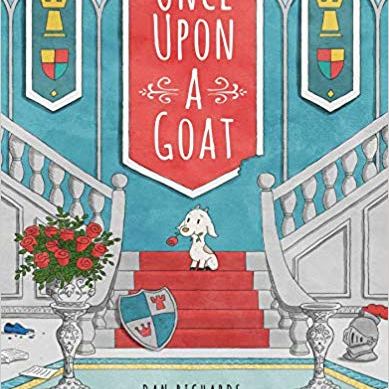
Once Upon a Goat

By Dan Richards
Call Number: PIC RIC
View in IvyCat

When a proper king and queen ask their fairy godmother for a child, they find themselves gifted instead with a baby goat.

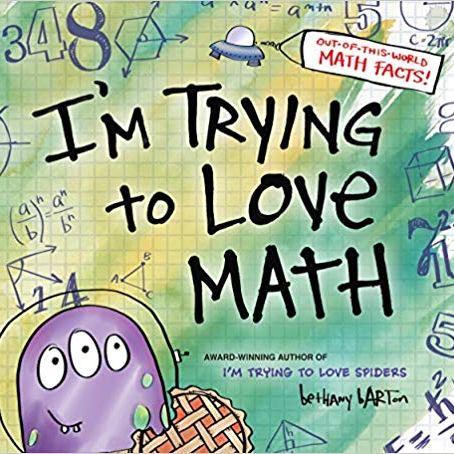
I’m Trying to Love Math

By Bethany Barton
Call Number: QA40.5 .B38 2019
View in IvyCat

In a book for those who dislike mathematics, an alien explains the many areas in which math is used, including baking, music, navigation, and measurements.

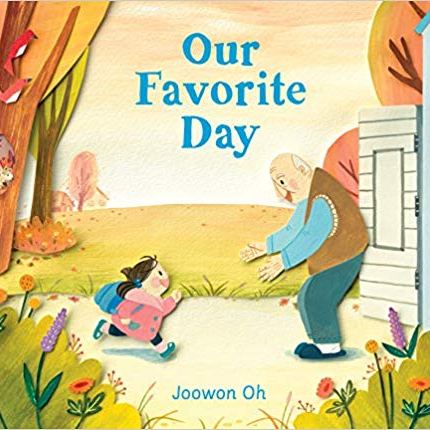
Our Favorite Day

By Joowon Oh
Call Number: PIC OH
View in IvyCat

Follow Papa and his granddaughter as they spend another Thursday together.

Parrots Pugs and Pixie Dust: a book about fashion designer Judith Leiber

By Deborah Blumenthal
Call Number: TT505.L46 B59 2019
View in IvyCat

Trace the life of fashion designer Judith Leiber, who used inspiration from her life to create extraordinary and fantastical handbags.

Horse and Buggy Paint It Out

By Ethan Long
Call Number: PIC LON
View in IvyCat

Horse is all set to paint a mural his way, oblivious to Buggy’s suggestions that a bit of planning might be a good idea. But as the Horse knocks over paint cans and sends brushes flying, he relents and accepts some help from Buggy.

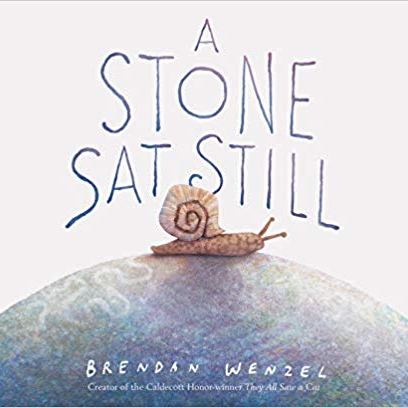
Stone Sat Still

By Brendan Wenzel
Call Number: PIC WEN
View in IvyCat

Told in rhyming verse, a stone is considered from a variety of environmental and emotional perspectives, surrounded by grass, dirt, and water, an unchanging certainty in the world.

National Novel Writing Month

Remember all those moments in which an idea brightened your mood and refreshed your outlook? Did you ever wonder where those ideas go after you let them go?

Nowhere! They have all been waiting in the back of your head, neglected but banded together in solidarity as your most loyal supporters. Well, it is that time of year again, time to rally them together to produce your masterpiece!

This year, join writers of all varieties in sharing your story of ideas during National Novel Writing Month! The goal is the same every year: 50,000 words in 30 days. Start at the harrowing finale; explore a thesis; develop compelling characters; or just practice your prose!

Even if you have not committed to all 50,000 words, it could not be a better time to join the community: https://www.nanowrimo.org/. Expect reminders, writing prompts, tips, and encouragement right here on Ivy Tech Library’s blog throughout the remainder of the month!

Spirits of Fort Wayne

How will you be remembered?  This October, the Ivy Tech Library calls upon the departed influential Fort Wayne residents to tell their stories. 

Meet Alice Hamilton, a medical doctor from the early 20th century, whose advocacy for workers’ rights proved crucial in industrial poison legislation. Consider Frances Slocum, known as an 18th century Delaware captive, who later in life leveraged her story to prevent the removal of her adopted community from Indiana. You are likely already familiar with Philo Farnsworth and Carole Lombard, but what about Henry Cannady, who selflessly helped former slaves escape through the Underground Railroad?

Many irreplaceable community members are those whose stories demand reevaluation of norms taken for granted, lives buried by nefarious or apathetic forces.  Whose voice would you resurrect?  Who would you give peace?  Who would you condemn?  Find them all at Ivy Tech Library.

New Early Childhood Education Books

Engaging Learners Through Artmaking: Choice-Based Art Education in the Classroom (TAB)

By Katherine M. Douglas and Diane B. Jaquith
Call Number: N 350 .D6 2018
View in IvyCat

The authors who introduced the concepts of “Teaching for Artistic Behavior” (TAB) and “choice-based art education” have completely revised and updated their original, groundbreaking bestseller that was designed to facilitate independent learning and support student choices in subject matter and media.

More than ever before, teachers are held accountable for student growth and this new edition offers updated recommendations for assessments at multiple levels, the latest strategies and structures for effective instruction, and new resources and helpful tips that provide multiple perspectives and entry points for readers.

The Second Edition of Engaging Learners Through Artmaking will support those who are new to choice-based authentic art education, as well as experienced teachers looking to go deeper with this curriculum. This dynamic, user-friendly resource includes sample lesson plans and demonstrations, assessment criteria, curricular mapping, room planning, photos of classroom set-ups, media exploration, and many other concrete and open-ended strategies for implementing TAB in kindergarten–grade 8.

Overview by Barnes and Noble

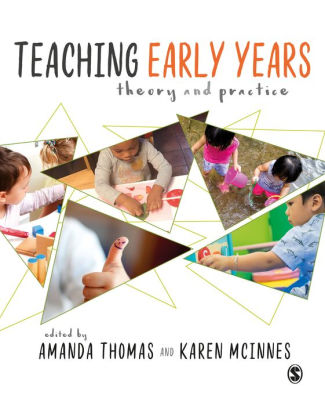
Teaching Early Years: Theory and Practice / Edition 1

By Amanda Thomas and Karen Mcinnes
Call Number: LB 1139.23 .T43 2018
View in IvyCat

This textbook focuses on the main areas of teaching young children, covering the 3-7 years age range that spans the early years and primary phases. The majority of chapters are written by both an academic and practitioner, reflecting a genuine theory and practice approach, and this helps the reader to set theoretical discussion in the context of real practice.

Key themes explored within the book include:

–        Play and playfulness in the curriculum

–        Child development in practice

–        Literacy development and subject pedagogy

–        Creativity and outdoor learning

Packed full of learning features such as case studies, reflective questions and lesson plans, Teaching Early Years is an essential resource for both students and practitioners, and will enhance your knowledge of how young children think and learn.

Overview by Amazon

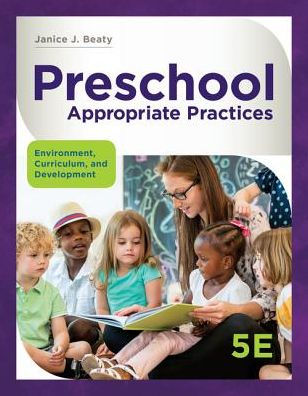
Preschool Appropriate Practices: Environment, Curriculum, and Development / Edition 5

By Janice J. Beaty
Call Number: LB 1140.4 .B43 2019
View in IvyCat

Preschool Appropriate Practices, 5th Edition, helps future and current teachers create self-directed learning environments in their classrooms. Each chapter helps students learn how to set up one type of learning center (e.g., music/dance), including instructions on what to include in the center and how children can use it. The self-directed learning approach encourages children to become involved in their own learning. A second theme emphasizes the teacher’s role as a facilitator, helping readers understand how to:

1) observe children’s developmental levels,

2) provide developmentally appropriate activities,

3) serve as a behavior model, and

4) best support children in their learning.

Learning activities, some of which incorporate children’s picture books, exemplify the NAEYC’s developmentally appropriate practice (DAP). Chapters also incorporate NAEYC accreditation criteria.

Overview by Amazon