 Title: Meg & Jo
Author: Virginia Kantra
Call #: FIC KAN

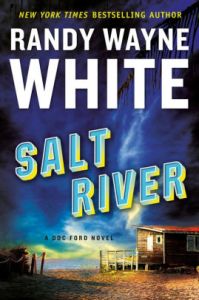 Title: Salt River
Author: Randy Wayne White
Series: Doc Ford Series, #26
Call #: FIC WHI
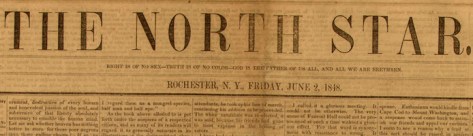
Frederick Douglass was a great orator, eloquent writer, and the publisher of three newspapers supporting the cause of Abolition. After escaping enslavement, his own freedom was bought with funds raised from his speaking tour of Europe. Douglass championed African-American owned newspapers as essential, declaring that: “the man who has suffered the wrong is the man to demand redress,—that the man STRUCK is the man to CRY OUT—and that he who has endured the cruel pangs of Slavery is the man to advocate Liberty.”
The Library of Congress has now digitized their entire Frederick Douglass Newspaper Collection and made it freely available and searchable online. This is a subset of the Frederick Douglass Papers collection which they also curate. Although the Library holds the largest collection of his newspapers, it does not include every issue, because the Douglasses’ house was burned (by suspected arson) destroying part of his library where archival copies were stored.
Douglass was involved in publishing newspapers from the 1840s into the 1870s. These are powerful primary sources for learning about the experiences of African Americans in the United States from the antebellum era through Reconstruction. The Library of Congress provides freely downloadable teaching kits for the Frederick Douglass Papers, and for other primary sources from this time.
Other digital collections of Frederick Douglass papers are at Indiana University – Purdue University Indianapolis; and in the New York Heritage Digital Collections.
In the Frederick Douglass collections one can find connections to Fort Wayne and the African-American and Abolitionist communities here. Henry Ward Beecher was a correspondent of Douglass; his father Lyman Beecher headed Lane Theological Seminary in Cincinnati during the period it was splintered by abolitionism. Henry Beecher visited Fort Wayne in 1843 and convinced members of the First Presbyterian Church – until then served by the abolitionist pastor Alexander T. Rankin – to split off and form another abolitionist congregation, which his brother Charles served as pastor for its first six years. Indiana was not a slaveholding state, but the position of African Americans was precarious within its borders. Rankin’s house in downtown Fort Wayne has been identified as a stop on the underground railroad.
Among our books dealing with abolitionist activism in Fort Wayne are:
The Underground Railroad and the Antislavery Movement in Fort Wayne and Allen County, Indiana by Angela M. Quinn – View Record in IvyCat
Slavery and the Meetinghouse: The Quakers and the Abolitionist Dilemma, 1820-1865 by Ryan P. Jordan – View Record in IvyCat
Indiana, 1816-1850: The Pioneer Era by Donald F. Carmony – View Record in IvyCat
Homeless, Friendless, and Penniless: The WPA Interviews with Former Slaves Living in Indiana compiled by Ronald L. Baker – View Record in IvyCat
A trove of primary sources relating to the Underground Railroad in Indiana, Illinois, and Ohio is The Wilbur H. Siebert collection, available online from the Ohio Memory Network. Professor Siebert, of Ohio State University, began the project with his history students in the 1890s. They were able to interview former fugitives, “railroad agents,” and others for whom escapes were living memory. The Siebert collection includes this map of escape routes through Indiana on which Fort Wayne is a node.
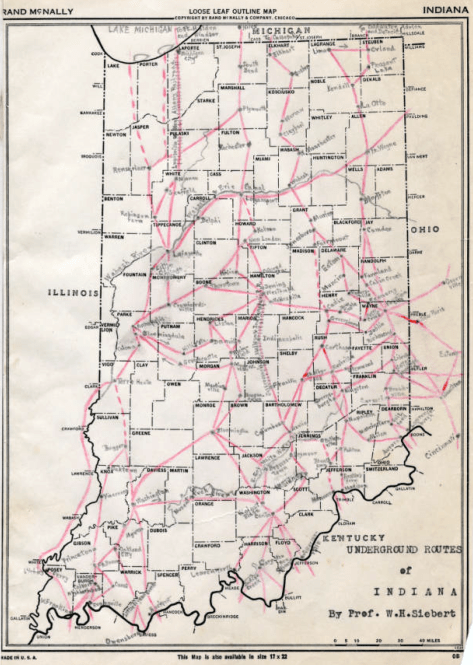
Image courtesy of the Ohio History Connection

“Hong Kong in the Shadow of China tells the story of why the “Umbrella Movement” failed to bring Hong Kong a more democratic system … the Umbrella Movement, so called because of the umbrellas protesters carried for protection against ran and pepper spray, … only punctuated a protracted debate over how to vest leaders with more legitimacy, while preserving social stability … [protests] became the background before which members of the Chinese and Hong Kong governments, the business community, politicians of every stripe, and political activists held fraught discussions on electing Hong Kong’s chief executive through universal suffrage and on whether China should control the process. Because there was too little trust among these political forces, a significant opportunity for progress was missed … Richard Bush takes us inside the debates and demonstrations and then pulls back to critically explore what Hong Kong and China must do to ensure both economic competitiveness and good governance and how these developments affect United States policy” (publisher).
Richard Bush has gathered recent survey data and other primary sources that will remain relevant to the ongoing debates about Hong Kong. The book includes extensive notes and an index. Bush is a senior fellow in the Foreign Policy program at the Brookings Institution and director of its Center on East Asia Policy Studies. He worked for nineteen years in the U.S. government on Asia policy issues, including Hong Kong.
 Title: The Lost Book of Adana Moreau
Author: Michael Zapata
Call #: FIC ZAP
 Title: Perfect Little Children
Author: Sophie Hannah
Call #: FIC HAN
 Title: Alone in the Wild
Author: Kelley Armstrong
Series: Rockton Series, #5
Call #: FIC ARM
 Title: Into the Fire
Author: Gregg Hurwitz
Series: Orphan X Series, #5
Call #: FIC HUR
 Title: Golden in Death
Author: J.D. Robb
Series: In Death Series, #50
Call #: FIC ROB
 Title: The Look-Alike
 Fort Wayne & Warsaw Library Blogs