Begins in the 1500s with the Protestant Reformation; the emphasis is on the twentieth century, but ample consideration is given to the last twenty years. The perspective is western, perhaps limited by the ephemeral nature of the materials surveyed. An excellent primer on protest graphics, and graphics generally.
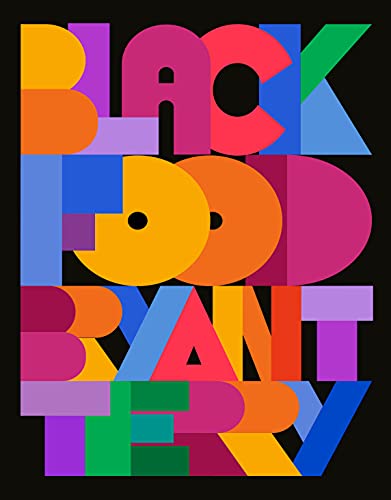
Not just Design – music, literature, and more. This volume defines the Black Arts movement as occurring between the late 1950s and the 1970s. That is arguable. Whether it is truly encyclopedic is also arguable. This highly praised volume is a necessary endeavor, and a provocation to further scholarship.
Before her untimely death, our beloved professor Meshele Wynekyn alerted us that students entering the culinary program were interested in the growing market for “edibles.” This is the second of two books we purchased on the topic, the first was a history of cooking with weed. This volume has been highly praised. The recipes begin with basics such as infused butter and oils that can be adapted to many recipes; and move on to more elaborate creations.
Falastin: A Cookbook
By Sami Tamimi and Tara Wigley, Foreward by Yotam Ottolenghi
Palestinian food from Sami Tamimi, executive chef of Ottolenghi Restaurants. It is said that music is the international language, but food has always been a means of creating connection on a more elemental level. IACP Award Finalist. Longlisted for the Art of Eating Prize. Named “one of the best cookbooks of the year” by Forbes, Bon Appétit, NPR, San Francisco Chronicle, Food Network, Food & Wine, The Guardian, National Geographic, Smithsonian Magazine, Publishers Weekly, Library Journal
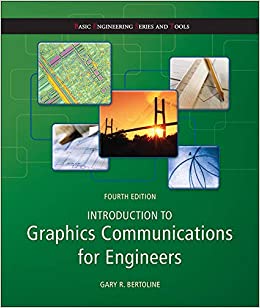
Of interest to students in Graphic Design and Engineering. For anyone who needs to create or interpret engineering diagrams. “Presents both traditional and modern approaches to engineering graphics, providing engineering and technology students a strong foundation in graphics methods through visualization, drawing, drafting, CAD software, and 3-D modeling” – publisher
Fundamentals of Structural Analysis
By Kenneth Leet, Chia-Ming Uang, Joel T. Lanning, Anne M. Gilbert
Of interest to students in architectural design, building construction, and public safety emergency management. “Covers the classical methods of analysis for determinate and indeterminate structures, and provides an introduction to the matrix formulation on which computer analysis is based” – publisher
Engineering Fundamentals and Problem Solving, 7th edition
By Arvid Eide, Roland Jenison, Larry Northup, Steven Mickelson
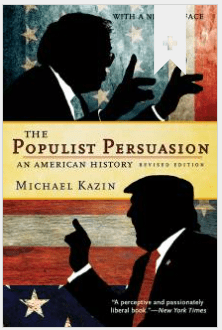
Populism is, well, a popular term right now! It is being applied in news reports and analysis to political parties and leaders around the world, including Senator Bernie Sanders and President Donald Trump.
According to multiple reference sources, the term was coined as a pejorative by a journalist covering the American movement to organize farmers against banks, railroads, and government land policy in the late nineteenth century. That movement became a political party, proudly adopting it as their name.
Populism has taken on several meanings since, and often appears with qualifiers: “agrarian populism,” “economic populism,” “political populism.” Recently the phrase “medical populism” has begun to appear, describing public resistance to medical expertise during the COVID pandemic.
With such widespread application, how can populism be defined?Following the research process is helpful.
Our Credo Reference database includes encyclopedias and dictionaries ranging from brief definitions to deeper dives into the context of particular populist movements. References in these articles can be used to construct a Literature Review. After scanning the literature, including history, economics, law, sociology, and news sources, a Working Definition can be constructed, like this one drawn from the Encyclopedia of Global Studies:
“The core aspects of these … types of populism are the centrality of the people and the antagonism between the people and the elites. This general definition does not include references to social bases, issues, and electorates because these characteristics differ too much over time and regionally … Populists tend to define “the people” as an undifferentiated community constructed in opposition to an enemy within or outside the nation or the state … The most common approach is to define populism as an ideology but as an ideology that is not a well-elaborated and grand one like socialism, liberalism, or conservatism.”
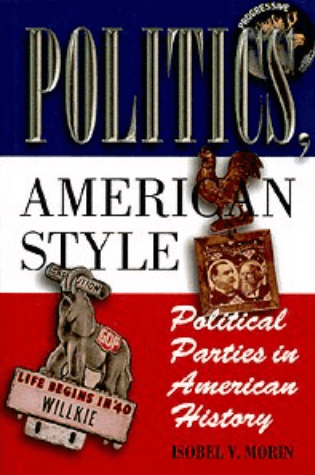
Populism is often opposed to liberalism and neo-liberalism. But populist parties and factions exist on both ends of the political spectrum, the Left and the Right. Populist movements have been organized by people of color against European minority rule; as well by Europeans in opposition to immigration, globalization, and modernization. They are occurring in democracies and also supporting dictatorships.
Populist movements have led to reforms. In the United States, our direct election of Senators is a legacy of the short-lived Populist Party. It is not uncommon that a populist leader who became an autocrat, began public life as a hero. Robert Mugabe of Zimbabwe is an example.
However, because populism is predicated on antagonism, such movements easily become violent. Populist elected leaders often urge their supporters to demonstrate. They have used military, police, and other government powers to suppress their opposition. Contemporary populist autocrats have attacked press freedoms by revoking broadcast licenses, detaining and murdering journalists (Russia); attacked academic independence by dismissing professors and closing programs (Turkey); attacked judicial independence by impeaching judges (Philippines); unilaterally changed monetary policy (India); and tried to dismiss elected legislatures where the majority opposed them (Brazil).
Are populist movements good for democracies? How do you make sense of shifting terminology? How can you tell if news coverage of political events and protests is manipulated?How will you decide when a populist leader has crossed the line into autocratic rule?
Below are resources for examining aspects of populism world-wide and over time. Subsequent blog posts will cover best practices for researching controversial topics and using current news for research.
Populism Virtual Display
Display Bibliography – includes links to access Books and Articles
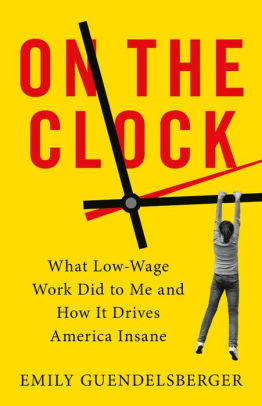
“I get to leave.” That was the mantra going through Emily Guendelsberger’s mind as she endured almost a year of low-wage jobs. Unlike her suffering co-workers at Amazon, Convergys, (a call center used by AT&T) and a San Francisco McDonalds, Emily knew that her time at each position would only last a few months.
When her newspaper folded, reporter Emily Guendelsberger decided it was the optimum time to fling herself into the low-wage workplace, to see for herself the indignities and despair dished out to those at the bottom of the labor market. A year later, she left with burns, a recurrence of PTSD, bad feet, a repetitive-motion injury to her wrist, and never-ending respect for the people stuck in such thankless jobs.
Like many people, Guendelsberger worked fast food in her teen years. She was raised on the rule “If you have time to lean, you have time to clean.” She thought she had a good idea of what would be asked of her, but instead she entered a new era of technological surveillance. Time management studies, scheduling software, and the ability to track every minute of a worker’s day has made even the thought of having “time to lean” an impossibility.
Amazon stocks vending machines with pain killers workers can access with a swipe of their badge, because that wastes less time than going to see the nurse. Convergys has mind-numbing acronyms and procedures that must be precisely followed – until they’re changed the next week. There’s always a line at McDonalds and the McFlurry machine is always broken because the algorithm scheduling workers ensures that no one has a minute of extra time for preventative maintenance. Fed up enough to quit? Go ahead, no one cares. Constant turnover is just one more accepted business practice.
On the Clock has terrific insights about how these types of jobs deal out stress and despair along with low wages. Guendelsberger provides clear explanations on the beginnings of time management studies, human anxiety, and the current business practices that suck all the personal control and joy out of a multitude of jobs. Why do we have our present government? Why are people so stressed out? Why is there an opioid crisis? Read this book and you might begin to understand why.
It is my pleasure to present to you Ink Cloud 2020. It has been a gift during quarantine to put this edition together for those who were able to participate.
Please take a few moments to enjoy the transformative effects of art created by Ivy Tech students, faculty and staff. We do not typically receive much traffic on this blog, but if you do stop by and one of these poets or artists reaches you, please let them know in the comments!
Let’s give everyone a reason to keep creating and sharing.



































 Fort Wayne & Warsaw Library Blogs