Category Archives: Featured Materials

Celebrate October

October feels like a month of holidays! This year October encompasses Sukkot, Diwali, and Samhain/Hallowe’en among others. We have cookbooks with recipes for these holidays, and children’s books about them too. Come on in and browse!

As the leaves fall, you can use the online TreeFinder to identify the tree species they are from. And of course you can find many uses for colorful leaves, and leaf-themed designs, in our Hobbies and Crafts Reference Center.

Don’t forget to observe All Hallows Read by giving someone you love a scary book that they would like. Our new favorite for children is I Want to Be in a Scary Story. Check it out!

Other new books received this month include:
The Woman Who Smashed Codes: A True Story of Love, Spies, and the Unlikely Heroine Who Outwitted America’s Enemies, by Jason Fagone.
George and Lizzie by Nancy Pearl, the acclaimed debut novel by NPR books commentator.
The Hate U Give by Angie Thomas, a young adult novel of which Kirkus Reviews says: “This story is necessary. This story is important.”
Sleeping Beauties, another novel with topical overtones, from horror master Steven King and his son Owen King.

Meet Your Library Staff
There is no better illustration of talent hiding behind a job description than Library Director Nicole Treesh. (That’s her on the left)

What do you do at the Library?
I have been the Library Director for almost a year.  The synopsis of what I do is oversee the Fort Wayne, Wabash, and now Warsaw library services, resources, and staff while supporting the mission and goals of the College particularly related to student success.  I can’t do what I do without the amazing staff on my team.  I represent the library on several committees and consortia including the Statewide Library Director’s Committee, our Regional Academic Affairs Team, and the Regional Extended Cabinet.
I develop, manage, and evaluate the library budgets, the library collections, and our online resources.  My brain is always working, thinking, and learning about trends in information technology, library services, and community college completion and retention.  I’m always striving to tell the story of the library and our mission to serve the students, faculty, and staff in more ways than just offering books and resources.

How did you gain your expertise?
I have a BS in Counseling and worked several years in community mental health organizations.  My passion for wanting to help people overcome adversity and obtain their goals in life started when I was in elementary school.  I’ve also always loved libraries, books, and technology.  I got a part time job at a library and quickly realized that my passions for helping people and information technology go hand in hand.  I decided to get my MLS and started pursuing full time library jobs.  I spent a couple years working in secondary schools in both IT, media centers, and as a Computer Programming Teacher.  My first MLS job was as a librarian here at Ivy Tech!  Soon after I started, the library director resigned and I became interim director until hired officially in November 2016.  My library career path isn’t traditional and certainly moved rapidly, but I couldn’t be happier or feel more blessed.

What is unique about you that could be of service to the Ivy Tech Community?
I believe that my background in mental health is invaluable, but also my personal experience with mental illness particularly as it relates to suicide prevention and awareness having lost my dad to suicide when I was just 17.  I’m compassionate and empathetic, can relate to the struggles of many of our students, and have the strength to move mountains for our students to succeed.

What is your favorite thing to do outside the Library?
I should say reading, right?  But truthfully, I’m a Netflix addict.  I love gardening, spending time with my husband, my kitty Maggie, and family.  I also dance obnoxiously to Kelly Clarkson 24/7 who I’ve seen 4 times in concert.

What books would you recommend to readers?
The Watersong series by Amanda Hocking who is a terrific YA author, I also have loved anything by Jandy Nelson, Jodi Picoult, or Ellen DeGeneres who is my favorite person/philanthropist.

What website do you recommend just for fun?
Everyone needs a goodreads.com account!

Welcome to Fall Semester at Ivy Tech Northeast!

Over the summer we made some changes to our library website in order to serve you better

Let us know what you think!

From our homepage, when you click on the Articles link in the left navigation panel, you will now find the databases grouped by subject.

We have maintained the A-Z List which is alphabetical by title.

Instructors: We have changed a few of our database subscriptions, so please check on the resources available for your assignments. We encourage the use of Guides to point students to appropriate resources, whether databases, websites, or whatever. A Librarian will be delighted to set one up for your courses and sections. These can be linked to your IvyLearn course site too.

Requesting library instruction for your class is quicker and easier. Use the Schedule Instruction link on the left navigation panel and fill out the form, which is so self-explanatory that faculty are already using it. (A detailed mailing on this new system is being distributed.)

Students: Reserving the study rooms is now Self-Service! Use the Reserve Rooms link on the left navigation panel of the Library Home page. You can do this remotely on any device, or come in and use the kiosk at the front desk where our friendly staff will show you how.

Everyone: Check out our new Apps for College guide, which has collected the best mobile device apps especially useful to students and teachers.

Come on in and peruse our book display this month, which relates to the solar eclipse. You can check these books out, along with #1 NY Times Bestseller, Astrophysics for People in a Hurry by the always-entertaining Neil de Grasse Tyson in our Baker & Taylor collection.

It’s not necessary to memorize all the numbers he throws around to understand the principles he explains. You will feel smarter just carrying this around!

New books we have received:

Behold the Dreamers “A compulsively readable debut novel about marriage, immigration, class, race, and the trapdoors in the American Dream—the unforgettable story of a young Cameroonian couple making a new life in New York just as the Great Recession upends the economy”
New York Times Bestseller – Winner of the PEN/Faulkner Award – Longlisted for the PEN/Open Book Award – An ALA Notable Book

Wild Things: The Joy of Reading Children’s Literature as an Adult “An irresistible, nostalgic, insightful—and totally original—ramble through classic children’s literature from Vanity Fair contributing editor (and father) Bruce Handy.”

The Driver “From the creator of the TV show Bones comes a ‘riveting, smart and funny’ (Harlan Coben) debut thriller. ‘Everything a great thriller should be—always smart, often funny, and relentlessly exciting. I loved every page.’ (Scott Turow)”

Coming soon:

The Burning Girl “A bracing, hypnotic coming-of-age story about the bond of best friends, from the New York Times best-selling author of The Emperor’s Children.”

Stay with Me “This celebrated, unforgettable first novel, shortlisted for the prestigious Bailey’s Prize and set in Nigeria, gives voice to both husband and wife as they tell the story of their marriage—and the forces that threaten to tear it apart.”

You can place holds on these books if they are not available using your IvyTech library account.

Best wishes to everyone for a successful semester!

Legal and Ethical Aspects of Health Information Management

510crmdr2b3l-_sx389_bo1204203200_By Dana C. McWay
Call Number: KF3827.R4 M395 2016
View in IvyCat

Understanding the complex legal and ethical principles that govern health information management is more important than ever. To help you successfully navigate these legal issues, LEGAL AND ETHICAL ASPECTS OF HEALTH INFORMATION MANAGEMENT is revised, updated, and expanded, providing the opportunity to focus on law and ethics as they relate to HIM. Key topics include the role of social media in health care, expansion of existing materials on e-discovery, compliance, completeness of the health record, breaches of confidentiality, and much more. Features include enrichment activities, mapping to CAHIIM standards, and interactive quizzing and case studies to help develop practical application and high-level problem solving skills. Written by a seasoned HIM professional and lawyer, LEGAL AND ETHICAL ASPECTS OF HEALTH INFORMATION MANAGEMENT, 4th Edition provides a complete solution for understanding the legal and ethical concerns that safeguard health care information today.

In the steamy days of late summer, think of STEAM … and Steampunk

Ivy Tech takes another interim break in August, just before kids return to school. When the weather is hot and stormy, is a great time to indulge in crafting and hobbies.

Research shows these activities are good for your brain:
“Having at least one persistent and intellectually stimulating hobby is a better predictor of career success in any discipline than IQ, standardized test scores, or grades.”1
“Nobel laureates were: twenty-five times as likely as an average scientist to sing, dance, or act; seventeen times as likely to be an artist; twelve times more likely to write poetry and literature; eight times more likely to do woodworking or some other craft; four times as likely to be a musician; and twice as likely to be a photographer.”2

Educators know that the arts are a crucial addition to math, science, engineering and technology training. The non-linear problem-solving techniques, and creative flow, exercised in artistic endeavors stimulate innovation.

Crochet and knitting are used by mathematicians to demonstrate hyperbolic surfaces. Dr. Daina Taimina, visiting professor at Cornell University, was one of the pioneers in demonstrating hyperbolic crochet. Dr. Sarah-Marie Belcastro at Smith College and Dr. Carolyn Yackel at Mercer University publish on mathematical knitting. Dr. Maryam Mirzakhani, the Fields Medal winner who died of cancer July 14th, also worked on complex surfaces by “doodling” on large sheets of paper, writing the mathematical formulas in the margins.3

Margaret Wertheim explains the math of coral reefs using crocheted models from Dr. Taimina in a TED talk.

To get your creativity flowing, we have books to check out and page through on our DIY shelf in the Creative Commons. These are for all ages, and there are more crafting books in our children’s section.

We have access to the Hobbies and Crafts Reference Center as part of our databases subscription. This is an excellent resource for techniques tutorials and designs, linking to how-to instructions and creative ideas with full text and illustrations from periodicals and books. It is organized into broad categories you can browse: Arts & Crafts, Collecting, Home & Garden, Indoor Recreation [games], Kids’ Crafts, Model Building, Needlecrafts & Textiles, Outdoor Recreation, Performing Arts, Science & Technology, Scrapbooking & Paper Crafts. A keyword search will pull up periodicals and books on “cake decoration” and other such specific activities within these. Or, you can do a keyword search across all categories for style topics, like Cosplay or Steampunk. Both are well covered here, from clothing to cakes to household furnishings.

1 Milgram, R., and Hong, E. (1997). “Out-of-school activities in gifted adolescents as a predictor of vocational choice and work.” Journal Of Secondary Gifted Education 8/3:111. Quoted in Colegrove, T. (2017). “Editorial Board Thoughts: Arts into Science, Technology, Engineering, and Mathematics – STEAM, Creative Abrasion, and the Opportunity in Libraries Today,” Information Technology and Libraries, 36/1:7. https://doi.org/10.6017/ital.v36i1.9733

2 Root-Bernstein, et al. (2008). “Arts Foster Scientific Success: Avocations of Nobel, National Academy, Royal Society, and Sigma Xi Members.” Journal of Psychology of Science and Technology https://doi.org/10.1891/1939-7054.1.2.51; quoted in Colegrove 2017.

3 http://news.stanford.edu/2017/07/15/maryam-mirzakhani-stanford-mathematician-and-fields-medal-winner-dies/

The Coaching Habit

Say Less, Ask More, & Change the Way You Lead Forever

9780978440749-ukBy Michael Bungay Stanier
Call Number: HF5549.5.C53 B86 2016
View in IvyCat

Want to say less, work less, and have more impact? Stanier gives you the seven core questions that will help you provide more effective support to your employees and co-workers. By unlocking their potential, you’ll be able to unlock your own.

Happy Birthday USA!

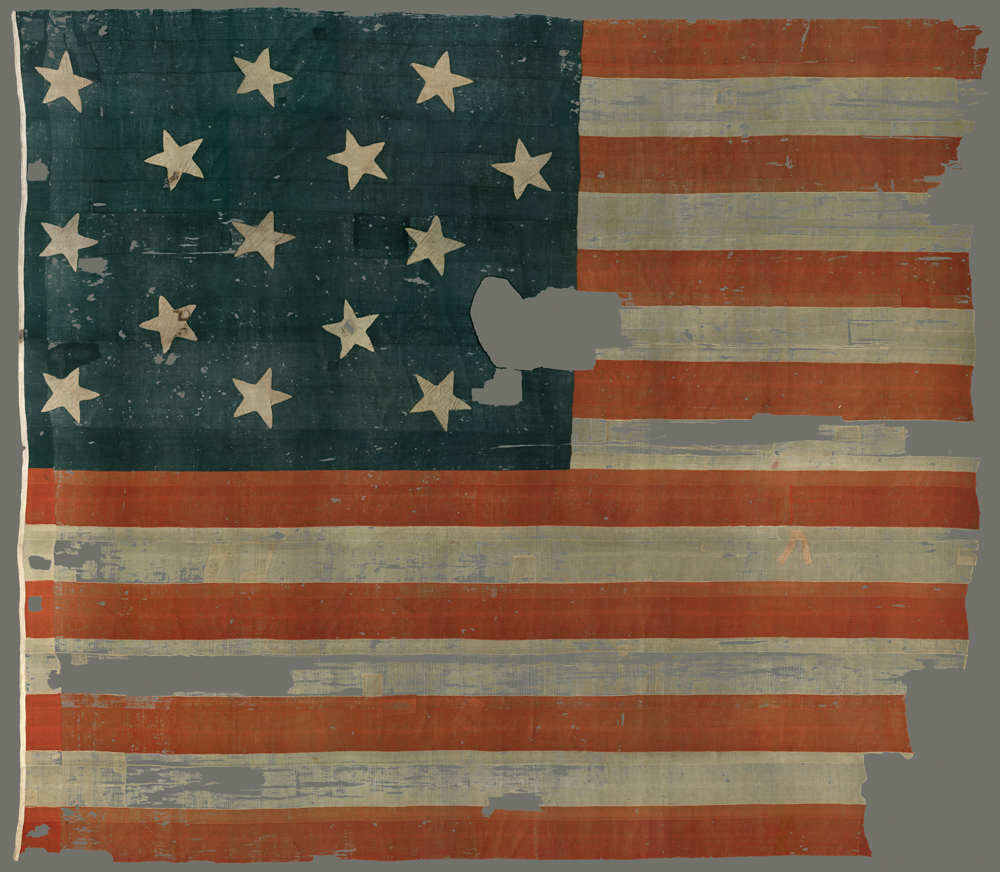
The flag that inspired “The Star-Spangled Banner” (image from the Smithsonian Institution


While fireworks explode as we celebrate the Fourth of July, you can get a blast from the past with these great historical resources! Who isn’t moved by examining Thomas Jefferson’s handwritten draft of the Declaration of Independence, or reading manuscript letters of George Washington, or the reports of eyewitnesses to battles in the Revolution?
The Coming of the American Revolution is a freely accessible, online gallery from the Massachusetts Historical Society containing digitized primary source documents like broadsides and newspaper announcements of meetings of the Sons of Liberty. Documents are presented with extensive scholarly notes and resources for teachers and students. It is clearly organized and offers multiple searching options.
Examine three early versions of the Declaration of Independence in the online gallery of the American Philosophical Society in Philadelphia. The first is Jefferson’s draft, which he sent to a friend before submitting it to the Continental Congress on July 1st, 1776.
Examine correspondence between members of the Continental Congress, digitized by The New York Public Library’s Early American Manuscripts Project. These collections include hand-written letters cross-indexed by names and topics. Keyword searching will find these tags.
Read transcribed accounts of battles from eyewitnesses and soldiers’ diaries of life in the Continental Army in the database American History Online accessible through the Ivy Tech Northeast Library home page. Find it in the A-Z list of databases. From the American History Home page, under “Browse Resources” choose “Primary Sources,” then under “Filter Primary Sources” choose “American Revolution” to see an index of transcriptions. This database also has maps of major battles in the War of Independence. From the Home page, under “Browse Resources” choose “Maps and Charts”, then under “Filter Maps and Charts” choose “American Revolution.”
What was life like in the Federal period after the Revolution? Check out the open database Chronicling America: Historic American Newspapers. Papers from 1789-1924 are keyword-searchable. 1876 was the centennial year of the United States. To see newspaper articles about the celebrations, do an advanced searchof all states for the phrase centennial anniversary or centennial celebration. Choose the date range 1870-1880 for articles about the preparation and aftermath. This is an ongoing project of the National Endowment for the Humanities, coordinated by the Library of Congress. Content is being contributed by local institutions, digitized in a format suitable for keyword searching. This site also provides a directory of newspapers from 1690-present, showing library holdings; this is the expected range of coverage upon completion.
Are you decorating your house for the holiday? Symbols of the United States is a Primary Source Set from the Library of Congress, written for elementary schools but fun for all. View digitized original sources and read the history of the Liberty Bell, our flag, the bald eagle, Uncle Sam, the Star Spangled Banner, and the Statue of Liberty. This set includes a Teachers’ plan, a student guide, and a free ebook for iOS devices.

Summer Reading

person reading under tree with dog sleeping at side

Summer term is shorter than Fall and Spring, and classes can be intense! We are all grateful for the breaks between semesters. This is the perfect time to read a book just for fun – no citations, annotations, or discussion post required! I asked our staff for reading recommendations, suggesting a classic and a recently published book.

Elizabeth Metz (Librarian): I just finished Norse Mythology by Neil Gaiman, it was excellent (but then I’m biased towards his works!). It is available to borrow in our Baker & Taylor collection. My second book, it’s not a classic per se, but it’s one of my all-time favorites: The Hitchhiker’s Guide to the Galaxy by Douglas Adams. This is available in our Fiction collection.

Elina Puckett (evening librarian): Summer is not exactly the time to think about cold and ice, yet two books – The Way of the Iceman by Wim Hof and What Doesn’t Kill Us on cold training may significantly improve your summer by teaching you how to “dramatically enhance energy levels, improve circulation, reduce stress, boost the immune system, strengthen the body and successfully combat many disease.”

Ann Spinney (afternoon librarian): A classic summer book for me is Ulysses by James Joyce, a story about a man going about his day on June 16th, 1904 worrying about his wife’s infidelity. Obviously, this is not a book for kids! Joyce was an accomplished singer and the book is full of the sounds of Dublin in summer; it is a wonderful book to read aloud. It is based on the classical story of Ulysses the mariner, with events that are parallel: for example, the Cyclops monster of the original is a racist man holding forth in a pub in Joyce’s retelling. The book is available to borrow in our fiction collection.
A new book I am recommending is Taduno’s Song by Odafe Otogun. It also is based on a classical story, the myth of Orpheus the musician who tries to rescue his wife from Hades. Otogun’s retelling is based in modern Nigeria. His writing sparkles with the precision of poetry. I could not put this book down and read it twice over, it is so enchanting, sad, and beautiful. We have it available to borrow in our Baker & Taylor collection.

Carol Gibbs (library assistant/ILL): Carol recommended a series of fiction books by Sarah Addison Allen, all set in rural North Carolina and centering around family mysteries. Several are available in our fiction collection.

Diana Dudley (library assistant): Diana submitted a long list, so feel free to ask her for more recommendations! She included The Three Musketeers by Alexandre Dumas as her classic read; and City of Light, City of Poison: Murder, Magic, and the First Police Chief of Paris by Holly Tucker, which is a new nonfiction book available to borrow in our Baker & Taylor collection.

Jean Adkins (library assistant): My classic favorite is The Hobbit by J.R.R. Tolkien (in our fiction collection) and a new book that I enjoyed is Ghosts of War by Brad Taylor (in our Baker & Taylor collection).

Bridging the Soft Skills Gap

How to Teach the Missing Basics to Today’s Young Talent

9781118725641-usBy Bruce Tulgan
Call Number: HF5381 .T757 2015
View in IvyCat

The number one challenge with today’s young talent is a problem hiding in plain sight: the ever-widening soft skills gap. Today’s new, young workforce has so much to offer new technical skills, new ideas, new perspective, new energy. Yet too many of them are held back because of their weak soft skills. Soft skills may be harder to define and measure than hard skills, but they are just as critical. People get hired because of their hard skills but get fired because of their soft skills. Setting a good example or simply telling young workers they need to improve isn’t enough, nor is scolding them or pointing out their failings in an annual review. However you can teach the missing basics to today’s young talent. Based on more than twenty years of research, Bruce Tulgan, renowned expert on the millennial workforce, offers concrete solutions to help managers teach the missing basics of professionalism, critical thinking, and followership complete with ninety-two step-by-step lesson plans designed to be highly flexible and easy to use. Tulgan’s research and proven approach has show that the key to teaching young people the missing soft skills lies in breaking down critical soft skills into their component parts, concentrating on one small component at a time, with the help of a teaching-style manager. Almost all of the exercises can be done in less than an hour within a team meeting or an extended one-on-one. The exercises are easily modified and customized and can be used as take-home exercises for any individual or group, to guide one-on-one discussions with direct-reports and in the classroom as written exercises or group discussions. Managers and their young employees will find themselves returning to their favorite exercises over and over again. One exercise at a time, managers will build up the most important soft skills of their new, young talent. These critical soft skills can make the difference between mediocre and good, between good and great, between great and one of a kind.

The Art of Leading Collectively

Co-Creating a Sustainable, Socially Just Future

9781603586269By Petra Kuenkel
Call Number: HD2961 .K76 2016
View in IvyCat

A guide to collaborative impact for leaders in industry, government, and social change networks

Our world is facing unsustainable global trends–from climate change and water scarcity to energy insecurity, unfair labor practices, and growing inequality. Tackling these crises effectively requires a new form of leadership–a collective one. But, in a world of many silos, how do we get people to work together toward a common goal? That is one of the most important questions facing sustainability and social-change professionals around the world, and it is a question that Petra Kuenkel answers in The Art of Leading Collectively.

Readers learn how to tackle system change for sustainable development, reimagine leadership as a collaborative endeavor, retrain leaders to work collectively, and manage diverse groups through a change process that has sustainability as a guiding focus. Drawing upon two decades of pioneering, internationally recognized work orchestrating multi-stakeholder initiatives, Kuenkel presents her chief tool, the Collective Leadership Compass, and shows others how to use it with large groups of diverse stakeholders to solve complex, urgent problems–particularly those that enmesh business activities, governance, human needs, and environmental impacts.

The book offers many examples of collective leadership efforts involving corporate, public, and nonprofit sectors around the world. Readers learn about the processes that led to a sustainable textile alliance and set standards for sustainable cocoa and coffee production and trade, as well as those that helped nations rebound from war, develop sustainable infrastructure, and tackle resource conflicts with global businesses, to name a few.

Kuenkel provides a clear roadmap for leaders from multinational companies involved in partnerships, international organizations engaged in cooperative development, public agencies, and interest groups–as well as for citizens seeking solutions to social and sustainability challenge