Category Archives: Featured Materials

Comprehensive Reflexology & Massage Video Set

This video set demonstrates numerous techniques using male and female models. It covers the entire body thoroughly and offers practical advice throughout the video. Unlike other videos, massage instructor both performs the massage and explains the techniques at the same time. The set includes:

  • Ultimate Face, Scalp, Neck & Shoulder Massage RA 780 .U488 2004
  • Essentials of Swedish Massage RM 721 .E88 2003
  • Deep Tissue Massage: Pelvic Girdle QM 161 .D44 2008
  • Deep Tissue Massage: Shoulder Girdle RM 721 .D44 2008
  • Deep Tissue Massage: Extremities RM 721 .D44 2008
  • Art & Practice of Stone Massage RA 780 .A782 2005
  • Comprehensive Reflexology & Massage: The Hand RM 723 .R43 C67 2005
  • Therapeutic Breast Massage RM 721 .T44 2007
  • Complete Guide to Full Body Chair Massage RM 721 .C65 2006
  • Lymphatic Drainage Massage Therapy: Face & Neck RM 723.L96 L96 2013
  • Lymphatic Drainage Massage Therapy: Body RM 723 .L96 L96 2010
  • Nurturing Pregnancy Massage: Techniques I RM 721 .N87 2008
  • Nurturing Pregnancy Massage: Techniques II RM 721 .N87 2008
  • Craniosacral Therapy Techniques RZ 399 .C73 C73 2010
  • Myofascial Release Techniques RM 723 .M96 2010

New from CINAHL – Plum Print!

The Plum Print is an article-level widget that visually changes based upon the metrics found in each of the five categories of metrics – Usage, Captures, Mentions, Social Media and Citations. Read below:

We are excited to announce a forthcoming new feature for CINAHL®.  Plum™ Print widget will be added to EBSCOhost® Research databases giving users access to a brand new research tool.
Plum Print is an article-level widget that visually changes based upon the metrics found in each of the five categories of metrics – Usage, Captures, Mentions, Social Media and Citations. These metrics help users to measure the research impact of an article.

Users can hover over the Plum Print widget to view a
brief breakdown of available metrics.

The metrics found in Plum Print are continuously updated and cover articles published from 2013 onward that are found in more than 3,500 premier journals available as full text or indexed in all versions of CINAHL.
The Plum Print widget will be automatically added to CINHAL in late March 2016.

New on the video shelf – Dementia Care

As one of America’s leading educators on dementia, Teepa Snow’s philosophy is reflective of her education, work experience, available medical research, and first hand caregiving interactions. Working as a Registered Occupational Therapist for over 30 years her wealth of experience has led her to develop Positive Approach™ to Care techniques and training models that now are used by families and professionals working or living with dementia or other brain changes throughout the world.

Teepa Snow DVDs

  • It’s All in Your Approach RC 521 .I89 2011 (125 MH)
  • Art of Caregiving RC 521 .A78 2011 (126 MH)
  • Lewy Body Dementia: What Everyone Needs to Know RC 521 .L49 2013 (127 MH)
  • Filling the Day with Meaning RC 521 .F555 2011 (128 MH)
  • End of Life Care & Letting Go RC 521 .E53 2012 (129 MH)
  • Improving Emergency Services for Dementia Patients RC 521 .I49 2012 (130 MH)
  • Journey of Dementia RC 521 .J687 2011 (131 MH)
  • Understanding Frontotemporal Dementia RC 521 .U53 2014 (132 MH)
  • Progression of Dementia: Seeing Gems, Not Just Loss RC 521 .P7647 2011 (133 MH)

New Journal – Townsend Letter

Townsend Letter, the Examiner of Alternative Medicine, publishes a print magazine about alternative medicine. It is written by researchers, health practitioners and patients. As a forum for the entire alternative medicine community, Townsend Letter presents scientific information (pro and con) on a wide variety of alternative medicine topics.

Recent article:  

Tragedy of the Flint Michigan Contamination
Lead In The Water – Is It Time To Freak-Out?
by John Parks Trowbridge M. D., FACAM

The simple answer is … it’s not so simple. But you must pay attention to what is happening to you and your family to be able to respond accordingly.

Over 27,000 innocent children in Flint, Michigan, have been exposed to startlingly high levels of lead in their city water supply – sometimes 13,000 times the concentration found in nearby localities – for many months, without any warning, even without early official acknowledgment when the problem was identified. The city emergency manager had changed its water supply but failed to comply with Federal and State standards, with dire consequences. They switched back after 18 months to the earlier, safer water source, when Flint declared a State of Emergency. Now city dwellers are left with corrosive toxics leaching from their pipes for who knows how long.

So how can you really know “what is happening”? Read More or come to the Library to check our first print issue.

Chocolate


As we make our way toward the tail-end of this rather mild winter, you may find yourself celebrating Valentine’s Day. For different couples, this day has various associations. Perhaps it’s an excuse for a romantic getaway. Maybe it’s a vibrant bouquet of flowers to dispel the winter’s dreariness. Or, if you’re anything like me, it’s all about the chocolate. Is it any wonder that we give this delicious, unique, and versatile treat away as a sign of our affection? Let’s dig a bit deeper into the world of chocolate, using the resources available in the Ivy Tech Northeast Library, to help understand what makes this confection so special.

A world without chocolate sounds like a dark place, but depending on where your ancestors hail from, that may have been the case. Made from the seeds of the cacao tree, chocolate was known for centuries as a treat, usually in the form of a drink, to Central American civilizations such as the Maya and the Aztecs. While we have come to associate the food with chocolatiers from Switzerland or Belgium, chocolate didn’t hit European shores until the Spanish conquistador Cortés encountered it during his New World exploration in the 16th century. As this Modern Marvels segment, available from the Films on Demand database, points out, chocolate as we know really came to be in 1828 when Dutch chocolate maker C.J. Van Houten created a press that allowed for the processing of cacao seeds into a dry powder, which in turn allowed in to be pressed into bars or baked into all the delectable treats we know it for today.

Since this development, the uses for chocolate have become many and varied, from the simplest bite-sized chocolate bar to the most elaborate cakes and pastries. The book Chocolate Passion from Tish Boyle and Timothy Moriarty is chock-full of “choc”-full recipes that feature the ingredient in delightful ways. For something relatively simple, the “Pain au Chocolat” is the perfect treat. The light, flaky croissant crust is the perfect way to deliver a rich, melted chocolate filling. If you’re feeling a bit more daring, try the unique fusion of flavors in “Ganache-filled Fried Wontons with Ginger Ice Cream and Chocolate Sorbet.” This recipe teaches you how to make everything, from the ice cream itself made with fresh ginger, to the ganache filling with bittersweet chocolate and cognac. The “Asian-spiced Dipping Sauce,” with its cinnamon, cloves, and anise is a perfect example of the many flavors that can complement and enhance your chocolate eating experience.

If you’re looking for something solely chocolate-focused, try Lisa Yockelson’s “Chocolate Savannahs, Remodeled” from her appropriately Chocolate Chocolate. As Yockelson describes, “The intense flavor reaches a chocolatey plateau in the dough through use of cocoa powder, bittersweet chocolate, unsweetened chocolate, and chocolate chips in the dough.” I’ll take a dozen.

Are you a diagnosed chocaholic? Ok, that may be a made-up condition, but our curiosity about chocolate from a health standpoint is definitely real. From the MedlinePlus database, an article from the National Institutes of Health entitled “Claims about Cocoa: Can Chocolate Really Be Good for You?” explores the various health claims about chocolate and its place in our diet. It details an interesting study about the Kuna people off the coast of Panama whose low risk of cardiovascular disease and blood pressure was found to be inconsistent with their salt intake and weight. Could this be good genetics? Not likely. The article also states that “those who moved away from the Kuna islands developed high blood pressure and heart disease at typical rate.” One unique aspect of their diet that piqued the interest of researchers was the fact that, as Dr. Brent M. Egan said, the amount of cocoa they consume “was easily 10 times more than most of us would get in a typical day.” Of course, this doesn’t mean you should stock up on Hershey’s bars for daily consumption. The Kuna’s chocolate is much closer to the original way that humans consumed it, a drink made from crushed and dried cacao pods that we would probably find much too bitter. Some researchers have tried to find links between chocolate and preventing disease such as diabetes or cancer, but it’s difficult to determine correlation with something as complex as diet, and almost impossible to declare causation. Even if chocolate helps stave off diabetes, most of the chocolate we eat as Americans is delivered in a way that is high in sugar and fat, which almost certainly does more harm than good. Going with darker, less processed chocolates—ideally paired with healthy foods such as fruits and nuts—seems to be the way to go. This is because a compound called flavonols are thought to be responsible for the health benefits of chocolate. Often flavonols, along with the more bitter taste that accompanies them, are removed the more cocoa is processed. By the time that cocoa makes its way into your slice of triple chocolate cheesecake, you probably shouldn’t consider it a health food. We haven’t yet reached a consensus on exactly what the health benefits of chocolate are, but as long as you’re watching the sugar and fat that accompany it, you may very well be doing your body a favor.

Are you going to enjoy any chocolate this month? There’s no wrong way to do so, and with so many interesting flavor combinations, you’ll never run out of interesting and flavorful ways to try this delicious ingredient. If you need more ideas about how to get more chocolate in your life, make sure to stop by the Ivy Tech Northeast Library and get inspired. (By Library Clerk, David Winn)

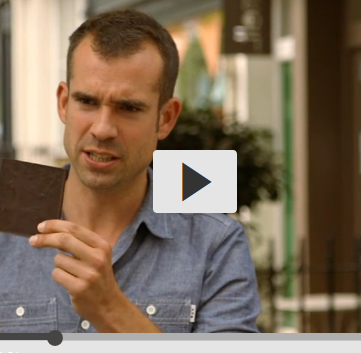
The Wonders of Chocolate DVD

Experience the amazing and delectable delights of chocolate… Plunge your senses into the world of master chocolatier Patrick Roger–from the lab where this audacious artist creates his luxurious chocolate gems, to Ecuador and the source of the finest quality beans. Meet pastry chef Thierry, whose cocoa-coated gourmet universe produces textures and flavors to seduce and surprise the palate-cocoa spring rolls, chocolate bonbons with foie gras… Discover the health benefits of chocolate, from anti-aging serums to treatments for cavities and even cancer! A truly wondrous decadence.

On Civility

The Ivy Tech Northeast Library is collaborating with the Change Action Northeast team as a part of their Setting Our Inner Compass project.

This semester will see CAN focusing on the topic of civility, and the library has procured a collection of books to support this discussion.

The books will be on display in front of the windows to the Presentation Room in the Library. Everyone in the Ivy Tech community is encouraged to participate in this discussion by checking out one or more of these books and reading them.

The CAN team is in the process of scheduling a brown bag lunch discussion date for all to share their thoughts and ideas about civility. The Library is very excited to share in the collaboration of this project and its timely topic! More information will be coming soon.


Title Author
Choosing Civility: The Twenty-five Rules of Considerate Conduct Forni, P. M.
Civility Carter, Stephen L.
Creating & Sustaining Civility in Nursing Education Cynthia M.
George Washington’s Rules of Civility and Decent Behavior: …And Other Important Writings Washington, George
Hello!: And Every Little Thing That Matters Edwards, Kate
Saving Civility: 52 Ways to Tame Rude, Crude & Attitude for a Polite Planet Hacala, Sara
The Civility Solution: What to Do When People Are Rude Forni, P. M.
The Cosmopolitan Canopy: Race and Civility in Everyday Life Anderson, Elijah

Workplace and Civility

As we rush headlong into the spring 2016 semester, we begin a campus-wide focus on promoting values to improve Ivy Tech as a place to work and grow. To start off the year, we will be focusing on, as Jane Janovyak of Change Action Northeast puts it, “civility and the traits of being neighborly and encouraging.” Let’s take a few moments to think of what civility means here at Ivy Tech, and what we can all do to promote this value.

First things first: just what is civility? We seem to recognize right away when someone is being uncivil, but it can be harder to narrow down exactly what embodies this big concept. P. M. Forni, the author of Choosing Civility: The Twenty-Five Rules for Considerate Conduct defines civility by four qualities which it satisfies:

-Civility is complex

-Civility is good

-Whatever civility might be, it has to do with courtesy, politeness, and good manners

-Civility belongs in the realm of ethics

When reading more about Forni’s thoughts on civility, it becomes clear that this big idea of civility is not simply a checklist of dos and don’ts, or a handful of behaviors to adopt. The actions and behaviors of people who practice civility are certainly something to discuss and emulate, but the broader sense is that civility is about a constant sense of awareness about your own behavior and how it affects everything around you, both the people you interact with and the environment you inhabit. As Forni puts it, “Being civil means being constantly aware of others and weaving restraint, respect, and considerations into the very fabric of this awareness.” Civility, then, is not merely avoiding things that are considered uncivil, but actively aspiring to be well mannered.

One excellent article that is especially germane to everyone here at Ivy Tech is Alexander Popovics’ “Civility on Community College Campuses: A Shared Responsibility.” This article is available through the Humanities International Complete database, a part of EBSCO, and was originally published in the College Student Journal. One interesting distinction that Popovics makes via author Judy Rootskool is the difference between etiquette and civility. Civility is the underlying respect that informs behaviors like good etiquette. Civility may start to seem like an abstract concept, floating out there in the æther, but Popovics is very practical about the process of improving campus civility. He queries, “So do actions speak louder than words when we speak of civility and respect? The correct answer is that words combined with actions speak the loudest. And we need to speak loudly.” Popovics speaks to the need for a campus-wide initiative to really improve the level of civility in campus interactions.

As much as we focus on promoting civility, the value of civility stands out the most when we are confronted by the lack of it. An article entitled “Tit for Tat? The Spiraling Effect of Incivility in the Workplace” that is available through JSTOR addresses the true dangers of allowing incivility to perpetuate. Though incivility can be as simple as not cleaning up after yourself, neglecting to say thank you, or adopting a brusque tone, it can lead to larger problems such as verbal aggression, violence, and other antisocial behavior. Another article that is available through Proquest shows a link between incivility in the workplace and a negative impact on productivity. From a psychological perspective, Paul Jiménez demonstrates in his article “Workplace Incivility and Its Effects on Value Congruence, Recovery-Stress-State and the Intention to Quit” that a lack of civility can cause employees to look for other work, and keeps employees from uniting around positive values. There are very real consequences to allowing incivility to perpetuate within the workplace, and this is all the more reason to foster civility in its place.

Have I been civil today? Was there a time when my behavior could have been seen as rude? Could I have done more to make everyone around me more comfortable? Civility is not something that can be switched on instantly, but it is something at which we can try to be a little better each day. If you have an interaction that you walk away from with that slight “off” feeling, take a moment to examine what could have gone better. Even if it was the result of someone acting uncivil toward you, was there anything you could have done to improve the situation? Most of all, talk with your coworkers. Improving civility is a collaborative project, and only by engaging with others can we truly make strides toward civility. Hopefully this has been something to keep in mind as we all strive to make Ivy Tech a better place to work, live, and learn. (By Library Clerk, David Winn)