Begins in the 1500s with the Protestant Reformation; the emphasis is on the twentieth century, but ample consideration is given to the last twenty years. The perspective is western, perhaps limited by the ephemeral nature of the materials surveyed. An excellent primer on protest graphics, and graphics generally.
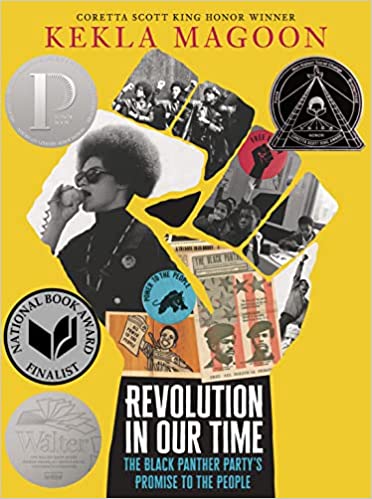
Not just Design – music, literature, and more. This volume defines the Black Arts movement as occurring between the late 1950s and the 1970s. That is arguable. Whether it is truly encyclopedic is also arguable. This highly praised volume is a necessary endeavor, and a provocation to further scholarship.
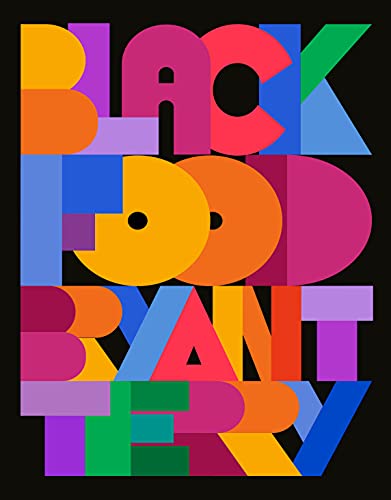
Before her untimely death, our beloved professor Meshele Wynekyn alerted us that students entering the culinary program were interested in the growing market for “edibles.” This is the second of two books we purchased on the topic, the first was a history of cooking with weed. This volume has been highly praised. The recipes begin with basics such as infused butter and oils that can be adapted to many recipes; and move on to more elaborate creations.
Falastin: A Cookbook
By Sami Tamimi and Tara Wigley, Foreward by Yotam Ottolenghi
Palestinian food from Sami Tamimi, executive chef of Ottolenghi Restaurants. It is said that music is the international language, but food has always been a means of creating connection on a more elemental level. IACP Award Finalist. Longlisted for the Art of Eating Prize. Named “one of the best cookbooks of the year” by Forbes, Bon Appétit, NPR, San Francisco Chronicle, Food Network, Food & Wine, The Guardian, National Geographic, Smithsonian Magazine, Publishers Weekly, Library Journal
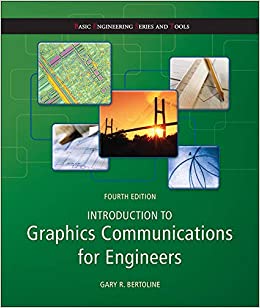
Of interest to students in Graphic Design and Engineering. For anyone who needs to create or interpret engineering diagrams. “Presents both traditional and modern approaches to engineering graphics, providing engineering and technology students a strong foundation in graphics methods through visualization, drawing, drafting, CAD software, and 3-D modeling” – publisher
Fundamentals of Structural Analysis
By Kenneth Leet, Chia-Ming Uang, Joel T. Lanning, Anne M. Gilbert
Of interest to students in architectural design, building construction, and public safety emergency management. “Covers the classical methods of analysis for determinate and indeterminate structures, and provides an introduction to the matrix formulation on which computer analysis is based” – publisher
Engineering Fundamentals and Problem Solving, 7th edition
By Arvid Eide, Roland Jenison, Larry Northup, Steven Mickelson
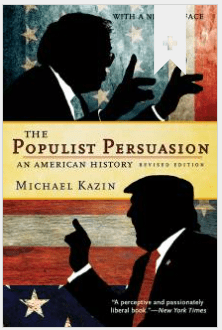
Populism is, well, a popular term right now! It is being applied in news reports and analysis to political parties and leaders around the world, including Senator Bernie Sanders and President Donald Trump.
According to multiple reference sources, the term was coined as a pejorative by a journalist covering the American movement to organize farmers against banks, railroads, and government land policy in the late nineteenth century. That movement became a political party, proudly adopting it as their name.
Populism has taken on several meanings since, and often appears with qualifiers: “agrarian populism,” “economic populism,” “political populism.” Recently the phrase “medical populism” has begun to appear, describing public resistance to medical expertise during the COVID pandemic.
With such widespread application, how can populism be defined?Following the research process is helpful.
Our Credo Reference database includes encyclopedias and dictionaries ranging from brief definitions to deeper dives into the context of particular populist movements. References in these articles can be used to construct a Literature Review. After scanning the literature, including history, economics, law, sociology, and news sources, a Working Definition can be constructed, like this one drawn from the Encyclopedia of Global Studies:
“The core aspects of these … types of populism are the centrality of the people and the antagonism between the people and the elites. This general definition does not include references to social bases, issues, and electorates because these characteristics differ too much over time and regionally … Populists tend to define “the people” as an undifferentiated community constructed in opposition to an enemy within or outside the nation or the state … The most common approach is to define populism as an ideology but as an ideology that is not a well-elaborated and grand one like socialism, liberalism, or conservatism.”
Populism is often opposed to liberalism and neo-liberalism. But populist parties and factions exist on both ends of the political spectrum, the Left and the Right. Populist movements have been organized by people of color against European minority rule; as well by Europeans in opposition to immigration, globalization, and modernization. They are occurring in democracies and also supporting dictatorships.
Populist movements have led to reforms. In the United States, our direct election of Senators is a legacy of the short-lived Populist Party. It is not uncommon that a populist leader who became an autocrat, began public life as a hero. Robert Mugabe of Zimbabwe is an example.
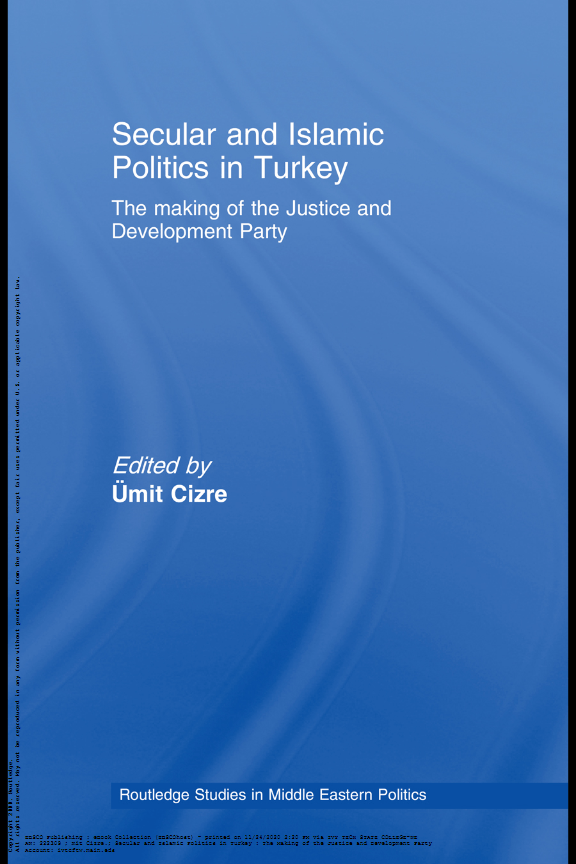
However, because populism is predicated on antagonism, such movements easily become violent. Populist elected leaders often urge their supporters to demonstrate. They have used military, police, and other government powers to suppress their opposition. Contemporary populist autocrats have attacked press freedoms by revoking broadcast licenses, detaining and murdering journalists (Russia); attacked academic independence by dismissing professors and closing programs (Turkey); attacked judicial independence by impeaching judges (Philippines); unilaterally changed monetary policy (India); and tried to dismiss elected legislatures where the majority opposed them (Brazil).
Are populist movements good for democracies? How do you make sense of shifting terminology? How can you tell if news coverage of political events and protests is manipulated?How will you decide when a populist leader has crossed the line into autocratic rule?
Below are resources for examining aspects of populism world-wide and over time. Subsequent blog posts will cover best practices for researching controversial topics and using current news for research.
Populism Virtual Display
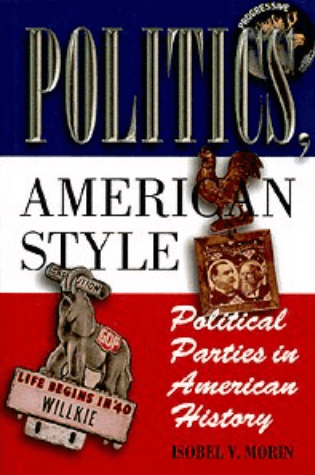
Display Bibliography – includes links to access Books and Articles
There are no tests, you can’t get a degree, it has no campus. It’s not even a virtual place!
The Electoral College was established by the framers of the Constitution as the process by which the United States would elect its President and Vice President. The name came later; only electors are mentioned in the Constitution.
The decennial census sets the number of electors each state gets, out of a fixed total of 538. This is one reason why conducting the census has been so contentious this year. The states then choose their electors, and those processes vary.
Image Source: USA.gov
The Electoral College process was devised as a compromise between factions at the Constitutional Congress. The number of electors equals the total of the Senate and House of Representatives; plus three electors for the District of Columbia. The Electoral College was divisive from its inception – Thomas Jefferson called it a blot on the Constitution – and remains so nearly 250 years later. It is the reason that a president can be elected while losing the popular vote. This has happened four times, in 1876, 1888, 2000, and 2016.
American History Online has explainers, historical documents, images, news articles, and more on the Electoral College. Another resource for understanding and analyzing this institution is CQ Press Library.
The National Archives has developed a website with all manner of information about the Electoral College process. (By law, the Archivist of the United States is responsible for collating all the state electors’ votes, and after inspection by the Office of the Federal Register, submitting them to Congress.) You will find links to the relevant sections of the Constitution, to historical background information, the state processes for choosing electors, FAQs, and more.
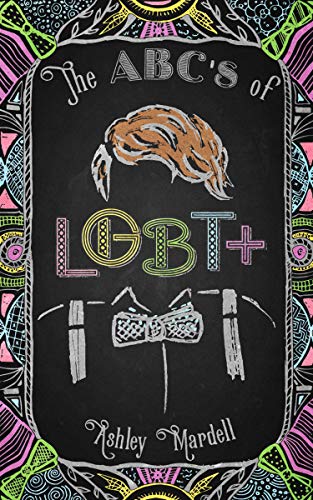
June is LGBTQIA Pride month. This commemorates, in part, the June 28th, 1969 resistance by gay and trans people to a police raid on a popular bar, Stonewall, in New York City.
One year after the Stonewall resistance, a parade was held in New York City to commemorate it. Called the Christopher Street Liberation Day Parade, after the district where many gay bars were located, it is considered the first Pride Parade. The Library of Congress has recently released online the documentary video of this parade made by Lilli Vincenz.
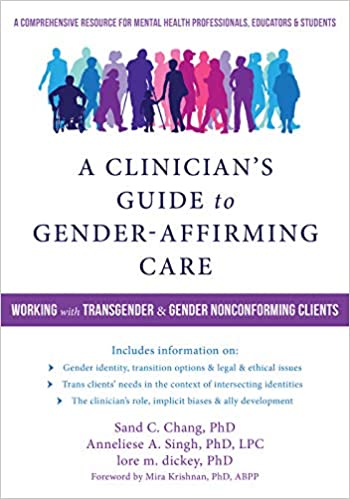
This year, fifty years after that parade, we are celebrating affirmation by the Supreme Court in “Bostock v. Clayton County, Georgia …” that gay, lesbian, transgender, intersex, and queer people may not be denied employment on the basis of sex. This is an interpretation of Title VII of the Civil Rights Act. One case that created precedent for this determination was brought against Ivy Tech Community College. Read about it at FindLaw: Hively v Ivy Tech And read Ivy Tech’s current statement on diversity, equity, and belonging here.
The Library of Congress has gathered resources on a Pride Month research guide. This includes links to their collections relating to famous and significant LGBTQIA people: Walt Whitman, Aaron Copland, Margaret Mead … and so many more. It is a reminder of the important contributions that LGBTQIA people make to our society.
Your Ivy Tech library has many LGBTQIA resources. Begin by searching the broad term sexual minority in Discover or IvyCat and limit the search results by format, date, additional key words. For help with more targeted searches, contact your librarian.
Explore Resources on Faith and Sexuality, compiled by Dawn M. Burns of the Ivy Tech Warsaw Academic and Learning Resource Center
“Sexual minority” is the Library of Congress Subject Heading applied to LGBTQIA resources. Read about resistance to this, and other classification issues, here: Cataloging Lab and Homosaurus
While we pause to express pride, we know there is more work to do.
We welcome our new students, and welcome back continuing students to Fort Wayne and Warsaw. The librarians and library staff are available online to help you have your best semester. We are here for our Professors, too!
Librarians are available for online class instruction, 1-on-1 online meetings, and quick help via chat and email. Find out how here.
The library buildings are still closed, but we have millions of articles online and hundreds of thousands of ebooks. Plus videos, audio, images, and more. In our databases you can filter for scholarly resources and most recent content. All these are preselected to support our courses, so using them will save you time.
We have guides to the best resources for many subjects, and guides to formatting papers, charts, and citations. See them here. Professors can ask for specific resources to be included on a guide.
Our ILL service is currently processing journal articles and ebook chapters. Our databases are adding new ebooks. Both Fort Wayne library and Warsaw library have new websites, and our IvyCat catalog will be updated soon with a new interface and functionalities.
Visit us online, and let us know how we can help you!
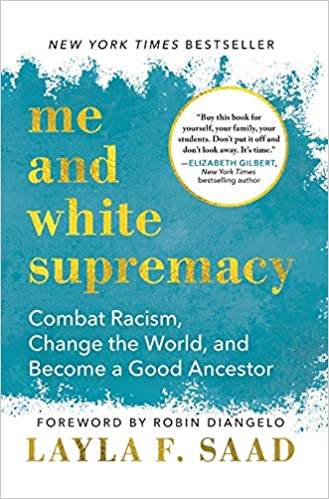
Talking, and listening to others talk, about race is difficult. But we must keep those conversations going as we work together to overcome racism, because we will only find answers to our social issues by learning from each other.
We find this resource from the National Museum of African American History and Culture helpful. It is concise, with options to go more in depth. It is for educators, parents, anyone who may need to lead a conversation about race, and individuals wondering where to start.





















 Fort Wayne & Warsaw Library Blogs