Category Archives: Library News

Workplace and Civility

As we rush headlong into the spring 2016 semester, we begin a campus-wide focus on promoting values to improve Ivy Tech as a place to work and grow. To start off the year, we will be focusing on, as Jane Janovyak of Change Action Northeast puts it, “civility and the traits of being neighborly and encouraging.” Let’s take a few moments to think of what civility means here at Ivy Tech, and what we can all do to promote this value.

First things first: just what is civility? We seem to recognize right away when someone is being uncivil, but it can be harder to narrow down exactly what embodies this big concept. P. M. Forni, the author of Choosing Civility: The Twenty-Five Rules for Considerate Conduct defines civility by four qualities which it satisfies:

-Civility is complex

-Civility is good

-Whatever civility might be, it has to do with courtesy, politeness, and good manners

-Civility belongs in the realm of ethics

When reading more about Forni’s thoughts on civility, it becomes clear that this big idea of civility is not simply a checklist of dos and don’ts, or a handful of behaviors to adopt. The actions and behaviors of people who practice civility are certainly something to discuss and emulate, but the broader sense is that civility is about a constant sense of awareness about your own behavior and how it affects everything around you, both the people you interact with and the environment you inhabit. As Forni puts it, “Being civil means being constantly aware of others and weaving restraint, respect, and considerations into the very fabric of this awareness.” Civility, then, is not merely avoiding things that are considered uncivil, but actively aspiring to be well mannered.

One excellent article that is especially germane to everyone here at Ivy Tech is Alexander Popovics’ “Civility on Community College Campuses: A Shared Responsibility.” This article is available through the Humanities International Complete database, a part of EBSCO, and was originally published in the College Student Journal. One interesting distinction that Popovics makes via author Judy Rootskool is the difference between etiquette and civility. Civility is the underlying respect that informs behaviors like good etiquette. Civility may start to seem like an abstract concept, floating out there in the æther, but Popovics is very practical about the process of improving campus civility. He queries, “So do actions speak louder than words when we speak of civility and respect? The correct answer is that words combined with actions speak the loudest. And we need to speak loudly.” Popovics speaks to the need for a campus-wide initiative to really improve the level of civility in campus interactions.

As much as we focus on promoting civility, the value of civility stands out the most when we are confronted by the lack of it. An article entitled “Tit for Tat? The Spiraling Effect of Incivility in the Workplace” that is available through JSTOR addresses the true dangers of allowing incivility to perpetuate. Though incivility can be as simple as not cleaning up after yourself, neglecting to say thank you, or adopting a brusque tone, it can lead to larger problems such as verbal aggression, violence, and other antisocial behavior. Another article that is available through Proquest shows a link between incivility in the workplace and a negative impact on productivity. From a psychological perspective, Paul Jiménez demonstrates in his article “Workplace Incivility and Its Effects on Value Congruence, Recovery-Stress-State and the Intention to Quit” that a lack of civility can cause employees to look for other work, and keeps employees from uniting around positive values. There are very real consequences to allowing incivility to perpetuate within the workplace, and this is all the more reason to foster civility in its place.

Have I been civil today? Was there a time when my behavior could have been seen as rude? Could I have done more to make everyone around me more comfortable? Civility is not something that can be switched on instantly, but it is something at which we can try to be a little better each day. If you have an interaction that you walk away from with that slight “off” feeling, take a moment to examine what could have gone better. Even if it was the result of someone acting uncivil toward you, was there anything you could have done to improve the situation? Most of all, talk with your coworkers. Improving civility is a collaborative project, and only by engaging with others can we truly make strides toward civility. Hopefully this has been something to keep in mind as we all strive to make Ivy Tech a better place to work, live, and learn. (By Library Clerk, David Winn)

Introducing the Library Catalog Kiosk!

The Ivy Tech Northeast Library is happy to announce that we now have a Library Catalog Kiosk. You can now browse the library catalog without having to log into a computer terminal. With an easy touch screen interface, this device makes it easier than ever to find what you need on the fly. Best of all, it’s located right alongside a majority of our collection allowing easy access to both the shelves and the library catalog. If you are new to navigating our catalog system, any of the library employees will be happy to assist you in how to search the catalog, and how to get the most useful results when doing so.

Holiday Food


For many, the holidays come with a familiar set of sensory memories that put us back into the mindset of past merrymaking. We hear the jingling of bells and the crackling of a warm fire. We smell pine and juniper, or cocoa warming on the stove. We feel the kiss of snowflakes on our cheeks as we arrive at the homes of loved ones, ready to share in the celebrations that accompany the season. Of course, no holiday would be complete without the sense of taste. The end-of-the-year culinary traditions bring a whole host of experiences that we’ve come to associate with celebration. Here are a few sources for spicing up your holiday fare.

Gatherings & Celebrations : History, Folklore, Rituals and Recipes for the Occasions that Bring People Together
Gatherings and Celebrations by Burt Wolf is a unique international exploration of holidays and food. Wolf pairs each holiday with a geographical region and then gives a bit of history about the holiday, the customs observed, and which kinds of dishes are frequently served. In the “Christmas in Germany” chapter, he describes the German Pfefferkuchen, spice cakes made with pepper dating back to medieval times and Spekulatius, hard gingerbread prepared in the likeness of St. Nicholas. Each section also has its respective set of recipes, and those wanting to try a German-style Christmas celebration can try the Roast Christmas Goose, Riesling Soup, or Red Wine Spiced Cabbage

To Every Season : A Family Holiday Cookbook
If you find yourself with kids who want to help out in the kitchen, Jane Zalben’s To Every Season: A Family Holiday Cookbook is a good collection of holiday favorites with simple, but delicious ingredients. If you’re celebrating Hanukkah, Pearl’s Potato Latkes are fun to fry together. For celebrants of Kwanzaa, Sweet Potato Pudding is a simple, sweet treat that will give your whole kitchen a festive aroma. For a fun project that will show off everyone’s artistic side, you can try Spiced and Iced Gingerbread Animals that the little ones will enjoy making just as much as eating.

Mr. Food Test Kitchen Christmas Made Easy : Recipes, Tips and Edible Gifts for a Stress-free Holiday
Holidays are times of joy, but they can also be stressful. We don’t all have hours to spend in the kitchen. Luckily, the Mr. Food Test Kitchen has your back with Christmas Made Easy : Recipes, Tips and Edible Gifts for a Stress-Free Holiday. This book offers many recipes that you can prepare in advance and heat when you’re about to serve. The Strawberry Breakfast Rollups are the perfect warm treat for a cold winter morning. There are also many recipes that are as easy to prepare as casseroles, but will still spice up the menu for a special holiday treat, such as the Ravioli Pesto Pie and Garden Sloppy Joes. Sometimes all it takes is a little inspiration to make an easy recipe into a holiday family favorite.

A Country Music Christmas : Christmas Songs, Memories, Family Photographs and Recipes from America’s Favorite Country and Gospel Stars
For something a little different, why not add the strum of a guitar into your Christmas celebration? A Country Music Christmas is a collection of family photos, memories, and recipes from a whole host of country legends. Make sure you grab the accompanying CD to put on while you prepare Alan Jackson’s Chattahoochee Cornbread and Cornbread Dressing, Willie Nelson’s Always on My Mind Biscuits and Chocolate Gravy with Cocoa, or Dolly Parton’s Jolly Cheesecake Pudding. If you and your family love country music, this is the perfect combination to celebrate the holidays.

No matter how you and yours celebrate the holiday season, we here at the Ivy Tech Northeast Library wish everyone a happy, safe, and sane season. Season’s greetings!

Finals in the Library

Are you Hungry? Need Caffeine? Let the Ivy Tech Library be your oasis during fall finals (Monday 12/14 – Friday 12/18). We will have snacks and refreshments during regular Library hours at the Coliseum Campus Library (and at the PSA Library Wednesday 12pm to 4pm).

Stress Relief Activities available:

  • Therapy dogs will be in the Coliseum Campus Library from 10am to 12pm.
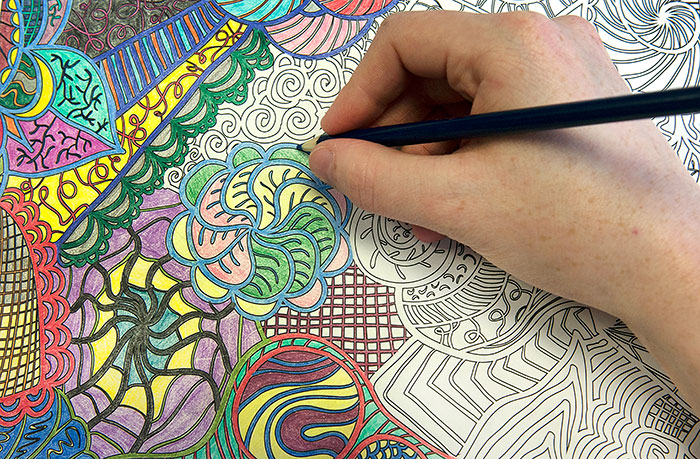
  • Adult coloring books stations will be available within the Library
  • Relaxing music is available for listening and downloading- you will find a large collection of instrumental music and also the Jeff Bridges Sleeping Tapes.
  • Quick Help Guides and Links to Library Resources and Services.

For more information, click here.

Stress -Therapy Coloring in the Library

During Finals Week, we will have a relaxation Coloring Station.
We are providing a variety of adult coloring books and colored pencils for students to use in the Library.
The practice of coloring generates wellness, quietness and also stimulates brain areas related to motor skills, the senses and creativity.
Interested students may keep their coloring pages or donate them to our Library display to inspire others to color.
Read more about Adult Coloring and de-stressing benefits here in the Huffington Post.

Ask for new materials

The Ivy Tech Northeast Library receives fascinating and informative new materials each month for your use and enjoyment. What you may not know, though, is that faculty and staff can make requests for materials to be added to our collection. On the Northeast Library’s homepage, simply click the “Purchase Request” link to submit your request for consideration. This will take you to a basic form that lets us know what the item is and what group of Ivy Tech students would find this item useful. Make sure you include contact information for follow-up from Library staff. We are committed to providing most relevant and up-to-date supportive materials for students and faculty from all areas of study.

Library Creative Commons

What do you know about Library’s Creative Commons? We have dedicated PC’s loaded with specialized software not available on normal students computers. This includes software titles such as AutoCAD, Solidworks, Business Plan Pro. Creative Commons environment is conducive to individual study or collaboration.

Also available in Creative Commons is a TV stations a DVD/VHS player.

What is coming soon to Library’s Creative Commons? We plan on adding a MAC computer, Adobe Creative Cloud (Image/Video editing capability), computer stations with webcams for webinars and web-based interviews, other software as needed or identified.
Here is an A-Z list of software titles available in the Creative Commons:


·         SOLIDWORKS 2015 Education Edition
o   eDrawings 2015 x64 Edition
o   SOLIDWORKS 2015 x64 Edition
o   SOLIDWORKS Composer 2015
o   SOLIDWORKS Tools
·         Autodesk
o   Autodesk Design Review 2013
o   Alias Design 2015
o   AutoCAD 2015
o   AutoCAD Architecture 2015
o   AutoCAD Electrical 2015
o   AutoCAD Mechanical 2015
o   AutoCAD Raster Design 2015
o   AutoCAD Structural Detailing 2015
o   AutoCAD Utility Design 2015
o   Autodesk 3ds Max Design 2015
o   Autodesk AutoCAD Civil 3D 2015
o   Autodesk Backburner 2015
o   Autodesk Data Management
o   Autodesk Factory Design Utilities 2015
o   Autodesk Inventor 2015
o   Autodesk Mechanical Simulation Job Manager
o   Autodesk Mudbox 2015
o   Autodesk Recap
o   Autodesk Showcase 2015
o   Autodesk Simulation Mechanical 2015
o   Autodesk Simulation Mudflow Advisor 2015
o   Autodesk Sketchbook Designer 2014
o   DWG TrueView 2015
o   Revit 2015
o   Simulation CFD 2015
o   Subassembly Composer 2015

Business Plan Pro

Celiac Awareness Month

October marks the observance of Celiac Awareness Month, an event to generate awareness about a serious and painful chronic condition that results from reaction to gliadin, a gluten protein found in wheat. Conservative estimates show that at least 1 in 170 people have celiac disease, but it may also be under-diagnosed. Sufferers of celiac disease experience discomfort and pain in the digestive tract, diarrhea and chronic constipation, anemia, fatigue, and trouble properly absorbing nutrients through the intestines. The only real treatment for celiac disease is a gluten-free diet, a tough but manageable feat, at least here in the U.S. The article Celiac Disease and Gluten-Free Diet through the Health and Wellness Resource Center is a good overview of other symptoms and dietary restrictions for those with celiac disease.

Gluten? That stuff is bad, right? Part of the reason for raising awareness is providing clarity for those who misunderstand the mechanisms of celiac and similar conditions, and it all boils down to that one little word. So, let’s talk about gluten.

Gluten is such a misunderstood term in America that some have even begun to poke fun at it. In the 2013 apocalyptic comedy film This Is the End, Seth Rogan and Jay Baruchel (playing themselves) are arguing about the benefits of a gluten-free diet. When Baruchel accuses Rogan of not even knowing what gluten is, Rogan responds, “Gluten is a vague term. It’s something that’s used to categorize things that are bad. You know, calories, that’s a gluten. Fat, that’s a gluten.” With the way that “gluten free” has been marketed as a buzzword, someone whose only exposure to the term from ad copy might conclude that it is a dangerous chemical that is being needlessly injected into food. Gluten is, in fact, a naturally occurring wheat protein that is so useful that we extract it and use it elsewhere in our foodstuffs for its ability to add structural integrity—chewiness, basically. So how does this naturally occurring chemical react so poorly with some people’s bodies?

Celiac disease is not just an extreme allergic reaction. In a gluten or wheat allergy (allergy to other proteins contained in wheat other than gluten), the body reacts in the same way as other food allergies. The symptoms, while painful, are a temporary result of the body’s immune system reacting against proteins that it has incorrectly deemed harmful to the body. Once the reactive food is no longer in the body and the immune response has subsided, there is no permanent damage to the body. In celiac disease, the enzyme tissue transglutaminase reacts with the tissue of the small intestine, creating histological changes in the cells of the digestive system, weakening them in a way that causes many of the disease’s painful symptoms well after the meal has passed through the digestive tract. You can read more about the mechanism in the article Celiac Disease from the Journal of Allergy and Clinical Immunology through Proquest. The reaction to the gluten, in the case of celiac sufferers, is literally changing the body chemistry of the person through continual reactions. Does that mean eating gluten will damage one’s digestive tract? Hopefully not. Celiac disease is a genetic condition, and we understand it to the point that we have identified the gene markers that determine celiac disease, and we can test for them to rule out other autoimmune and digestive conditions.

If one don’t have celiac disease or allergies to wheat or gluten, should one be eating wheat? The simple answer is, you’re probably fine, in moderation. However, there is some research that is starting to shed light on other problems of wheat consumption that, while intriguing, is incomplete. Let’s talk about the term “leaky gut,” more technically known as intestinal permeability. Technically this refers to the phenomenon where the gastrointestinal wall becomes more porous, allowing the absorption of molecules beyond the nutrients it is supposed to absorb. Gliadin, another wheat protein, can react with the zonulin in the gut wall in order to produce this effect. The sticking point seems to be under what conditions this effect actually takes place. One study (Possible Links between Intestinal Permeablity and Food Processing: A Potential Therapeutic Niche for Glutamine) available through PubMed Central concluded that many conditions can result in increased intestinal permeability, but in trying to find an association between ingredients such as gluten and these conditions, the researchers concluded that “We have attempted to illustrate how alimentary compounds induced via modern cooking, food conservation and food processing methods may be associated with these pathologies when (intestinal permeability) is increased. These associations are certainly largely unrecognized and not necessarily easy to identify.” Studies like this seem to be turning up similar results: there is enough sporadic correlation between gluten and intestinal permeability to warrant study, but no one has been able to link causation in any meaningful way. In fact, another study (Divergence of gut permeability and mucosal immune gene expression in two glutenassociated conditions: celiac disease and gluten sensitivity) which compared the increase of intestinal permeability in celiac patients and patients with non-celiac gluten sensitivity found that gluten sensitivity “is not associated with increased intestinal permeability.” So why are gluten free diets so popular without conclusive proof that gluten is harmful for those who aren’t sensitive to gluten?

Never underestimate the allure of a new dieting fad. Many of the diets which include a gluten-free focus will help people lose weight. However, this probably has more to do with the elimination of carbs, not just gluten. Due to the health conditions that can be aggravated by gluten, many savvy salesman have been quick to try and correlate unwarranted health benefits to a gluten-free diet. Some diets that are good for your health will be gluten free; switching to a gluten-free diet will not automatically be good for your health. Let’s illustrate this by looking at one effect of eating wheat that can affect you, regardless of sensitivity: wheat’s effect on the glycemic index (GI), a way of measuring blood sugar increase after eating. In his book Wheat Belly , William Davis points out that “whole wheat bread has a GI of 72, while plain table sugar has a GI of 59. In contrast, kidney beans have a GI of 51, grapefruit comes in at 25, while noncarbohydrate foods such as salmon and walnuts have GIs of essentially zero.” Put simply, this shows that consumed food is converted into glucose, a sugar that, while necessary for providing energy, will be converted into fat if it’s not used up. Clearly, wheat has the potential to create excess fat. Here’s the rub: all starches do. If a GI of 72 sounds scary, consider for a moment white rice (GI or 89), corn flakes (GI of 93), or a baked russet potato (GI of 111). (Glycemic index and glycemic load for 100+ foods) Maybe gluten is not the worst, huh?

Coincidentally, the “albatross around all of our necks” may be the same reason it’s so difficult for those with celiac disease to find an appropriate meal in our current food climate. Because gluten is such a useful ingredient, we end up using it—a lot. It’s in sauces and soups, candy, processed meats and seitan, and many other products. Gluten provides structure, and makes for much more appealing products in everything from visual appeal to mouth feel. Unfortunately, we are paying the price if we’re not burning all of the glucose that results from it. Thus, we can all benefit from watching the amount of wheat (and other starches) in our diets, and a big part of this is shirking processed foods in favor of whole ingredients. For people with celiac disease, allergies, and intolerances, books like the Complete Gluten-Free Cookbook: 150 Gluten-free, Lactose-free Recipes, Many with Egg-free Variations  are an essential tool for maintaining health and not getting bored in the kitchen. For those who really want to cut their intake of carbs, try Real Life Paleo : 175 Gluten-free Recipes, Meal Ideas, and an Easy 3-phased Approach to Lose Weight & Gain Health. We should all be sympathetic to the lengths that people with conditions like celiac disease go to in order to ensure their meal is one they can eat, and perhaps we can take it as a cue that we should all put a little more thought into what we’re putting into our bodies.

If you think that you have celiac disease, see your doctor immediately. If you think you have allergies or sensitivities to gluten or anything else, consult your doctor. If you have concerns about gluten or anything else in food, certainly don’t take my word for it; ask the experts and look at good research. Scientists will continue to research the effects of gluten and all sorts of other food chemicals on the body, and one day we will know to a fuller extent the effects of wheat on the human body. I would be remiss if I didn’t mention that there are some very vocal proponents out there who tout all grains as the cause of anxiety, depression, Alzheimer’s, and many other conditions, but this goes against the medical consensus of those who readily admit that while reducing carbs can help with certain neurological disorders, it is quite a leap to conclude that they caused them in the first place. For the time being, though, barring any medical conditions that make wheat the wrong choice for you, you can have that sandwich on whole wheat bread every once in a while. Just make some time for exercise too.

(By Library Clerk, David Winn)

New Digital Collaboration Room!

Now available in the Library is our Digitally Equipped Collaboration Room – the only space of this kind that is available to ALL Ivy Tech Northeast students. The Digitally Equipped Collaboration Room offers you a private collaborative space with computer access and a large TV Display. You can now work on team projects with your classmates, create Power Point Presentations, edit Word documents, stream YouTube and IvyVilos videos, create Prezis, you name it! The possibilities are truly unlimited! Instantly plug-in your laptop or thumb drive and start exploring your media files –pictures, audio, videos, and slideshows directly on the HD TV. The room can be reserved for groups of 2 to 8 people.