Category Archives: Library News

Celebrate October

October feels like a month of holidays! This year October encompasses Sukkot, Diwali, and Samhain/Hallowe’en among others. We have cookbooks with recipes for these holidays, and children’s books about them too. Come on in and browse!

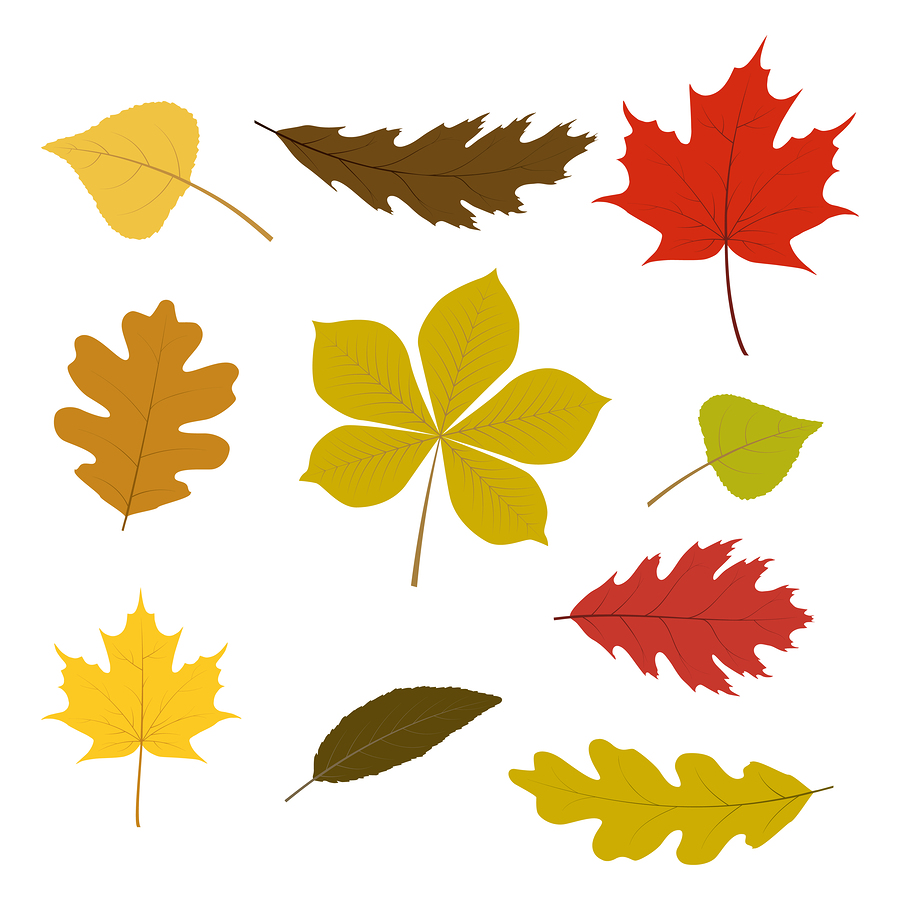
As the leaves fall, you can use the online TreeFinder to identify the tree species they are from. And of course you can find many uses for colorful leaves, and leaf-themed designs, in our Hobbies and Crafts Reference Center.

Don’t forget to observe All Hallows Read by giving someone you love a scary book that they would like. Our new favorite for children is I Want to Be in a Scary Story. Check it out!

Other new books received this month include:
The Woman Who Smashed Codes: A True Story of Love, Spies, and the Unlikely Heroine Who Outwitted America’s Enemies, by Jason Fagone.
George and Lizzie by Nancy Pearl, the acclaimed debut novel by NPR books commentator.
The Hate U Give by Angie Thomas, a young adult novel of which Kirkus Reviews says: “This story is necessary. This story is important.”
Sleeping Beauties, another novel with topical overtones, from horror master Steven King and his son Owen King.

Meet Your Library Staff
There is no better illustration of talent hiding behind a job description than Library Director Nicole Treesh. (That’s her on the left)

What do you do at the Library?
I have been the Library Director for almost a year.  The synopsis of what I do is oversee the Fort Wayne, Wabash, and now Warsaw library services, resources, and staff while supporting the mission and goals of the College particularly related to student success.  I can’t do what I do without the amazing staff on my team.  I represent the library on several committees and consortia including the Statewide Library Director’s Committee, our Regional Academic Affairs Team, and the Regional Extended Cabinet.
I develop, manage, and evaluate the library budgets, the library collections, and our online resources.  My brain is always working, thinking, and learning about trends in information technology, library services, and community college completion and retention.  I’m always striving to tell the story of the library and our mission to serve the students, faculty, and staff in more ways than just offering books and resources.

How did you gain your expertise?
I have a BS in Counseling and worked several years in community mental health organizations.  My passion for wanting to help people overcome adversity and obtain their goals in life started when I was in elementary school.  I’ve also always loved libraries, books, and technology.  I got a part time job at a library and quickly realized that my passions for helping people and information technology go hand in hand.  I decided to get my MLS and started pursuing full time library jobs.  I spent a couple years working in secondary schools in both IT, media centers, and as a Computer Programming Teacher.  My first MLS job was as a librarian here at Ivy Tech!  Soon after I started, the library director resigned and I became interim director until hired officially in November 2016.  My library career path isn’t traditional and certainly moved rapidly, but I couldn’t be happier or feel more blessed.

What is unique about you that could be of service to the Ivy Tech Community?
I believe that my background in mental health is invaluable, but also my personal experience with mental illness particularly as it relates to suicide prevention and awareness having lost my dad to suicide when I was just 17.  I’m compassionate and empathetic, can relate to the struggles of many of our students, and have the strength to move mountains for our students to succeed.

What is your favorite thing to do outside the Library?
I should say reading, right?  But truthfully, I’m a Netflix addict.  I love gardening, spending time with my husband, my kitty Maggie, and family.  I also dance obnoxiously to Kelly Clarkson 24/7 who I’ve seen 4 times in concert.

What books would you recommend to readers?
The Watersong series by Amanda Hocking who is a terrific YA author, I also have loved anything by Jandy Nelson, Jodi Picoult, or Ellen DeGeneres who is my favorite person/philanthropist.

What website do you recommend just for fun?
Everyone needs a goodreads.com account!

Changing Hours

Our Saturday hours are changing! On September 30th, we will begin opening at 9:00 a.m. and stay open until 1:45 p.m.

We have several new displays. A selection of books relevant to Hispanic Heritage Month are laid out near our north door for you to browse. They include Sonia Sotomayor’s best-selling My Beloved World.  You can check these out, too, right off the table!

Banned Books Week is September 25th -30th this year. We will have shelves of these dangerous items available for you to check out – they are part of our collections.

On our bulletin board outside our south door we are showcasing resources for courses in the School of Business, Logistics & Supply Chain. Did you know we have a dedicated Business Plan Pro workstation in the Library? Plus dozens of recent eBooks and hundreds of specialized articles.

While preparing this display I was temporarily captivated by logistics because there are so many recent innovations in this field. We’ve all heard of GPS but have you used an IPS – indoor positioning system? They are used in malls and other large spaces with many rooms. Each room or area has a transmitter using Bluetooth, WiFi or other medium; and with an app you can be directed to that specific place within the building. Wouldn’t an IPS have made those first days of classes much easier?

I recently read an article by the CMO of What3Words, a company that is providing addresses for the entire world. (Giles Rhys Jones, “Human Friendly Coordinates.” Geoinformatics, vol. 18, no. 5, 2016, pp. 10-12.) What3Words mapped the entire earth into 3-meter squares and assigned each a three-word address. Humans tend to mix up numbers – especially the long ones used by GPS systems – but research shows we can recall three random words. (They are indeed random with no connection to the purpose or neighborhood of the space so tagged.) The words are translated into local languages worldwide. This system has revolutionized humanitarian aid delivery and is allowing civil, legal, and financial services to reach communities that have been underserved. The What3Words app is free for iOS or Android, and the system now has many partners.

See you at dusty.puzzle.ritual!

Welcome to Fall Semester at Ivy Tech Northeast!

Over the summer we made some changes to our library website in order to serve you better

Let us know what you think!

From our homepage, when you click on the Articles link in the left navigation panel, you will now find the databases grouped by subject.

We have maintained the A-Z List which is alphabetical by title.

Instructors: We have changed a few of our database subscriptions, so please check on the resources available for your assignments. We encourage the use of Guides to point students to appropriate resources, whether databases, websites, or whatever. A Librarian will be delighted to set one up for your courses and sections. These can be linked to your IvyLearn course site too.

Requesting library instruction for your class is quicker and easier. Use the Schedule Instruction link on the left navigation panel and fill out the form, which is so self-explanatory that faculty are already using it. (A detailed mailing on this new system is being distributed.)

Students: Reserving the study rooms is now Self-Service! Use the Reserve Rooms link on the left navigation panel of the Library Home page. You can do this remotely on any device, or come in and use the kiosk at the front desk where our friendly staff will show you how.

Everyone: Check out our new Apps for College guide, which has collected the best mobile device apps especially useful to students and teachers.

Come on in and peruse our book display this month, which relates to the solar eclipse. You can check these books out, along with #1 NY Times Bestseller, Astrophysics for People in a Hurry by the always-entertaining Neil de Grasse Tyson in our Baker & Taylor collection.

It’s not necessary to memorize all the numbers he throws around to understand the principles he explains. You will feel smarter just carrying this around!

New books we have received:

Behold the Dreamers “A compulsively readable debut novel about marriage, immigration, class, race, and the trapdoors in the American Dream—the unforgettable story of a young Cameroonian couple making a new life in New York just as the Great Recession upends the economy”
New York Times Bestseller – Winner of the PEN/Faulkner Award – Longlisted for the PEN/Open Book Award – An ALA Notable Book

Wild Things: The Joy of Reading Children’s Literature as an Adult “An irresistible, nostalgic, insightful—and totally original—ramble through classic children’s literature from Vanity Fair contributing editor (and father) Bruce Handy.”

The Driver “From the creator of the TV show Bones comes a ‘riveting, smart and funny’ (Harlan Coben) debut thriller. ‘Everything a great thriller should be—always smart, often funny, and relentlessly exciting. I loved every page.’ (Scott Turow)”

Coming soon:

The Burning Girl “A bracing, hypnotic coming-of-age story about the bond of best friends, from the New York Times best-selling author of The Emperor’s Children.”

Stay with Me “This celebrated, unforgettable first novel, shortlisted for the prestigious Bailey’s Prize and set in Nigeria, gives voice to both husband and wife as they tell the story of their marriage—and the forces that threaten to tear it apart.”

You can place holds on these books if they are not available using your IvyTech library account.

Best wishes to everyone for a successful semester!

In the steamy days of late summer, think of STEAM … and Steampunk

Ivy Tech takes another interim break in August, just before kids return to school. When the weather is hot and stormy, is a great time to indulge in crafting and hobbies.

Research shows these activities are good for your brain:
“Having at least one persistent and intellectually stimulating hobby is a better predictor of career success in any discipline than IQ, standardized test scores, or grades.”1
“Nobel laureates were: twenty-five times as likely as an average scientist to sing, dance, or act; seventeen times as likely to be an artist; twelve times more likely to write poetry and literature; eight times more likely to do woodworking or some other craft; four times as likely to be a musician; and twice as likely to be a photographer.”2

Educators know that the arts are a crucial addition to math, science, engineering and technology training. The non-linear problem-solving techniques, and creative flow, exercised in artistic endeavors stimulate innovation.

Crochet and knitting are used by mathematicians to demonstrate hyperbolic surfaces. Dr. Daina Taimina, visiting professor at Cornell University, was one of the pioneers in demonstrating hyperbolic crochet. Dr. Sarah-Marie Belcastro at Smith College and Dr. Carolyn Yackel at Mercer University publish on mathematical knitting. Dr. Maryam Mirzakhani, the Fields Medal winner who died of cancer July 14th, also worked on complex surfaces by “doodling” on large sheets of paper, writing the mathematical formulas in the margins.3

Margaret Wertheim explains the math of coral reefs using crocheted models from Dr. Taimina in a TED talk.

To get your creativity flowing, we have books to check out and page through on our DIY shelf in the Creative Commons. These are for all ages, and there are more crafting books in our children’s section.

We have access to the Hobbies and Crafts Reference Center as part of our databases subscription. This is an excellent resource for techniques tutorials and designs, linking to how-to instructions and creative ideas with full text and illustrations from periodicals and books. It is organized into broad categories you can browse: Arts & Crafts, Collecting, Home & Garden, Indoor Recreation [games], Kids’ Crafts, Model Building, Needlecrafts & Textiles, Outdoor Recreation, Performing Arts, Science & Technology, Scrapbooking & Paper Crafts. A keyword search will pull up periodicals and books on “cake decoration” and other such specific activities within these. Or, you can do a keyword search across all categories for style topics, like Cosplay or Steampunk. Both are well covered here, from clothing to cakes to household furnishings.

1 Milgram, R., and Hong, E. (1997). “Out-of-school activities in gifted adolescents as a predictor of vocational choice and work.” Journal Of Secondary Gifted Education 8/3:111. Quoted in Colegrove, T. (2017). “Editorial Board Thoughts: Arts into Science, Technology, Engineering, and Mathematics – STEAM, Creative Abrasion, and the Opportunity in Libraries Today,” Information Technology and Libraries, 36/1:7. https://doi.org/10.6017/ital.v36i1.9733

2 Root-Bernstein, et al. (2008). “Arts Foster Scientific Success: Avocations of Nobel, National Academy, Royal Society, and Sigma Xi Members.” Journal of Psychology of Science and Technology https://doi.org/10.1891/1939-7054.1.2.51; quoted in Colegrove 2017.

3 http://news.stanford.edu/2017/07/15/maryam-mirzakhani-stanford-mathematician-and-fields-medal-winner-dies/

Visualize Data

Data visualization is a hot topic in education and research as well as business. We are all swimming in data these days, but the information in that data simply won’t be evident without good visualization techniques, as David McCandless demonstrates in his full TED talk from our Films on Demand collection.

Visualization is a kind of answer, and thus derives from the quality of the questions asked of data, and the quality of the data itself. Columbia University professor Kaiser Fung provides clear explanations of data visualization principles on his blog, Junk Charts.

Explore these inspiring examples: Hans Rosling was a physician who developed brilliant data visualizations to campaign for world health initiatives. Rosling’s best TED Talks are now in a playlist. Edward Tufte is Professor Emeritus of political science, statistics, and computer science at Princeton and a pioneer in making data understandable. On his website are examples of his work and links to some of his essays on visualization, including his famous rants about bad use of PowerPoint.

There are well-known pitfalls to presenting data in graphic format. The website wtf-viz  (also wtf-viz on Tumblr) collects bad graphs of all kinds, crowd-sourced. These include network, flowchart, and block diagrams gone awry, along with poor quantitative representations. The archive is searchable by hashtag (#pie charts) or you can browse thumbnails in the archive by month. There are some great examples here for classroom discussion!

On her blog Storytelling with Data Cole Nussbaumer Knaflic, a former financial risk assessor, shares best practices for presenting and explaining business data. She not only reveals tips for manipulating Excel charts, but also how to lay out data in presentations (not on a single page or slide, usually). Knaflic’s collected blog posts are published in an eponymous book available in our Ebook Central Collection.

We also have manuals and cookbooks for popular programs used to visualize data, from small sets to Hadoop. In IvyCat, do a keyword search for “data visualization” as a phrase, or search the subject “information visualization – computer programs,” to bring up a list. Most of these are eBooks.

The programs discussed include Google Sheets and MicroSoft Excel, which are available to all IvyTech students, faculty, and staff. The program R is free ; and NodeXL is a free social network analysis add-in for Excel.  Many of these are just applications using HTML. D3.js is free and open source. Google Charts allows users to plug in their own data to generate and customize charts, plots, and maps of all kinds for websites.

(Please note, the author, the Library, and Ivy Tech are not responsible for user experiences, and Ivy Tech does not allow the installation of software on college computers without authorization.)

Happy Birthday USA!

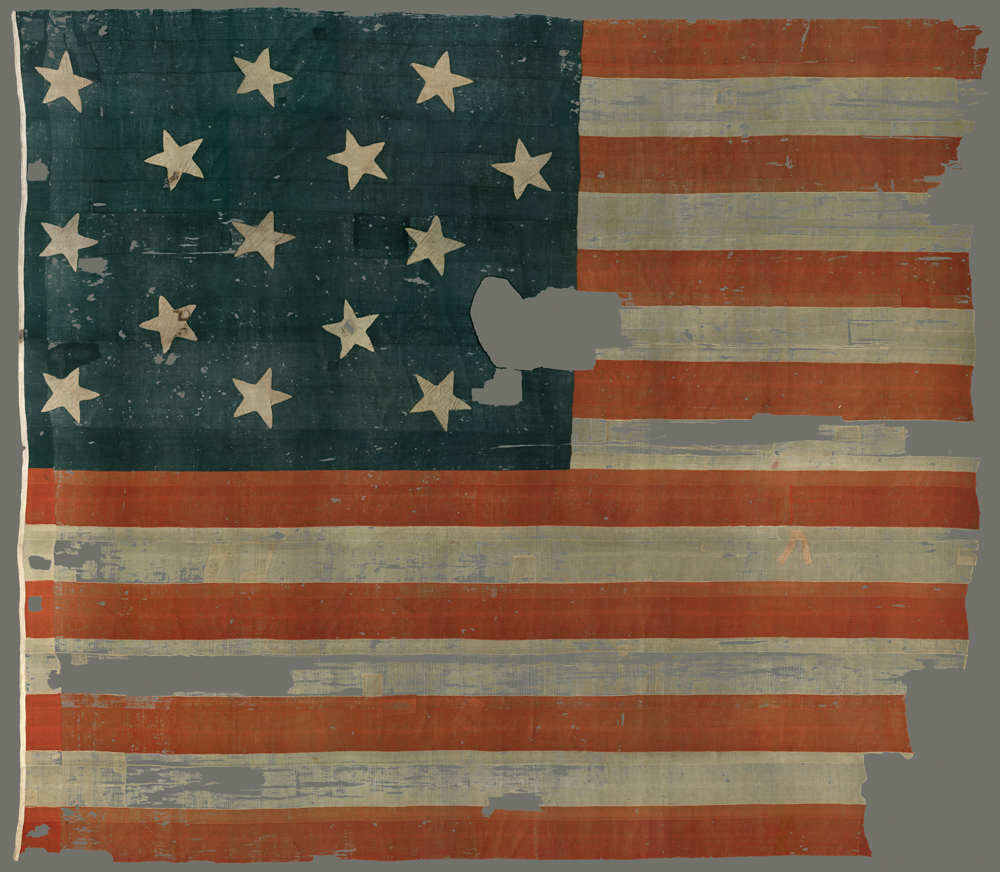
The flag that inspired “The Star-Spangled Banner” (image from the Smithsonian Institution


While fireworks explode as we celebrate the Fourth of July, you can get a blast from the past with these great historical resources! Who isn’t moved by examining Thomas Jefferson’s handwritten draft of the Declaration of Independence, or reading manuscript letters of George Washington, or the reports of eyewitnesses to battles in the Revolution?
The Coming of the American Revolution is a freely accessible, online gallery from the Massachusetts Historical Society containing digitized primary source documents like broadsides and newspaper announcements of meetings of the Sons of Liberty. Documents are presented with extensive scholarly notes and resources for teachers and students. It is clearly organized and offers multiple searching options.
Examine three early versions of the Declaration of Independence in the online gallery of the American Philosophical Society in Philadelphia. The first is Jefferson’s draft, which he sent to a friend before submitting it to the Continental Congress on July 1st, 1776.
Examine correspondence between members of the Continental Congress, digitized by The New York Public Library’s Early American Manuscripts Project. These collections include hand-written letters cross-indexed by names and topics. Keyword searching will find these tags.
Read transcribed accounts of battles from eyewitnesses and soldiers’ diaries of life in the Continental Army in the database American History Online accessible through the Ivy Tech Northeast Library home page. Find it in the A-Z list of databases. From the American History Home page, under “Browse Resources” choose “Primary Sources,” then under “Filter Primary Sources” choose “American Revolution” to see an index of transcriptions. This database also has maps of major battles in the War of Independence. From the Home page, under “Browse Resources” choose “Maps and Charts”, then under “Filter Maps and Charts” choose “American Revolution.”
What was life like in the Federal period after the Revolution? Check out the open database Chronicling America: Historic American Newspapers. Papers from 1789-1924 are keyword-searchable. 1876 was the centennial year of the United States. To see newspaper articles about the celebrations, do an advanced searchof all states for the phrase centennial anniversary or centennial celebration. Choose the date range 1870-1880 for articles about the preparation and aftermath. This is an ongoing project of the National Endowment for the Humanities, coordinated by the Library of Congress. Content is being contributed by local institutions, digitized in a format suitable for keyword searching. This site also provides a directory of newspapers from 1690-present, showing library holdings; this is the expected range of coverage upon completion.
Are you decorating your house for the holiday? Symbols of the United States is a Primary Source Set from the Library of Congress, written for elementary schools but fun for all. View digitized original sources and read the history of the Liberty Bell, our flag, the bald eagle, Uncle Sam, the Star Spangled Banner, and the Statue of Liberty. This set includes a Teachers’ plan, a student guide, and a free ebook for iOS devices.

Summer Reading

person reading under tree with dog sleeping at side

Summer term is shorter than Fall and Spring, and classes can be intense! We are all grateful for the breaks between semesters. This is the perfect time to read a book just for fun – no citations, annotations, or discussion post required! I asked our staff for reading recommendations, suggesting a classic and a recently published book.

Elizabeth Metz (Librarian): I just finished Norse Mythology by Neil Gaiman, it was excellent (but then I’m biased towards his works!). It is available to borrow in our Baker & Taylor collection. My second book, it’s not a classic per se, but it’s one of my all-time favorites: The Hitchhiker’s Guide to the Galaxy by Douglas Adams. This is available in our Fiction collection.

Elina Puckett (evening librarian): Summer is not exactly the time to think about cold and ice, yet two books – The Way of the Iceman by Wim Hof and What Doesn’t Kill Us on cold training may significantly improve your summer by teaching you how to “dramatically enhance energy levels, improve circulation, reduce stress, boost the immune system, strengthen the body and successfully combat many disease.”

Ann Spinney (afternoon librarian): A classic summer book for me is Ulysses by James Joyce, a story about a man going about his day on June 16th, 1904 worrying about his wife’s infidelity. Obviously, this is not a book for kids! Joyce was an accomplished singer and the book is full of the sounds of Dublin in summer; it is a wonderful book to read aloud. It is based on the classical story of Ulysses the mariner, with events that are parallel: for example, the Cyclops monster of the original is a racist man holding forth in a pub in Joyce’s retelling. The book is available to borrow in our fiction collection.
A new book I am recommending is Taduno’s Song by Odafe Otogun. It also is based on a classical story, the myth of Orpheus the musician who tries to rescue his wife from Hades. Otogun’s retelling is based in modern Nigeria. His writing sparkles with the precision of poetry. I could not put this book down and read it twice over, it is so enchanting, sad, and beautiful. We have it available to borrow in our Baker & Taylor collection.

Carol Gibbs (library assistant/ILL): Carol recommended a series of fiction books by Sarah Addison Allen, all set in rural North Carolina and centering around family mysteries. Several are available in our fiction collection.

Diana Dudley (library assistant): Diana submitted a long list, so feel free to ask her for more recommendations! She included The Three Musketeers by Alexandre Dumas as her classic read; and City of Light, City of Poison: Murder, Magic, and the First Police Chief of Paris by Holly Tucker, which is a new nonfiction book available to borrow in our Baker & Taylor collection.

Jean Adkins (library assistant): My classic favorite is The Hobbit by J.R.R. Tolkien (in our fiction collection) and a new book that I enjoyed is Ghosts of War by Brad Taylor (in our Baker & Taylor collection).

National Bicycle Month

May is National Bicycle Month, with several events observed in Fort Wayne, including National Bike to Work Day and the Ride of Silence honoring those killed and injured while bicycling.

Bicycle safety awareness is emphasized during this month. Have you heard of the Dutch Reach?

Government agencies provide excellent resources for bicycle safety. At the sites listed, you can find best practices for cyclists and motorists, initiatives to make bicycling safer, tools for educating children in bike safety, and statistics on injuries.

National Highway Traffic Safety Administration https://www.nhtsa.gov/road-safety/bicyclists
Federal Highway Administration https://safety.fhwa.dot.gov/ped_bike/
Centers for Disease Control and Prevention https://www.cdc.gov/motorvehiclesafety/bicycle/
The Medline database is a great resource for any public safety topic. Medline uses Medical Subject Headings (MeSH) for targeted searching. The Ivy Tech Library provides a user-friendly interface: find Medline (EBSCO) in our A-Z List. When you enter your search term bicycle safety also select suggest subject terms. This shows you the correct terms to use, how the topic relates to other topics, and allows you to target statistics, trends, injuries and other data sets.

Congratulations – now get a job!

Spring Semester is over! You did it!! Graduates may be wondering about job prospects in your field, whether to transfer to a Bachelor program, or go to work with your Associates degree. If you’re not graduating, you may be considering or re-considering your major.

A resource from our library gives you access to industry growth predictions – by state – drawn from the latest government data in an easy-to-read format. I looked at automotive repair. With only 266 automotive repair shops, Alaska could use some good mechanics!

From our A-Z listof databases, select Business Source Complete. The easiest way to search is to put in the NAICS number for your industry, which can be found with an easy keyword search at: https://www.census.gov/eos/www/naics/index.html

In the Business Source Complete search window, enter Barnes Reports in the first box. Then scroll down to Limit your results. Choose Industry Profile, then enter the six-digit NAICS Industry Code. For automotive repair it is 811111. Click the Search button at the bottom of the page, and a list of results will be generated. Choose the 2017 Industry and Market Outlook. This Barnes Report document reports the number of employers and employees nationwide and by state, and gives predictions of industry growth.

Have a job offer from a company? See if there is a SWOT analysis (strengths, weaknesses, opportunities, threats) of it in Business Source Complete by entering the company name in the top search box, scrolling down to Limit your results and under Publication Type selecting SWOT Analysis. I tried Frontier Communications, a local employer.

The future’s so bright, you gotta wear shades! 

STUDY AND WRITING HELPS

As everyone gears up for final papers and exams, here are some helpful tools for studying and writing. Remember we will have free snacks in the library during finals week, and therapy dogs in the mornings to boost your oxytocin.
Flashcards are a proven study aid that work best when presented randomly. This is hard to do yourself, so try one of these apps that let you create your own deck or use already created decks. For IOS or Android phones, try Quizlet. You can use Quizlet from a browser (laptop/desktop) as well. For iPhones, Tinycards is an award-winning flashcard app.
Plagiarism is a serious academic offense, so check your papers and reports before handing them in. Two of the best free tools you can use are: Dupli Checker which allows you to copy and paste in 1000-word passages of text; and Plagiarism Checker which allows you to search two phrases of text at a time from different parts of your document. It only works with the Google Chrome browser. These tools do not require uploading files or any particular format – just copy and paste your text passages. Your professor may have turned on a plagiarism checker in Blackboard, so look for this when you are about to upload your paper.
The library offers links to a citation creator called Noodletools that creates both in-text citations and sources lists in MLA, APA, and Chicago styles. It can be easier to use than MSWord’s built-in citation tool. Access Noodletools from the Library home page http://library.ivytech.edu/northeast You must create a free account with username and password, and then you can add sources directly from search results in the library databases! Even better, it offers a browser plug-in called “Archive This” that allows you to keep your sources organized for quick reference. It also has a smartphone app that will generate citations by scanning the ISBN on a book jacket with your phone camera!! It’s easiest if you set up your project first before using the App. When you create a sources list, choose your style (MLA, APA, Chicago) and ADVANCED which includes almost any source type: books, journals, websites, emails …
We wish everyone GOOD LUCK and remind you we are here to answer your questions!