Category Archives: School of Arts, Sciences & Education

Communication and Phonics

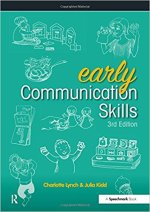
Early Communication Skills
51fprnikxwl-_sx351_bo1204203200_By Charlotte Lynch and Julia Kidd
Call Number: LB1140.5.L3 L96 2016
View in IvyCat

Early Communication Skills has been a popular and widely used publication since becoming available in 1991. Now in its third edition, the resource retains its original approach to communication, providing a source of fresh educational and therapeutic ideas for pre-school children. This accessible resource contains ideas for a six-session programe that could be delivered in support and training, and is ideal for educators and parents as well as Speech and Language Therapists working with Early Years.

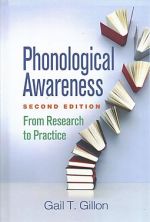
Phonological Awareness: From Research to Practice
largeBy Gail T. Gillon
Call Number: LB1573.3 .G48 2018
View in IvyCat

Translating cutting-edge research into practical recommendations for assessment and instruction, this book has helped thousands of readers understand the key role of phonological awareness in the development of reading, writing, and spelling. It clearly shows how children’s knowledge about the sound structure of spoken language contributes to literacy acquisition. Evidence-based strategies are described for enhancing all learners’ phonological awareness and effectively supporting those who are struggling (ages 3-17). The book discusses ways to tailor instruction and intervention for a broad range of students, including English language learners (ELLs) and those with reading or language disorders. Subject Areas/Key Words: phonological awareness, phonological skills, phonemic awareness, phonemes, phonology, phonics, spoken language impairments, oral language, written language, reading development, early literacy development, oracy, speaking, teaching, assessments, interventions, instructional approaches, speech-language pathologists, speech-language pathology, special education, struggling learners, speech problems, speech disorders, learning disabilities, learning disorders, specific language impairments, dyslexia, reading disorders, spelling development, English language learners, at-risk students, speech-language therapists, early childhood education, preschoolers; English as a second language; second-language acquisition; learning multiple languages; metalinguistics; sounds.
Teaching Children

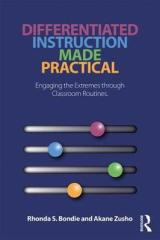
Differentiated Instruction Made Practical

9780815370819By Rhonda Bondie and Akane Zusho
Call Number: LB1031 .B67 2018
View in IvyCat

Need to decide when, why, and how to differentiate instruction in the classroom? Differentiated Instruction Made Practical introduces teachers to All Learners Learning Every Day (ALL-ED), an easy-to-use framework that enables tailored instruction for every learner. These unique, self-regulated learning routines were developed by an experienced K-12 teacher and researcher in collaboration with an educational psychology scholar. Filled with useful classroom examples, evaluation procedures, self-reflection activities, and relevant background information, this essential guide will help classroom teachers think on their feet and promote success for all students-not just the middle of the pack.

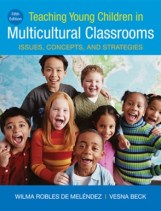
Teaching Young Children in Multicultural Classrooms

productresizehandlerBy Wilma Robles de Meléndez and Vesna Beck
Call Number: LC1099.3 .D4 2019
View in IvyCat

This in-depth exploration discusses the need for addressing diversity and multicultural realities in the classroom. It prepares you with the necessary knowledge, skills, and strategies to create a developmentally appropriate, respectful, and culturally responsive classroom and teaching environment. You’ll find practical information, ideas, and strategies that you can apply to classroom practice for young children. There are guidelines on how to create relationships between the school, community, and family as essential partners that influence a child’s success. Questions about how to deal with a bilingual child, a child with exceptionalities, and non-traditional parents are also addressed. Finally, you’ll learn the benefits of teaching multiculturalism from a global perspective.

Teaching STEM

STEM Lesson Essentials, Grades 3-8: Integrating Science, Technology, Engineering, and Mathematics

51UXAvjUGTL._SX393_BO1,204,203,200_By Jo Anne Vasquez, Cary Sneider and Michael Comer
Call Number: LB1585.3 .V38 2013
View in IvyCat

Want to know how to implement authentic STEM teaching and learning into your classroom? STEM Lesson Essentials provides all the tools and strategies you’ll need to design integrated, interdisciplinary STEM lessons and units that are relevant and exciting to your students. With clear definitions of both STEM and STEM literacy, the authors argue that STEM in itself is not a curriculum, but rather a way of organizing and delivering instruction by weaving the four disciplines together in intentional ways. Rather than adding two new subjects to the curriculum, the engineering and technology practices can instead be blended into existing math and science lessons in ways that engage students and help them master 21st century skills.

Engineering in Elementary STEM Education: Curriculum Design, Instruction, Learning, and Assessment

9780807776711By Christine M. Cunningham
Call Number: LB1585.3 .C86 2018
View in IvyCat

Bolstered by new standards and new initiatives to promote STEM education, engineering is making its way into the school curriculum. This comprehensive introduction will help elementary educators integrate engineering into their classroom, school, or district in age-appropriate, inclusive, and engaging ways. Building on the work of a Museum of Science team that has spent 15 years developing elementary engineering curricula, this book outlines how engineering can be integrated into a broader STEM curriculum, details its pedagogical benefits to students, and includes classroom examples to help educators tailor instruction to engage diverse students.

New College Success Materials

Here are some new books with tips for studying, learning, and overall success in college!

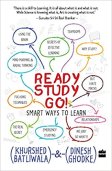
Ready Study Go! Smart Ways to Learn

51oolq0fskl-_sx324_bo1204203200_By Khurshed Batliwala and Dinesh Ghodke
Call Number: BF201 .B38 2016
View in IvyCat

Can studying really be interesting and enjoyable? This book explores attitudes towards studying and offers tips and techniques to turn studying into an interesting, enjoyable activity instead of the dull drudgery that it is for most people.

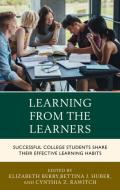
Learning from the Learners

9781442278615Edited by Elizabeth Berry, Bettina J. Huber, and Cynthia Z. Rawitch
Call Number: LB2395 .L385 2018
View in IvyCat

This book turns the traditional approach to student success on its head by examining the learning habits of successful students based on what they have told us about their learning strategies, on what they do to succeed in college, and on the teaching practices they think best foster their learning. This approach is in stark contrast to most recent studies of learning at the college level which focus on what students need to do to succeed, but are written from the point of view of “experts” who provide advice to struggling students.

The Student Leadership Challenge

51kf0zr8til-_sx331_bo1204203200_By James Kouzes and Barry Posner
Call Number: LB2346 .K68 2018
View in IvyCat

The Student Leadership Challenge tailors one of the world’s most respected leadership models to students’ unique needs, and provides a proven pathway to success. Based on The Five Practices of Exemplary Leadership, this book merges solid research with personal stories from real-world student leaders to help students develop the critical skills they need to lead both now and after graduation. Useful from high school to graduate school and beyond, these lessons are reinforced by reflective and critical thinking activities to help students internalize important concepts while honestly assessing their own practices. Updated and expanded, this new third edition includes four extra chapters to allow deeper investigation, while broader, deeper, and more vivid examples from real-life students illustrate what student leadership looks like around the world. New discussion delves into the research behind the model, as well as the usefulness of leadership in the transition to post-graduate life.

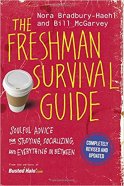
The Freshman Survival Guide

51tolddsezl-_sx329_bo1204203200_By Nora Bradbury-Haehl and Bill McGarvey
Call Number: LB2343.32 .F74 2016
View in IvyCat

In the four years since its initial publication, The Freshman Survival Guide has helped thousands of first year students make a successful transition to college life. However, much has changed on campuses. The explosion of technology, ubiquity of social media, and culture changes have all added new layers of complexity to the leap from high school to college. This updated edition features new research and advice on issues such as mental health, sexual assault, and finding balance. It also features expanded sections on dating, money management, and an increased focus on how the over 1.5 million incoming freshman can prepare themselves for the biggest change they’ve encountered in their lives: heading off to college.

The Secrets of College Success

51euvhzinul-_sx327_bo1204203200_By Lynn F. Jacobs and Jeremy S. Hyman
Call Number: LB2343.32 .J35 2013
View in IvyCat

The Secrets of College Success combines easy-to-follow tips that really work with insider information that few professors are willing to reveal. The over 800 tips in this book will show you how to: Pick courses and choose a major; manage your time and develop college-level study skills; get on top of the core requirements; get good grades and avoid stress; interact effectively with the professor; match college and career, and more. New to this second edition are tips for: online courses and MOOCs; community colleges, engineering schools, and arts and design colleges; r-readers, tablets, and laptops; taking out student loans and paying them off, and more.

New Children’s Books for April


Note: Caldecott Honor Book Crown: An Ode to the Fresh Cut is on our purchase list, but is currently sold out in most places. It will be added to our collection when it becomes available.

Wolf in the Snow by Matthew Cordell

2018 Caldecott Medal Winner
Call Number: PIC COR
View in IvyCat

When a wolf cub and little girl are lost in a snowstorm they must find their way home.

A Different Pond by Bao Phi, illustrated by Thi Bui

2018 Caldecott Honor Book
Call Number: PIC PHI
View in IvyCat

As a young boy, Bao Phi awoke early, hours before his father’s long workday began, to fish on the shores of a small pond in Minneapolis. Unlike many other anglers, Bao and his father fished for food, not recreation. Between hope-filled casts, Bao’s father told him about a different pond in their homeland of Vietnam.

Big Cat, Little Cat by Elisha Cooper

2018 Caldecott Honor Book
Call Number: PIC COO
View in IvyCat

There was a cat
who lived alone.
Until the day
a new cat came . . .

And so a story of friendship begins, following the two cats through their days, months, and years until one day, the older cat has to go. And he doesn’t come back. This is a poignant story, told in measured text and bold black-and-white illustrations about the act of moving on.

Grand Canyon by Jason Chin

2018 Caldecott Honor Book
Call Number: F 788 .C485 2017
View in IvyCat

A river winds through the landscape, eroding the rock for millions of years, shaping a cavity in the ground 277 miles long, as much as 18 miles wide, and more than a mile deep known as … Grand Canyon. Home to an astonishing variety of plants and animals that live within its walls, Grand Canyon is much more than just a hole in the ground. Follow a father and daughter as they make their way through this wondrous place, discovering life both present and past. Weave in and out of time as perfectly placed die cuts show how a fossil today was a living creature millions of years ago, often in a completely different environment.

Rhyme Crime by John Burgerman

Call Number: PIC BUR
View in IvyCat

In this buoyant rhyming romp, words have gone mysteriously missing: Who stole Marlow’s happy smile, and replaced it with a crocodile? Who swiped Dingle’s sneeze–aaaaachooo!–and left a stinky cheese? The thief took Tumble’s orange, and switched it with a . . . with a . . . Hey, does anything rhyme with orange? No? Aha! Could this be the rhyming robber’s undoing? Guided by bright, clever artwork, kids are empowered to put the final clues together for themselves to solve this silly rhyme crime, then guess at the name-nabber’s next sneaky move.

The Tiptoeing Tiger by Philippa Leathers

Call Number: PIC LEA
View in IvyCat

Everyone knows that tigers are sleek, silent, and totally terrifying . . . most tigers, that is. But no one is afraid of Little Tiger. He’s just too small and clumsy to frighten anyone. Determined to prove that he is terrifying, Little Tiger sets out on tiptoe, creeping through the forest to find someone to scare. He gets yawned at and laughed at, but Little Tiger won’t give up. Is there any animal in the forest who will find him just as sleek, silent, and totally terrifying as the bigger tigers?

New Children’s Books for March


Shake the Tree by Chiara Vignocchi, Paolo Chiarinotti, and Silvia Borando; illustrations by Silvia Borando

Call Number: PIC VIG
View in IvyCat

Various animals take turns shaking a tree in search of a tasty meal. It starts with Mouse who wants a nut so she shakes the tree a little to the right, and a little to the left. But it isn’t the nut that falls from the tree, it’s Fox who thinks that Mouse looks pretty tasty! Soon a warthog and then a bear come along with similar ideas. Little readers will enjoy the just-made-it escapes and the fun shaking-action that readers can do along with this interactive picture book. Translated from the Italian.

Red Again by Barbara Lehman

Call Number: PIC LEH
View in IvyCat

When a young boy finds an abandoned book, he discovers another world just as real as his own.

My Pillow Keeps Moving! by Laura Gehl, illustrated by Christopher Weyant

Call Number: PIC GEH
View in IvyCat

A clever pup ends up in a cozy home, and she’ll do anything to stay there. She impersonates everything the lonely homeowner needs–a pillow, a footstool, a jacket. But in the end, being herself works best.

Many: The Diversity of Life on Earth by Nicola Davies, illustrated by Emily Sutton

Call Number: QH 541.15 .B56 D38 2017
View in IvyCat

The more we study the world around us, the more living things we discover every day. The planet is full of millions of species of plants, birds, animals, and microbes, and every single one including us is part of a big, beautiful, complicated pattern. When humans interfere with parts of the pattern, by polluting the air and oceans, taking too much from the sea, and cutting down too many forests, animals and plants begin to disappear. What sort of world would it be if it went from having many types of living things to having just one?

Three Little Monkeys by Quentin Blake, illustrated by Emma Chichester Clark

Call Number: PIC BLA
View in IvyCat

Tim, Sam, and Lulu are the mischievous and naughty three little monkeys who are told each day to be good while Hilda goes off to do her errands. And each day, Hilda returns home to find a bigger mess than the day before. These mischievous monkeys will likely never learn to behave!

New Children’s Books for February


The Bad Mood and the Stick by Lemony Snicket; Matthew Forsythe (Illustrator)

Call Number: PIC SNI
View in IvyCat

New York Times bestselling author Lemony Snicket sheds light on the way bad moods come and go. Once there was a bad mood and a stick. The stick appeared when a tree dropped it. Where did the bad mood come from? Who picked up the stick? And where is the bad mood off to now? You never know what is going to happen.

How to Find an Elephant by Kate Banks; Boris Kulikov (Illustrator)

Call Number: PIC BAN
View in IvyCat

What to do on a dull gray day? Head into the wilds and look for an elephant. You will need a pair of binoculars, a blanket, a flute, some food, a little imagination, and a lot of curiosity. Look and listen closely, because elephants can be anywhere. And watch out, because if you’re not careful, the elephant may find you first! With pleasing prose and “now you see it, now you don’t” artwork, Kate Banks and Boris Kulikov’s How to Find an Elephant takes readers on a spirited romp that will both challenge and delight.

Before She Was Harriet by Lesa Cline-Ransome; James E. Ransome (Illustrator)

Call Number: E444.T82 C56 2017
View in IvyCat

A lush and lyrical biography of Harriet Tubman, written in verse and illustrated by an award-winning artist. We know her today as Harriet Tubman, but in her lifetime she was called by many names. As General Tubman she was a Union spy. As Moses she led hundreds to freedom on the Underground Railroad. As Minty she was a slave whose spirit could not be broken. An evocative poem and opulent watercolors come together to honor a woman of humble origins whose courage and compassion make her larger than life.

The Littlest Train by Chris Gall

Call Number: PIC GAL
View in IvyCat

In this endearing story of a tiny toy train, the creator of the hit series Dinotrux now breathes life into more than a half-dozen trains that climb, haul, chug, zip, and zoom. In a small room, down a short flight of stairs, there lives a little toy train…about to have a BIG adventure! There’s an endless world to explore, and awe-inspiring new friends to meet. Mighty Max, Chloe Cogs, Sara Speedster, and Farley Freighter can reach all the best sights, lickety-split. But when the day is done and the sun goes down, will the littlest train find his way home? Calling all train lovers: All aboard!

Accident! by Andrea Tsurumi

Call Number: PIC TSU
View in IvyCat

When a clumsy armadillo named Lola knocks over a glass pitcher, she sets off a silly chain of events, encountering chaos wherever she goes. But accidents happen–just ask the stoat snarled in spaghetti, the airborne sheep, and the bull who has broken a whole shop’s worth of china. In the tradition of beloved books like The Dot and Beautiful Oops, this charming, hilarious debut from author-illustrator Andrea Tsurumi shows that mistakes don’t have to be the end of the world.

The Book of Joy

Lasting Happiness in a Changing World

51zclmrv8nlBy His Holiness the Dalai Lama and Archbishop Desmond Tutu, with Douglas Abrams
Call Number: BL 65 .H36 B78 2016
View in IvyCat

Two leading spiritual masters share their wisdom about living with joy even in the face of adversity, sharing personal stories and teachings about the science of profound happiness and the daily practices that anchor their emotional and spiritual lives.

TED Talks

The Official TED Guide to Public Speaking

9780544634497-usBy Chris Anderson
Call Number: PN 4129.15 .A54 2016
View in IvyCat

Since taking over TED in the early 2000s, Chris Anderson has shown how carefully crafted short talks can be the key to unlocking empathy, stirring excitement, spreading knowledge, and promoting a shared dream. Done right, a talk can electrify a room and transform an audience’s worldview. Done right, a talk is more powerful than anything in written form. This book explains how the miracle of powerful public speaking is achieved, and equips you to give it your best shot. There is no set formula; no two talks should be the same. The goal is for you to give the talk that only you can give. But don’t be intimidated. You may find it more natural than you think. Chris Anderson has worked behind the scenes with all the TED speakers who have inspired us the most, and here he shares insights from such favorites as Sir Ken Robinson, Amy Cuddy, Bill Gates, Elizabeth Gilbert, Salman Khan, Dan Gilbert, Mary Roach, Matt Ridley, and dozens more — everything from how to craft your talk’s content to how you can be most effective on stage.

The Gene

An Intimate History

51mrk4dg8ml-_sx327_bo1204203200_By Siddartha Mukherjee
Call Number: RB155 .M85 2016
View in IvyCat

The Pulitzer Prize-winning author draws on his scientific knowledge and research to describe the magisterial history of a scientific idea, the quest to decipher the master-code of instructions that makes and defines humans; that governs our form, function, and fate; and that determines the future of our children. The story of the gene begins in earnest in an obscure Augustinian abbey in Moravia in 1856 where Gregor Mendel, a monk working with pea plants, stumbles on the idea of a “unit of heredity.” It intersects with Darwin’s theory of evolution, and collides with the horrors of Nazi eugenics in the 1940s. The gene transforms postwar biology. It invades discourses concerning race and identity and provides startling answers to some of the most potent questions coursing through our political and cultural realms. It reorganizes our understanding of sexuality, gender identity, sexual orientation, temperament, choice, and free will, thus raising the most urgent questions affecting our personal realms. Above all, the story of the gene is driven by human ingenuity and obsessive minds–from Mendel and Darwin to Francis Crick, James Watson, and Rosalind Franklin to the thousands of scientists working today to understand the code of codes. Woven through the book is the story of Mukherjee’s own family and its recurring pattern of schizophrenia, a haunting reminder that the science of genetics is not confined to the laboratory but is vitally relevant to everyday lives. The moral complexity of genetics reverberates even more urgently today as we learn to “read” and “write” the human genome–unleashing the potential to change the fates and identities of our children and our children’s children.–Adapted from dust jacket.