
Category Archives: School of Public Affairs & Social Services

New Applied Science books: on Teaching STEM, Energy, and Wildfires


Teaching and learning STEM: A practical guide
1118925815By Richard M. Felder and Rebecca Brent; foreword by Barbara Oakley.
Call number: Q181 .F45 2016
View Record in IvyCat

Part of our Faculty Development Collection. The authors each have taught STEM for decades and supervised junior faculty development. Their strategies “don’t require revolutionary time-intensive changes in your teaching, but rather a gradual integration of traditional and new methods.” This book is realistic, and its insights resonate with the lived experience of teaching, particularly when discussing the different cognitive styles, learning needs, and educational backgrounds that college teachers must meet. Especially valuable are their suggestions for using technology in hybrid courses and flipped classrooms, and for assignments that develop crucial work-place skills in students: self-directed learning & problem solving, critical and creative thinking, high-performance teamwork, and communication skills.

Energy: A Human History

energy-9781501105357_lg
By Richard Rhodes.
Call number: TJ163.2 .R56 2018
View record in IvyCat.

Relevant to our Agriculture, Engineering Technology, and Homeland Security/Public Safety programs, this book is also of broader interest. It is written for a general audience but is extensively footnoted and has a 50-page bibliography; it also contains many useful diagrams and primary sources. Richard Rhodes – winner of the Pulitzer Prize and many other awards for his science writing – “highlights the successes and failures that led to each breakthrough in energy production: from animal and waterpower to the steam engine, from internal combustion to electricity and the harnessing of wind and sunlight … Each invention, each discovery, each adaptation brought further challenges in its wake … this half-forgotten knowledge can inform our way tomorrow” (publisher).

Firestorm: How wildfire will shape our future
9781610918183
By Edward Struzik.
Call number: SD421.34.N67 S77 2017
View record in IvyCat.

Relevant to our Agriculture and Homeland Security/Public Safety programs, and for argumentative writing on social issues. “Journalist Edward Struzik visits scorched earth from Alaska to Maine, and introduces the scientists, firefighters, and resource managers making the case for a radically different approach to managing wildfire in the 21st century. Wildfires can no longer be treated as avoidable events because the risk and dangers are becoming too great and costly. Struzik weaves a heart-pumping narrative of science, economics, politics, and human determination and points to the ways that we, and the wilder inhabitants of the forests around our cities and towns, might yet flourish in an age of growing megafires.” (publisher)
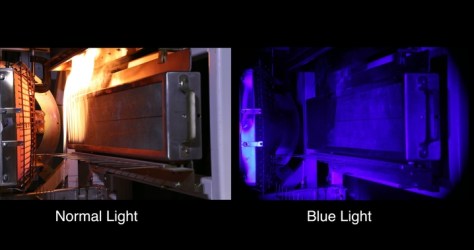
Blue Light sees through Fire

The National Institute of Standards and Technology just posted a blog about new fire science technology. Actually, it’s a new application of old science: using blue light filters to see through the distorting glare of fire, as used in glass making and other industrial processes. NIST’s blog includes a link to the open-access paper describing the experiment. Currently it is being used in materials testing, and its application in fire fighting is under consideration.

431https://www.nist.gov/news-events/news/2018/07/nist-unblinded-me-science-new-application-blue-light-sees-through-fire

Alert: National Guideline Clearinghouse taken down

The National Guideline Clearinghouse, used by many health practitioners to determine care recommendations, has lost its funding. The website goes down today, July 16th, and may or may not be replaced. Read the announcement

The NGC was an open-access database administered by the Agency for Healthcare Research and Quality, part of the U.S. Health and Human Services administration. We will watch for developments on this important resource.

National Police Week May 13-19

This week we honor our law enforcement officers and take time to remember those who have fallen in the service of protecting us and keeping the public peace. The Library of Congress legal blog this week notes the many statutes and codes that are required to carry out police work. I recently completed a library research guide for our Public Affairs and Social Services programs that includes links to relevant local, state, and federal codes. This guide also organizes the many resources we have in the library and online for criminal justice, homeland security, public safety, and legal studies.

Lexis-Nexis becomes Nexis Uni

Nexis Uni home page
We are excited to announce that Lexis-Nexis, our legal studies database, has implemented a major upgrade and changed the name of its academic service. It is now Nexis Uni. The new user screens are much easier to use; the layout is similar to our other databases. The filters and limits that you add as you are searching are now prominently displayed, and you can even save them for later searching. There are some differences in the Nexis Uni search results screen from Lexis-Nexis, but you will find the same functionalities and more. A good way to familiarize yourself with the changes is to open both Nexis Uni and Lexis Nexis and run the same search. Our access to Lexis-Nexis will be ending soon, so don’t delay!

Counseling and Social Work video collection added

XF_Counseling_4-485x459cropped

A new collection of videos in our Films on Demand subscription will be of special interest to our Human Services faculty and students. Counseling & Social Work adds 135 videos to other relevant content in the Sociology collection.
Broad topics are: Counseling approaches; Counseling skills; Diverse Clients; Professional Issues; Psychoactive Medications; Social Issues; and Social Work Practice. Integrative interventions, art therapy, and therapy animals are covered. The wide range of formats includes lecture-style explanations, demonstrations of techniques, training videos, reports, and documentaries.

Spotlight on Criminal Justice, Public Safety, and Legal Studies

IMG_3393On display this semester are our resources for Criminal Justice, Public Safety, and Legal/Paralegal Studies. The bulletin board outside the library gives a hint of what is at your fingertips: government agency reports, scholarly analyses, commentary, professional manuals, test preparation for public safety officers and firefighters, and more. We provide access to all this through specialized databases as well as streaming video collections demonstrating techniques, discussing issues, and case studies. We have hundreds of eBooks in these areas which are constantly updated. All can be accessed at any time through the library home page; just log in with your Ivy Tech credentials.

This display was created by Cassondra Graves, our talented student assistant, who graduated in December 2017 with a degree in Visual Communication. Thank you and good luck, Cassondra!

Welcome to Spring term 2018!

bigstock-Merry-Christmas-and-happy-New--211732684 copy
Yes, it is spring — in the academic calendar at least.

The Library’s mission is to help you have the most successful semester ever! We would like to extend a special invitation to Dual Credit students (and teachers) to use our resources. Research assistance is just part of what we offer:

Do you need computer access? Read more

Do you need help navigating IvyLearn or MyIvy? Our staff will guide you. We also assist with using Microsoft Word, Excel, and Powerpoint; using different browsers; email; printing and scanning documents.

Looking for a quiet place to read or study? Read more

Looking for a tutor? We host the CAE English and Math tutoring on Saturdays from 9 a.m. to 1 p.m.

Waiting for your textbooks? You can read Reserve copies in the Library. If you don’t see yours listed, use the online form in the link above to request it be added. Professors can add books to course Reserves at any time during the semester. Having a reserve copy available means all students can do the assigned readings.

We have several dozen new books on current issues. Each is shelved in the area relevant to the issue covered, but you can search the series titles in IvyCat: Thinking Critically, Issues in Society, Digital Issues, Cell Phones and Society.

We have over 150 databases that our vendors update, so instructors should check the resources and links you have used in the past. Our librarians are skilled in searching and a consultation will save you time. If we don’t have a book or article, our Inter-Library Loan clerk will request a copy you can borrow.

Have time for some recreational reading? Browse our local and national newspapers, popular magazines, or new bestseller print books. This month’s titles include poetry, mysteries, and science fiction.

Military-to-Civilian Career Transition Guide

The Essential Job Search Handbook for Service Members

51xn8inezkl-_sx331_bo1204203200_By Janet I. Farley
Call Number: HF5384 .F37 2010
View in IvyCat

This handbook provides a career transition framework for service members and their families. Readers are given exit strategies for gracefully leaving the military; charts, checklists, and worksheets for planning each transition aspect; resume and cover letter samples and strategies; and interviewing and salary negotiation tips. The author also shares advice for surviving the first month on the new job and beyond. This enhanced edition includes a chapter on how to land a federal job, tips for online networking; a directory of online transition tools; and information on employment and retraining options for disabled veterans. An essential roadmap for transitioning service members and their families, this eye-opening guide addresses the entire transition process and includes the family perspective with it.

Evicted

Poverty and Profit in the American City

41c15bznmhl-_sx315_bo1204203200_By Matthew Desmond
Call Number: HD7287.96.U6 D47 2016
View in IvyCat

The author takes us into the poorest neighborhoods of Milwaukee to tell the story of eight families on the edge. Arleen is a single mother trying to raise her two sons on the 20 dollars a month she has left after paying for their rundown apartment. Scott is a gentle nurse consumed by a heroin addiction. Lamar, a man with no legs and a neighborhood full of boys to look after, tries to work his way out of debt. Vanetta participates in a botched stickup after her hours are cut. All are spending almost everything they have on rent, and all have fallen behind. The fates of these families are in the hands of two landlords: Sherrena Tarver, a former schoolteacher turned inner-city entrepreneur, and Tobin Charney, who runs one of the worst trailer parks in Milwaukee. They loathe some of their tenants and are fond of others, but as Sherrena puts it, “Love don’t pay the bills.” She moves to evict Arleen and her boys a few days before Christmas. Even in the most desolate areas of American cities, evictions used to be rare. But today, most poor renting families are spending more than half of their income on housing, and eviction has become ordinary, especially for single mothers. In vivid, intimate prose, Desmond provides a ground-level view of one of the most urgent issues facing America today. As we see families forced into shelters, squalid apartments, or more dangerous neighborhoods, we bear witness to the human cost of America’s vast inequality– and to people’s determination and intelligence in the face of hardship. Based on years of embedded fieldwork and painstakingly gathered data, this masterful book transforms our understanding of extreme poverty and economic exploitation while providing fresh ideas for solving a devastating, uniquely American problem. Its unforgettable scenes of hope and loss remind us of the centrality of home, without which nothing else is possible.