Tag Archives: Education

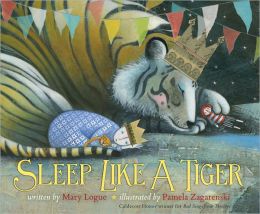
Sleep like a tiger / written by Mary Logue ; illustrated by Pamela Zagarenski

Call number: PZ7.L8288 Sl 2012

In this magical bedtime story, the lyrical narrative echoes a Runaway Bunny – like cadence: “Does everything in the world go to sleep?” the little girl asks. In sincere and imaginative dialogue between a not-at-all sleepy child and understanding parents, the little girl decides “in a cocoon of sheets, a nest of blankets,” she is ready to sleep, warm and strong, just like a tiger. The Caldecott Honor artist Pamela Zagarenski’s rich, luminous mixed-media paintings effervesce with odd, charming details that nonsleepy children could examine for hours. A rare gem. (From Google Books)

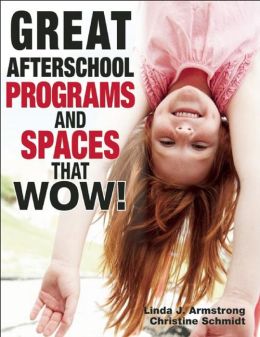
Great afterschool programs and spaces that wow!Linda J. Armstrong, Christine A. Schmidt

Call number: HQ778.6 .A76 2013


Create a high quality school-age program that is exciting, inviting, and reflects the interests, abilities, and needs of the children. Whether your program operates before or after school, on non-school days, during the summer, or overnight, you can create a dynamic environment where everyone will enjoy spending time.
This book is filled with hundreds of ideas–from setting up a quiet reading nook to tackling clutter–reflecting the authors’ years of experience and hundreds of visits to a variety of school-age programs. It takes you through all of the considerations that affect your program and then lays out a process to help you improve the three dimensions of a school-age environment.
Temporal: Establish schedules, routines, rules, and learning opportunities to meet children’s needs
Interpersonal: Facilitate the relationships and social interactions of children, staff, families, and the greater community
Physical: Create sensory-rich indoor and outdoor spaces
Does your afterschool program have the WOW factor?
Linda J. Armstrong and Christine A. Schmidt are experienced educational consultants who serve children and youth programs throughout the United States. (From Google Books)
 

From Text to Txting: New Media in the Classroom / by Paul Budra (Editor)

Call number: LB1028.3 .F77 2012
 

Literary scholars face a new and often baffling reality in the classroom: students spend more time looking at glowing screens than reading printed text. The social lives of these students take place in cyberspace instead of the student pub. Their favorite narratives exist in video games, not books. How do teachers who grew up in a different world engage these students without watering down pedagogy? Clint Burnham and Paul Budra have assembled a group of specialists in visual poetry, graphic novels, digital humanities, role-playing games, television studies, and, yes, even the middle-brow novel, to address this question. Contributors give a brief description of their subject, investigate how it confronts traditional notions of the literary, and ask what contemporary literary theory can illuminate about their text before explaining how their subject can be taught in the 21st-century classroom. (From Google Books)

Handbook of families and aging / Rosemary Blieszner and Victoria Hilkevitch Bedford, editors

Call number: HQ1061 .H3353 2012

This book is both an updated version of and a complement to the original “Handbook of Families and Aging.” The many additions include the most recent demographic changes on aging families, new theoretical formulations, innovative research methods, recent legal issues, and death and bereavement, as well as new material on the relationships themselves–sibling, partnered, and intergenerational relationships, for example. Among the brand-new topics in this edition are step-family relationships, aging families and immigration, aging families and 21st-century technology, and peripheral family ties.

Unlike the more cursory summaries found in textbooks, the essays within “Handbook of Families and Aging, Second Edition” provide thoughtful, in-depth coverage of each topic. No other book provides such a comprehensive and timely overview of theory and research on family relationships, the contexts of family life, and major turning points in late-life families. Nevertheless, the contents are written to be engaging and accessible to a broad audience, including advanced undergraduate students, graduate students, researchers, and gerontology practitioners. Serious lay readers will also find this book highly informative about contemporary family issues. (From Google Books)


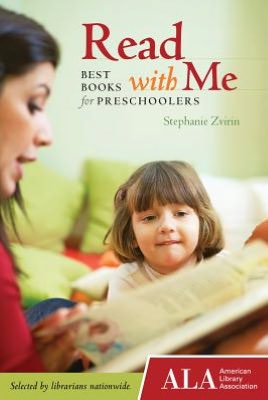
Read with me : best books for preschoolers / Stephanie Zvirin

Call Number: Z1037 .Z88 2012

There is a whirl of new books and learning products on the market every day. But what are the most enjoyable, the classic favorites, or the new, hot books that your young child will enjoy and cherish? The best source for solid picks is from those in the know: librarians who work with children and parents. This guide was developed with parents, grandparents, teachers, and day care providers in mind, to help them make wise and thoughtful purchases of books and learning materials that are enjoyable, educational, and age-appropriate.

 You will learn:

  • Where to start
  • Picture books for early learners
  • The classics
  • Reading along
  • A trip to the library can help

(From Google Books)

Teaching in the digital age : smart tools for age 3 to grade 3 / Brian Puerling ; [foreword by] Carol Copple

Call Number: LB1139.35 .C64 P84 2012

Technology is rapidly changing the ways we live our lives and interact with the world. It’s also changing how you teach. Technology can enhance your classroom’s complete curriculum and assessment and help you create and capture meaningful experiences, support inquiry, and expand your classroom’s walls. This comprehensive framework will help you select and use a variety of technology and interactive media tools in your classroom, including digital cameras, audio recorders, webcams, publication and presentation tools, and multi-touch mobile devices.

Reflecting Technology in Early Childhood Programs, the joint position statement of the National Association for the Education of Young Children and the Fred Rogers Center, Teaching in the Digital Age includes:

  • Developmentally appropriate and effective strategies to use technology to facilitate children’s learning
  • 28 links to video clips that provide a deeper look at how these practices are used in real classrooms
  • 32 forms to help you plan, reflect on, and evaluate how you use technology to help children learn

Brian Puerling, a National Board Certified Teacher, is a graduate of the Erikson Institute and the director of technology education at Catherine Cook School in Chicago. He is a former preschool teacher with Chicago Public Schools and has also worked as an early childhood teacher coach, a curriculum reviewer, and a professional development facilitator for Chicago Public Schools, Rush University Medical Center Science and Math Excellence Network, and Rochelle Lee’s Boundless Readers. Brian participated in the Erikson Early Mathematics Project, is active in the Chicago Metro AEYC, and is a member of the NAEYC Tech and Young Children Interest Forum, which works to provide early childhood educators with high quality implementation and research resources. Brian recently joined the Sesame Workshop Teacher Council, where he shares his knowledge on trends in early childhood education and technology movements to help guide the planning for future programming of their television shows. Brian was a recipient of the PBS Innovative Educator Award and PBS Teacher’s Choice Award in 2010.

(From Google Books)

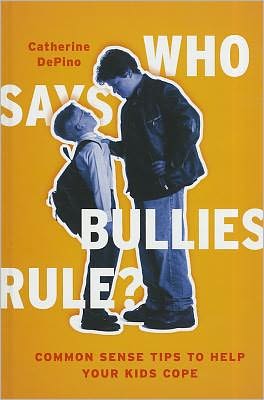
Who says bullies rule? : common sense tips to help your kids cope / Catherine DePino

Call number: LB3013.3 .D456 2011

Who Says Bullies Rule?: Common Sense Tips to Help Your Kids Cope gives parents practical bully prevention tips for their elementary and middle school children. It helps parents empower their children to stop bullying before it veers out of control and teaches parents to navigate their school systems’ channels to stop bullies from bothering their children. Additionally, the book arms parents with workable suggestions they can offer their children for dealing with different types of bullies, such as teasers, excluders, intimidators, and cyber bullies. The most important feature of Who Says Bullies Rule?, and what sets it apart from other books, is that it underscores the importance of having children use their common sense to anticipate and deal with bullies’ actions. No child should ever have to tolerate physical or mental abuse at the hands of a bully. Parents are the first line of defense against bullying. Using a conversational tone with myriad examples, Who Says Bullies Rule? shows parents what they need to do to help keep their children safe. (From Google Books)

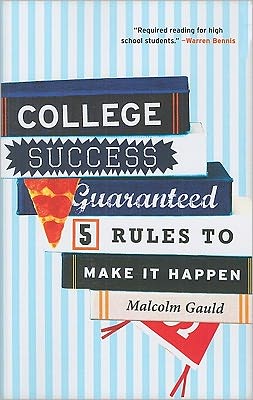
College success guaranteed : 5 rules to make it happen / Malcolm Gauld

Call number: LB2343.3 .G39 2011

 As a lifelong teacher, Malcolm Gauld has watched thousands of kids go off to college. Some return to visit after their first year exuding the vibe of conquering heroes. Others look, well, pretty bummed out. In this book, Gauld offers a plan to help the new college student complete year number 1 as a member of the first group. With anecdotes from current college students and recent graduates, Gauld presents five simple rules for college success. It is a short, non-preachy, fun, and slightly irreverent primer that can help you get off to a strong start toward the “best four years of your life. (From Barnes & Nobles)

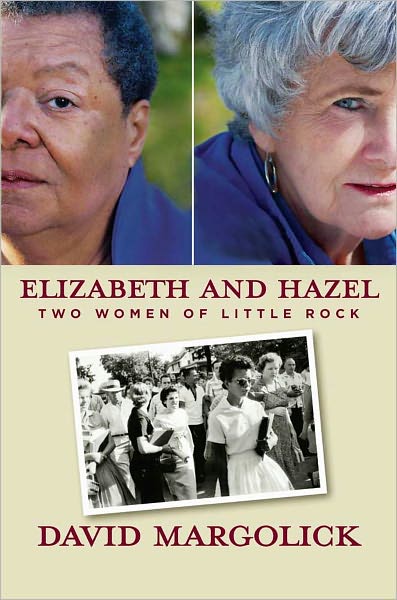
Elizabeth and Hazel : two women of Little Rock/ David Margolick

Call Number: F419.L7 M37 2011

The names Elizabeth Eckford and Hazel Bryan Massery may not be well known, but the image of them from September 1957 surely is: a black high school girl, dressed in white, walking stoically in front of Little Rock Central High School, and a white girl standing directly behind her, face twisted in hate, screaming racial epithets. This famous photograph captures the full anguish of desegregation — in Little Rock and throughout the South — and an epic moment in the civil rights movement. In this gripping book, David Margolick tells the remarkable story of two separate lives unexpectedly braided together. He explores how the haunting picture of Elizabeth and Hazel came to be taken, its significance in the wider world, and why, for the next half-century, neither woman has ever escaped from its long shadow. He recounts Elizabeth’s struggle to overcome the trauma of her hate-filled school experience, and Hazel’s long efforts to atone for a fateful, horrible mistake. The book follows the painful journey of the two as they progress from apology to forgiveness to reconciliation and, amazingly, to friendship. This friendship foundered, then collapsed — perhaps inevitably — over the same fissures and misunderstandings that continue to permeate American race relations more than half a century after the unforgettable photograph at Little Rock. And yet, as Margolick explains, a bond between Elizabeth and Hazel, silent but complex, endures–Provided by publisher.

It’s a jungle out there! : 52 nature adventures for city kids / Jennifer Ward

Call number: GV191.63 .W36 2011

Just because you live in the city doesn’t mean you can’t enjoy nature. This compact guide offers 52 nature-focused explorations, adventures, observations, and games that can help you and your child connect to nature while living in the city. While it may be hard to see nature through the traffic, buildings, and busyness of the city, there is still much of the natural world to explore when you turn your gaze to the cracks in the sidewalk, the trees on the street, or the green spaces that your city offers. Become an urban birder, make your own man vs. wild observations, and discover the not-so-hidden pockets of nature in your neighborhood. For children ages 4 to 8.(From Amazon)