Tag Archives: Social Sciences

Learning to be old : gender, culture, and aging / Margaret Cruikshank

Call number: BF724.55.A35 C78 2013
Margaret Cruikshank’s Learning to Be Old examines what it means to grow old in America today. The book questions social myths and fears about aging, sickness, and the other social roles of the elderly, the over-medicalization of many older people, and ageism. In this book, Cruikshank proposes alternatives to the ways aging is usually understood in both popular culture and mainstream gerontology. Learning to Be Old does not propose the ideas of successful aging or productive aging, but more the idea of learning how to age. Featuring new research and analysis, the third edition of Learning to be Old demonstrates, more thoroughly than the previous editions, that aging is socially constructed. Among texts on aging the book is unique in its clear focus on the differences in aging for women and men, as well as for people in different socioeconomic groups. Cruikshank is able to put aging in a broad context that not only focuses on how aging affects women but men, as well. Key updates in the third edition include changes in the health care system, changes in how long older Americans are working especially given the impact of the recession, and new material on the brain and mind-body interconnections. Cruikshank impressively challenges conventional ideas about aging in this third edition of Learning to be Old. This will be a must-read for everyone interested in new ideas surrounding aging in America today. (From Google Books)
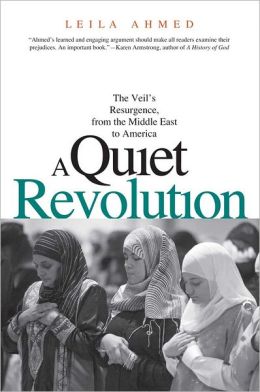
A quiet revolution : the veil’s resurgence, from the Middle East to America / Leila Ahmed

Call number: BP190.5.H44 A46 2011

In Cairo in the 1940s, Leila Ahmed was raised by a generation of women who never dressed in the veils and headscarves their mothers and grandmothers had worn. To them, these coverings seemed irrelevant to both modern life and Islamic piety. Today, however, the majority of Muslim women throughout the Islamic world again wear the veil. Why, Ahmed asks, did this change take root so swiftly, and what does this shift mean for women, Islam, and the West? When she began her study, Ahmed assumed that the veil’s return indicated a backward step for Muslim women worldwide. What she discovered, however, in the stories of British colonial officials, young Muslim feminists, Arab nationalists, pious Islamic daughters, American Muslim immigrants, violent jihadists, and peaceful Islamic activists, confounded her expectations.
Ahmed observed that Islamism, with its commitments to activism in the service of the poor and in pursuit of social justice, is the strain of Islam most easily and naturally merging with western democracies’ own tradition of activism in the cause of justice and social change. It is often Islamists, even more than secular Muslims, who are at the forefront of such contemporary activist struggles as civil rights and women’s rights. Ahmed’s surprising conclusions represent a near reversal of her thinking on this topic. Richly insightful, intricately drawn, and passionately argued, this absorbing story of the veil’s resurgence, from Egypt through Saudi Arabia and into the West, suggests a dramatically new portrait of contemporary Islam.

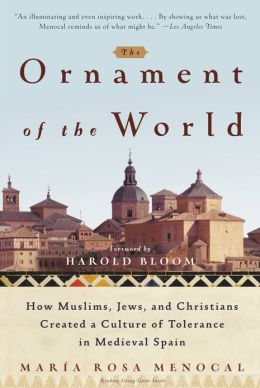
The ornament of the world : how Muslims, Jews, and Christians created a culture of tolerance in medieval Spain / María Rosa Menocal

Call number: DP99 .M465 2002

Undoing the familiar notion of the Middle Ages as a period of religious persecution and intellectual stagnation, Menocal brings us a portrait of a medieval culture where literature, science, and tolerance flourished for 500 years. The story begins as a young prince in exile–the last heir to an Islamic dynasty–founds a new kingdom on the Iberian peninsula: al-Andalus. Combining the best of what Muslim, Jewish, and Christian cultures had to offer, al-Andalus and its successors influenced the rest of Europe in dramatic ways, from the death of liturgical Latin and the spread of secular poetry, to remarkable feats in architecture, science, and technology. The glory of the Andalusian kingdoms endured until the Renaissance, when Christian monarchs forcibly converted, executed, or expelled non-Catholics from Spain. (Google Books)

Dreams of trespass : tales of a harem girlhood / Fatima Mernissi

Call number: CT2678.M47 A3 1995

I was born in a harem in 1940 in Fez, Morocco…” So begins Fatima Mernissi in the exotic and rich narrative of a childhood behind the iron gates of a domestic harem. In Dreams of Trespass, Mernissi weaves her own memories with the dreams and memories of the women who surrounded her in the courtyard of her youth–women who, deprived of access to the world outside, recreated it from sheer imagination. This book is the provocative story of a girl confronting the mysteries of time and place, gender and sex in the recent Muslim world.–Back cover.

Hamas and civil society in Gaza : engaging the Islamist social sector / Sara Roy

Call number: HV6433.P25 R69 2011

“Many in the United States and Israel believe that Hamas is nothing but a terrorist organization, and that its social sector serves merely to recruit new supporters for its violent agenda. Based on Sara Roy’s extensive fieldwork in the Gaza Strip and West Bank during the critical period of the Oslo peace process, Hamas and Civil Society in Gaza shows how the social service activities sponsored by the Islamist group emphasized not political violence but rather community development and civic restoration. Roy demonstrates how Islamic social institutions in Gaza and the West Bank advocated a moderate approach to change that valued order and stability, not disorder and instability; were less dogmatically Islamic than is often assumed; and served people who had a range of political outlooks and no history of acting collectively in support of radical Islam.
These institutions attempted to create civic communities, not religious congregations. They reflected a deep commitment to stimulate a social, cultural, and moral renewal of the Muslim community, one couched not only–or even primarily–in religious terms. Vividly illustrating Hamas’s unrecognized potential for moderation, accommodation, and change, Hamas and Civil Society in Gaza also traces critical developments in Hamas’s social and political sectors through the Second Intifada to today, and offers an assessment of the current, more adverse situation in the occupied territories. The Oslo period held great promise that has since been squandered. This book argues for more enlightened policies by the United States and Israel, ones that reflect Hamas’s proven record of nonviolent community building”– “Unlike other books on Hamas this study examines Hamas’s social service sector with a focus on the Oslo period. It analyzes the nature of Islamist social sector activities, the successes and failures of Islamist social activism and mobilization and argues that the ethos of civic engagement that defined Hamas’s social sector acted as a viable and powerful alternative to militancy and political violence”

So rich, so poor : why it’s so hard to end poverty in America

Call number: HC110.P6 E34 2012

If the nation’s gross national income?over $14 trillion?were divided evenly across the entire U.S. population, every household could call itself middle class. Yet the income-level disparity in this country is now wider than at any point since the Great Depression. In 2010 the average salary for CEOs on the S&P 500 was over $1 million?climbing to over $11 million when all forms of compensation are accounted for?while the current median household income for African Americans is just over $32,000. How can some be so rich, while others are so poor?

In this provocative book, Peter Edelman, a former top aide to Senator Robert F. Kennedy and a lifelong antipoverty advocate, offers an informed analysis of how this country can be so wealthy yet have a steadily growing number of unemployed and working poor. According to Edelman, we have taken important positive steps without which 25 to 30 million more people would be poor, but poverty fluctuates with the business cycle. The structure of today’s economy has stultified wage growth for half of America’s workers?with even worse results at the bottom and for people of color?while bestowing billions on those at the top.

So Rich, So Poor delves into what is happening to the people behind the statistics and takes a particular look at the continuing crisis of young people of color, whose possibility of a productive life too often is lost on their way to adulthood. This is crucial reading for anyone who wants to understand the most critical American dilemma of the twenty-first century. (From Google Books)

Moral origins : the evolution of virtue, altruism, and shame / Christopher Boehm

Call number: BJ1311 .B645 2012

From the age of Darwin to the present day, biologists have been grappling with the origins of our moral sense. Why, if the human instinct to survive and reproduce is “selfish,” do people engage in self-sacrifice, and even develop ideas like virtue and shame to justify that altruism? Many theories have been put forth, some emphasizing the role of nepotism, others emphasizing the advantages of reciprocation or group selection effects. But evolutionary anthropologist Christopher Boehm finds existing explanations lacking, and in Moral Origins, he offers an elegant new theory.

Tracing the development of altruism and group social control over 6 million years, Boehm argues that our moral sense is a sophisticated defense mechanism that enables individuals to survive and thrive in groups. One of the biggest risks of group living is the possibility of being punished for our misdeeds by those around us. Bullies, thieves, free-riders, and especially psychopaths—those who make it difficult for others to go about their lives—are the most likely to suffer this fate. Getting by requires getting along, and this social type of selection, Boehm shows, singles out altruists for survival. This selection pressure has been unique in shaping human nature, and it bred the first stirrings of conscience in the human species. Ultimately, it led to the fully developed sense of virtue and shame that we know today.A groundbreaking exploration of the evolution of human generosity and cooperation, Moral Origins offers profound insight into humanity’s moral past—and how it might shape our moral future. (From Google Books)

Fire in the ashes : twenty-five years among the poorest children in America / Jonathan Kozol

Call number: HV741 .K674 2012

In this powerful and culminating work about a group of inner-city children he has known for many years, Jonathan Kozol returns to the scene of his prize-winning books Rachel and Her Children and Amazing Grace, and to the children he has vividly portrayed, to share with us their fascinating journeys and unexpected victories as they grow into adulthood. For nearly fifty years Jonathan has pricked the conscience of his readers by laying bare the savage inequalities inflicted upon children for no reason but the accident of being born to poverty within a wealthy nation. A winner of the National Book Award, the Robert F. Kennedy Book Award, and countless other honors, he has persistently crossed the lines of class and race, first as a teacher, then as the author of tender and heart-breaking books about the children he has called “the outcasts of our nation’s ingenuity.” But Jonathan is not a distant and detached reporter. His own life has been radically transformed by the children who have trusted and befriended him.


Never has this intimate acquaintance with his subjects been more apparent, or more stirring, than in Fire in the Ashes, as Jonathan tells the stories of young men and women who have come of age in one of the most destitute communities of the United States. Some of them never do recover from the battering they undergo in their early years, but many more battle back with fierce and, often, jubilant determination to overcome the formidable obstacles they face. As we watch these glorious children grow into the fullness of a healthy and contributive maturity, they ignite a flame of hope, not only for themselves, but for our society. (From Google Books)

Handbook of families and aging / Rosemary Blieszner and Victoria Hilkevitch Bedford, editors

Call number: HQ1061 .H3353 2012

This book is both an updated version of and a complement to the original “Handbook of Families and Aging.” The many additions include the most recent demographic changes on aging families, new theoretical formulations, innovative research methods, recent legal issues, and death and bereavement, as well as new material on the relationships themselves–sibling, partnered, and intergenerational relationships, for example. Among the brand-new topics in this edition are step-family relationships, aging families and immigration, aging families and 21st-century technology, and peripheral family ties.

Unlike the more cursory summaries found in textbooks, the essays within “Handbook of Families and Aging, Second Edition” provide thoughtful, in-depth coverage of each topic. No other book provides such a comprehensive and timely overview of theory and research on family relationships, the contexts of family life, and major turning points in late-life families. Nevertheless, the contents are written to be engaging and accessible to a broad audience, including advanced undergraduate students, graduate students, researchers, and gerontology practitioners. Serious lay readers will also find this book highly informative about contemporary family issues. (From Google Books)