Tag Archives: Social Sciences

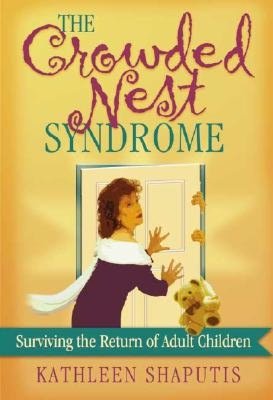
The crowded nest syndrome : surviving the return of adult children / Kathleen Shaputis

Call number: HQ755.86 .S533 2003 

Bringing the serious topic of postparenting out into the light, this is a humorous collection of insightful anecdotes on the perils and pleasures of being a parent of boomerang kids in the 21st century. Among the issues covered are dealing with adult children’s emotional state and often-staggering credit card debt and what to do with their numerous personal possessions. An alternative to more formal how-to books, this is a clever narrative of successful living with adult children. (From Google Books)

The end of country : dispatches from the frack zone / Seamus McGraw

Call number: HD9502 .U53 P4533 2012

“Susquehanna County, in the remote northeastern corner of Pennsylvania, is a community of stoic, low-income dairy farmers and homesteaders seeking haven from suburban sprawl–and the site of the Marcellus Shale, a natural gas deposit worth more than one trillion dollars. In The End of Country, journalist and area native Seamus McGraw opens a window on the battle for control of this land, revealing a conflict that pits petrodollar billionaires and the forces of corporate America against a band of locals determined to extract their fair share of the windfall–but not at the cost of their values or their way of life. Rich with a sense of place and populated by unforgettable personalities, McGraw tells a tale of greed, hubris, and envy, but also of hope, family, and the land that binds them all together.”–Publisher description.

The batterer as parent : addressing the impact of domestic violence on family dynamics / Lundy Bancroft

Call number: HV6626.2 .B25 2012

Moving beyond the narrow clinical perspective sometimes applied to viewing the emotional and developmental risks to battered children, The Batterer as Parent: Addressing the Impact of Domestic Violence on Family Dynamics, Second Edition offers a view that takes into account the complex ways in which a batterer’s abusive and controlling behaviors are woven into the fabric of daily life. This book is a guide for therapists, child protective workers, family and juvenile court personnel, and other human service providers in addressing the complex impact that batterers-specifically, male batterers of a domestic partner when there are children in the household-have on family functioning. In addition to providing an understanding of batterers as parents and family members, the book also supplies clearly delineated approaches to such practice issues as assessing risk to children (including perpetrating incest), parenting issues in child custody and visitation evaluation, and impact on children’s therapeutic process and family functioning in child protective practice. (From Google Books)

Millennium: Tribal Wisdom and the Modern World DVD set

Tracking number: 1169GE-1173GE

Programs Included in the Series:

The Art of Living / Touching the Timeless
The Art of Living: Travel to the Wodaabe tribe of Niger and the Dogon peoples of Mali to witness the ways they celebrate life and death with acts of beauty and grace. Meet an HIV positive Canadian artist who shows viewers his way of connecting his art to the meaning of life and death. Touching the Timeless: Accompany the Huichol people of Mexico on their annual pilgrimage to collect peyote, the sacred food of the gods, and visit the house of a Navajo medicine man who invites the spirits into his world through sand painting, chanting, and ‘walking in beauty’.

Mistaken Identity / An Ecology of Mind
Mistaken Identity: Explore the question of who you are and where your individual identity begins and ends through scenes taken from the family life of an abortion counselor in Toronto, a boy’s initiation in the Brazilian Xavante tribe, a high school girl’s attempted suicide, and an Indonesian Sumbanese tribesman’s relationship to his dead relatives. An Ecology of Mind: Learn how the Makuna of Columbia pass their sophisticated ecological awareness from generation to generation through complex myths and rituals. Understand how tribal peoples views’ contrast with the evolutionary ideas handed down to the modern world from the Bible and from 19th century Darwinian theory.

The Shock of the Other / Strange Relations
the Shock of the Other: Through scenes of the decimation of the rainforest and interviews with indigenous people, discover why so much is at stake when modern industrialism meets the tribal world. Strange Relations: Intimate scenes of Western societies and marriages in the tribal societies of Nepal and the plains of Niger, show how individuals can discover a balance between personal desire and social needs in the context of a loving and nurturing family.
A Poor Man Shames Us All / Inventing Reality
A Poor Man Shames Us All: Explore the alternative views of wealth and society that are exhibited in lives of tribal cultures. Trace the development of free market economics and explores how its characteristics contrast with tribal conceptions of wealth. Inventing Reality: Through tribal villages in Mexico and a cancer centre in Toronto, understand how the certainties of science can combine with natural conceptions of physical disease both in the tribal world of the shaman and in modern medical science.
 
The Tightrope of Power / At the Threshold
The Tightrope of Power: Viewers contrast Western form of states to the practice of democracy through consensus. Witness the struggles of the Ojibwa, Cree and Mohawk tribes against the Canadian federal government. Understand how their visions can help us refine our definitions of democracy, pluralism and the state. At the Threshold: Travel to central France to explore the most perplexing dilemmas of the Western World – heart versus mind, body versus soul, the desires of the individual versus the needs of society. Through intimate views of family life in tribal and Western societies, understand why our survival as a species may now depend on the wisdom of our tribal past.  

Who says bullies rule? : common sense tips to help your kids cope / Catherine DePino

Call number: LB3013.3 .D456 2011

Who Says Bullies Rule?: Common Sense Tips to Help Your Kids Cope gives parents practical bully prevention tips for their elementary and middle school children. It helps parents empower their children to stop bullying before it veers out of control and teaches parents to navigate their school systems’ channels to stop bullies from bothering their children. Additionally, the book arms parents with workable suggestions they can offer their children for dealing with different types of bullies, such as teasers, excluders, intimidators, and cyber bullies. The most important feature of Who Says Bullies Rule?, and what sets it apart from other books, is that it underscores the importance of having children use their common sense to anticipate and deal with bullies’ actions. No child should ever have to tolerate physical or mental abuse at the hands of a bully. Parents are the first line of defense against bullying. Using a conversational tone with myriad examples, Who Says Bullies Rule? shows parents what they need to do to help keep their children safe. (From Google Books)

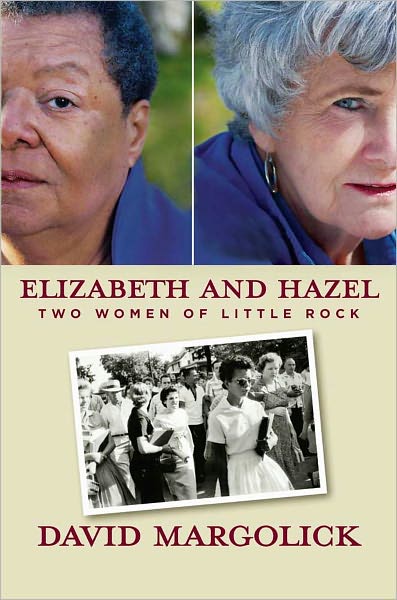
Elizabeth and Hazel : two women of Little Rock/ David Margolick

Call Number: F419.L7 M37 2011

The names Elizabeth Eckford and Hazel Bryan Massery may not be well known, but the image of them from September 1957 surely is: a black high school girl, dressed in white, walking stoically in front of Little Rock Central High School, and a white girl standing directly behind her, face twisted in hate, screaming racial epithets. This famous photograph captures the full anguish of desegregation — in Little Rock and throughout the South — and an epic moment in the civil rights movement. In this gripping book, David Margolick tells the remarkable story of two separate lives unexpectedly braided together. He explores how the haunting picture of Elizabeth and Hazel came to be taken, its significance in the wider world, and why, for the next half-century, neither woman has ever escaped from its long shadow. He recounts Elizabeth’s struggle to overcome the trauma of her hate-filled school experience, and Hazel’s long efforts to atone for a fateful, horrible mistake. The book follows the painful journey of the two as they progress from apology to forgiveness to reconciliation and, amazingly, to friendship. This friendship foundered, then collapsed — perhaps inevitably — over the same fissures and misunderstandings that continue to permeate American race relations more than half a century after the unforgettable photograph at Little Rock. And yet, as Margolick explains, a bond between Elizabeth and Hazel, silent but complex, endures–Provided by publisher.

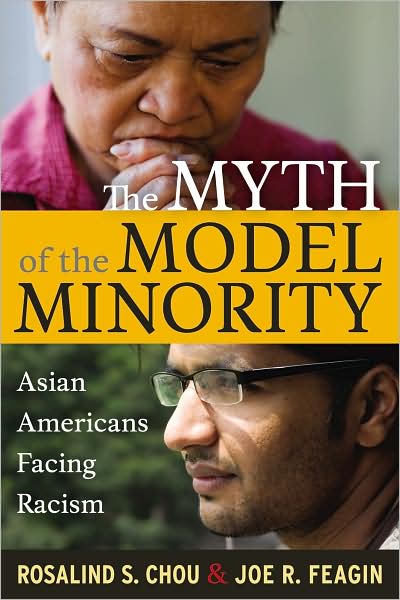
The myth of the model minority : Asian Americans facing racism / Rosalind S. Chou

Call number: E184.A75 C515 2008

In this pathbreaking book sociologists Rosalind Chou and Joe Feagin examine, for the first time in depth, racial stereotyping and discrimination daily faced by Asian Americans long viewed by whites as the ‘model minority.’ Drawing on more than 40 field interviews across the country, they examine the everyday lives of Asian Americans in numerous different national origin groups. Their data contrast sharply with white-honed, especially media, depictions of racially untroubled Asian American success. Many hypocritical whites make sure that Asian Americans know their racially inferior ‘place’ in U.S. society so that Asian people live lives constantly oppressed and stressed by white racism. The authors explore numerous instances of white-imposed discrimination faced by Asian Americans in a variety of settings, from elementary schools to college settings, to employment, to restaurants and other public accommodations.
The responses of Asian Americans to the U.S. racial hierarchy and its rationalizing racist framing are traced’with some Asian Americans choosing to conform aggressively to whiteness and others choosing to resist actively the imposition of the U.S. brand of anti-Asian oppression. This book destroys any naďve notion that Asian Americans are universally ‘favored’ by whites and have an easy time adapting to life in this still racist society. See an interview with Rosalind S. Chou at Rosalind S. Chou Interview (From Google Books)

God after Darwin : a theology of evolution / John F. Haught

 Call number: BT712 .H38 2008

Haught argues that the ongoing debate between Darwinian evolutionists and Christian apologists is fundamentally misdirected: both sides persist in focusing on an explanation of underlying design and order in the universe. Haught suggests that what is lacking in both of these competing ideologies is the notion of novelty, a necessary component of evolution and the essence of the unfolding of the divine mystery. He argues that Darwin’s disturbing picture of life, instead of being hostile to religion as scientific skeptics and many believers have thought it to be actually provides a most fertile setting for mature reflection on the idea of God. (Publisher’s description ).

Are we born racist? : new insights from neuroscience and positive psychology / Susan T. Fiske

Call number: BF575.P9 A74 2010

In this slender multidisciplinary analysis, scientists, novelists, and religious leaders examine the roots of racial prejudice and possible antidotes. Princeton psychology professor Susan T. Fiske presents neuroscience findings that in repeated studies, when white test subjects look at photographs of black people, their amygdalae—the seat of the fear response system in the brain—lights up, suggesting that bias is unconscious and deep-seated. But biology is not destiny, nor is bias ineradicable, as following essays attest. Contributors address how schools, businesses, and police departments can counter an inborn tendency to distrust that which is different.
And the book’s third section celebrates racial and ethnic diversity as a source of vitality. Rebecca Walker addresses being biracial, and others meditate on raising bi-cultural and biracial children or being part of an interracial couple. The concluding essay by Archbishop Desmond Tutu relates how the truth and reconciliation process helped heal South Africa’s deep racial fissures. While topics are explored too briefly to be of scholarly interest, their brevity will be an advantage to readers looking for a snapshot of contemporary research into and activism around ending racism. (From Google Books)

Is It Just Me?: Or Is It Nuts Out There? / Whoopi Goldberg

Call number: BJ 1533 .C9 G65

Have you noticed that things aren’t as civil as they once were? Or that rudeness is no longer an exception but a lifestyle? Sure you have. All you need to do is set foot outside your door to see that bad manners are taking over everywhere. People are yakking on cell phones in restaurants, even at church. Folks in carpools wear enough cologne to make our eyes bleed. Complete strangers think it’s OK to rub a pregnant lady’s belly. Passengers abuse flight attendants, family outings to the ball park are ruined by rowdy drunks a congressman heckled the President of the United States.

Well, Whoopi Goldberg has noticed all this and more and asked herself, “Is it just me?” Unleashing her trademark irreverence and humor, her new book of observations takes a funny and excruciatingly honest look at how a loss of civility is messing with the quality of life for all of us.
So if your pet peeve is folks who talk in movie theaters like it was their living room, or if you get bugged by people clipping their nails and performing other personal hygiene next to you on the bus, or if you cringe when “please” and “thank you” get replaced by “gimme” and “huh?” . . . you have found a kindred spirit. Because Whoopi has witnessed the growing disrespect and rudeness in our lives and realized she is not alone. And, as you’ll discover in these pages, neither are you. (From B&N)