Big Data, New Data, and What the Internet Can Tell Us about Who We Really Are
By Seth Stephens-Davidowitz
Call Number: QA76.9.D343 S685155 2017 View in IvyCat
A former Google data scientist presents an insider’s look at what the vast, instantly available amounts of information from the Internet can reveal about human civilization and society.
How much sex are people really having? How many Americans are actually racist? Is America experiencing a hidden back-alley abortion crisis? Can you game the stock market? Does violent entertainment increase the rate of violent crime? Do parents treat sons differently from daughters? How many people actually read the books they buy? In this groundbreaking work, Seth Stephens-Davidowitz, a Harvard-trained economist, former Google data scientist, and New York Times writer, argues that much of what we thought about people has been dead wrong. The reason? People lie, to friends, lovers, doctors, surveys–and themselves. However, we no longer need to rely on what people tell us. New data from the internet–the traces of information that billions of people leave on Google, social media, dating, and even pornography sites–finally reveals the truth. By analyzing this digital goldmine, we can now learn what people really think, what they really want, and what they really do. Sometimes the new data will make you laugh out loud. Sometimes the new data will shock you. Sometimes the new data will deeply disturb you. But, always, this new data will make you think. This book will change the way you view the world. There is almost no limit to what can be learned about human nature from Big Data–provided, that is, you ask the right questions.
Our Saturday hours are changing! On September 30th, we will begin opening at 9:00 a.m. and stay open until 1:45 p.m.
We have several new displays. A selection of books relevant to Hispanic Heritage Month are laid out near our north door for you to browse. They include Sonia Sotomayor’s best-selling My Beloved World. You can check these out, too, right off the table!
Banned Books Week is September 25th -30th this year. We will have shelves of these dangerous items available for you to check out – they are part of our collections.
On our bulletin board outside our south door we are showcasing resources for courses in the School of Business, Logistics & Supply Chain. Did you know we have a dedicated Business Plan Pro workstation in the Library? Plus dozens of recent eBooks and hundreds of specialized articles.
While preparing this display I was temporarily captivated by logistics because there are so many recent innovations in this field. We’ve all heard of GPS but have you used an IPS – indoor positioning system? They are used in malls and other large spaces with many rooms. Each room or area has a transmitter using Bluetooth, WiFi or other medium; and with an app you can be directed to that specific place within the building. Wouldn’t an IPS have made those first days of classes much easier?
I recently read an article by the CMO of What3Words, a company that is providing addresses for the entire world. (Giles Rhys Jones, “Human Friendly Coordinates.” Geoinformatics, vol. 18, no. 5, 2016, pp. 10-12.) What3Words mapped the entire earth into 3-meter squares and assigned each a three-word address. Humans tend to mix up numbers – especially the long ones used by GPS systems – but research shows we can recall three random words. (They are indeed random with no connection to the purpose or neighborhood of the space so tagged.) The words are translated into local languages worldwide. This system has revolutionized humanitarian aid delivery and is allowing civil, legal, and financial services to reach communities that have been underserved. The What3Words app is free for iOS or Android, and the system now has many partners.
Over the summer we made some changes to our library website in order to serve you better
Let us know what you think!
From our homepage, when you click on the Articles link in the left navigation panel, you will now find the databases grouped by subject.
We have maintained the A-Z List which is alphabetical by title.
Instructors: We have changed a few of our database subscriptions, so please check on the resources available for your assignments. We encourage the use of Guides to point students to appropriate resources, whether databases, websites, or whatever. A Librarian will be delighted to set one up for your courses and sections. These can be linked to your IvyLearn course site too.
Requesting library instruction for your class is quicker and easier. Use the Schedule Instruction link on the left navigation panel and fill out the form, which is so self-explanatory that faculty are already using it. (A detailed mailing on this new system is being distributed.)
Students: Reserving the study rooms is now Self-Service! Use the Reserve Rooms link on the left navigation panel of the Library Home page. You can do this remotely on any device, or come in and use the kiosk at the front desk where our friendly staff will show you how.
Everyone: Check out our new Apps for College guide, which has collected the best mobile device apps especially useful to students and teachers.
Come on in and peruse our book display this month, which relates to the solar eclipse. You can check these books out, along with #1 NY Times Bestseller, Astrophysics for People in a Hurry by the always-entertaining Neil de Grasse Tyson in our Baker & Taylor collection.
It’s not necessary to memorize all the numbers he throws around to understand the principles he explains. You will feel smarter just carrying this around!
New books we have received:
Behold the Dreamers “A compulsively readable debut novel about marriage, immigration, class, race, and the trapdoors in the American Dream—the unforgettable story of a young Cameroonian couple making a new life in New York just as the Great Recession upends the economy” New York Times Bestseller – Winner of the PEN/Faulkner Award – Longlisted for the PEN/Open Book Award – An ALA Notable Book
The Driver “From the creator of the TV show Bones comes a ‘riveting, smart and funny’ (Harlan Coben) debut thriller. ‘Everything a great thriller should be—always smart, often funny, and relentlessly exciting. I loved every page.’ (Scott Turow)”
Coming soon:
The Burning Girl “A bracing, hypnotic coming-of-age story about the bond of best friends, from the New York Times best-selling author of The Emperor’s Children.”
Stay with Me “This celebrated, unforgettable first novel, shortlisted for the prestigious Bailey’s Prize and set in Nigeria, gives voice to both husband and wife as they tell the story of their marriage—and the forces that threaten to tear it apart.”
You can place holds on these books if they are not available using your IvyTech library account.
Best wishes to everyone for a successful semester!
Ivy Tech takes another interim break in August, just before kids return to school. When the weather is hot and stormy, is a great time to indulge in crafting and hobbies.
Research shows these activities are good for your brain:
“Having at least one persistent and intellectually stimulating hobby is a better predictor of career success in any discipline than IQ, standardized test scores, or grades.”1
“Nobel laureates were: twenty-five times as likely as an average scientist to sing, dance, or act; seventeen times as likely to be an artist; twelve times more likely to write poetry and literature; eight times more likely to do woodworking or some other craft; four times as likely to be a musician; and twice as likely to be a photographer.”2
Educators know that the arts are a crucial addition to math, science, engineering and technology training. The non-linear problem-solving techniques, and creative flow, exercised in artistic endeavors stimulate innovation.
Crochet and knitting are used by mathematicians to demonstrate hyperbolic surfaces.Dr. Daina Taimina, visiting professor at Cornell University, was one of the pioneers in demonstrating hyperbolic crochet. Dr. Sarah-Marie Belcastro at Smith College and Dr. Carolyn Yackel at Mercer University publish on mathematical knitting. Dr. Maryam Mirzakhani, the Fields Medal winner who died of cancer July 14th, also worked on complex surfaces by “doodling” on large sheets of paper, writing the mathematical formulas in the margins.3
Margaret Wertheim explains the math of coral reefs using crocheted models from Dr. Taimina in a TED talk.
To get your creativity flowing, we have books to check out and page through on our DIY shelf in the Creative Commons. These are for all ages, and there are more crafting books in our children’s section.
We have access to the Hobbies and Crafts Reference Center as part of our databases subscription. This is an excellent resource for techniques tutorials and designs, linking to how-to instructions and creative ideas with full text and illustrations from periodicals and books. It is organized into broad categories you can browse: Arts & Crafts, Collecting, Home & Garden, Indoor Recreation [games], Kids’ Crafts, Model Building, Needlecrafts & Textiles, Outdoor Recreation, Performing Arts, Science & Technology, Scrapbooking & Paper Crafts. A keyword search will pull up periodicals and books on “cake decoration” and other such specific activities within these. Or, you can do a keyword search across all categories for style topics, like Cosplay or Steampunk. Both are well covered here, from clothing to cakes to household furnishings.
1 Milgram, R., and Hong, E. (1997). “Out-of-school activities in gifted adolescents as a predictor of vocational choice and work.” Journal Of Secondary Gifted Education 8/3:111. Quoted in Colegrove, T. (2017). “Editorial Board Thoughts: Arts into Science, Technology, Engineering, and Mathematics – STEAM, Creative Abrasion, and the Opportunity in Libraries Today,” Information Technology and Libraries, 36/1:7. https://doi.org/10.6017/ital.v36i1.9733
2 Root-Bernstein, et al. (2008). “Arts Foster Scientific Success: Avocations of Nobel, National Academy, Royal Society, and Sigma Xi Members.” Journal of Psychology of Science and Technology https://doi.org/10.1891/1939-7054.1.2.51; quoted in Colegrove 2017.
Data visualization is a hot topic in education and research as well as business. We are all swimming in data these days, but the information in that data simply won’t be evident without good visualization techniques, as David McCandless demonstrates in his full TED talk from our Films on Demand collection.
Visualization is a kind of answer, and thus derives from the quality of the questions asked of data, and the quality of the data itself. Columbia University professor Kaiser Fung provides clear explanations of data visualization principles on his blog, Junk Charts.
Explore these inspiring examples: Hans Rosling was a physician who developed brilliant data visualizations to campaign for world health initiatives. Rosling’s best TED Talks are now in a playlist. Edward Tufte is Professor Emeritus of political science, statistics, and computer science at Princeton and a pioneer in making data understandable. On his website are examples of his work and links to some of his essays on visualization, including his famous rants about bad use of PowerPoint.
There are well-known pitfalls to presenting data in graphic format.The website wtf-viz (also wtf-viz on Tumblr) collects bad graphs of all kinds, crowd-sourced. These include network, flowchart, and block diagrams gone awry, along with poor quantitative representations. The archive is searchable by hashtag (#pie charts) or you can browse thumbnails in the archive by month. There are some great examples here for classroom discussion!
On her blog Storytelling with Data Cole Nussbaumer Knaflic, a former financial risk assessor, shares best practices for presenting and explaining business data. She not only reveals tips for manipulating Excel charts, but also how to lay out data in presentations (not on a single page or slide, usually). Knaflic’s collected blog posts are published in an eponymous book available in our Ebook Central Collection.
We also have manuals and cookbooks for popular programs used to visualize data, from small sets to Hadoop. In IvyCat, do a keyword search for “data visualization” as a phrase, or search the subject “information visualization – computer programs,” to bring up a list. Most of these are eBooks.
The programs discussed include Google Sheets and MicroSoft Excel, which are available to all IvyTech students, faculty, and staff. The program R is free ; and NodeXL is a free social network analysis add-in for Excel. Many of these are just applications using HTML. D3.js is free and open source. Google Charts allows users to plug in their own data to generate and customize charts, plots, and maps of all kinds for websites.
(Please note, the author, the Library, and Ivy Tech are not responsible for user experiences, and Ivy Tech does not allow the installation of software on college computers without authorization.)
As everyone gears up for final papers and exams, here are some helpful tools for studying and writing. Remember we will have free snacks in the library during finals week, and therapy dogs in the mornings to boost your oxytocin.
Flashcards are a proven study aid that work best when presented randomly. This is hard to do yourself, so try one of these apps that let you create your own deck or use already created decks. For IOS or Android phones, try Quizlet. You can use Quizlet from a browser (laptop/desktop) as well. For iPhones, Tinycards is an award-winning flashcard app.
Plagiarism is a serious academic offense, so check your papers and reports before handing them in. Two of the best free tools you can use are: Dupli Checker which allows you to copy and paste in 1000-word passages of text; and Plagiarism Checker which allows you to search two phrases of text at a time from different parts of your document. It only works with the Google Chrome browser. These tools do not require uploading files or any particular format – just copy and paste your text passages. Your professor may have turned on a plagiarism checker in Blackboard, so look for this when you are about to upload your paper.
The library offers links to a citation creator called Noodletools that creates both in-text citations and sources lists in MLA, APA, and Chicago styles. It can be easier to use than MSWord’s built-in citation tool. Access Noodletools from the Library home pagehttp://library.ivytech.edu/northeast You must create a free account with username and password, and then you can add sources directly from search results in the library databases! Even better, it offers a browser plug-in called “Archive This” that allows you to keep your sources organized for quick reference. It also has a smartphone app that will generate citations by scanning the ISBN on a book jacket with your phone camera!! It’s easiest if you set up your project first before using the App. When you create a sources list, choose your style (MLA, APA, Chicago) and ADVANCED which includes almost any source type: books, journals, websites, emails …
We wish everyone GOOD LUCK and remind you we are here to answer your questions!
The annual Webby Awards honoring the best content on the internet are coming up. There are hundreds of categories and many educational and cultural institutions are nominated. Search the site by keyword to find nominees and past honorees. See what services are available that you can use for teaching, research, or just for fun. So much innovation is inspiring! You can vote through April 20th for the People’s Voice awards just by registering, and you don’t have to vote in every category, just for what you like.
April is National Kite Month and is a great time of the year to fly them. The American Kitefliers Association has many resources from directories of clubs to instruction videos. Kites are not just toys – kite making and flying can get very scientific and is a fun way to explore math, applied physics, earth science, art, and different cultures.
Kites have been used in scientific experiments like Ben Franklin’s test for electricity in lightning. Kites were used in warfare for observation as late as the second world war; in ancient times they could be flown over fortifications to test how thick walls were, by using triangulation. The classic kite shape of two triangles that share a base has many interesting mathematical properties, and can be convex or nonconvex.
Kites to be flown are not always kite-shaped, however; there are tubular sock and drogue shapes. Constructing a kite also involves tying special knots in the strings, and flying one uses the same technologies and techniques as operating a sail boat. Kites are being tested as a source of energy, as used in kite surfing, snowkiting, and kite sledding. Fighting with kites is an ancient sport taken quite seriously in parts of Asia, described in the acclaimed novel The Kite Runner by Khaled Hosseini (adapted as a movie).
Many kites are made to be beautiful above all. Ancient kites were made of silk, paper, and bamboo. Today, people make them out of Tyvek® and nylon fabric too.
In some places kites are part of religious ceremonies: in India, they are flown on the Hindu festival of Makar Sankranti; in Mexico, fire kites called “little witches” are set off at night around Hallowe’en; in Guatemala, kites are flown above graves to free ancestor spirits on the Day of the Dead; in Japan, kites are released to exorcise evil spirits. To find more information on the many aspects of kites, search in our databases using – ironically – the subject heading Kites (toys) to filter out resources concerned with the bird species called kite. (Sources: Freeman, C. (2010). Hands on geometry. Waco, TX: Prufrock Press. Rowlands, J. (1989). One-hour kites. New York: St. Martin’s Press. Silvester, H.(2008). Into the wind: the art of the kite. New York: Abrams.)
By Tom Lipton
Call Number: TS227 .L578 2013 View in IvyCat
This collection of priceless tips, tricks, skills, and experiences from a veteran of the trade is presented in a way that captures the readers attention and engages them in the process of furthering their skills. It includes shop-tested descriptions and illustrations of creative and unique techniques and observations from four decades in the metalworking trades. Perfect for hobbyists and veterans alike, and everyone in between, and for those who work out of either small shops or garages, backyard facilities and basements. It will help any metalworker do better work and do it faster!
By Joi Ito and Jeff Howe
Call Number: HC79.T4 I8165 2016 View in Ivy Cat
The director of MIT’s Media Lab and a contributor to “Wired” present a set of working principles for adapting and thriving in the face of the twenty-first century’s rapidly changing and unpredictable digital environments.
The world is more complex and volatile today than at any other time in our history. The tools of our modern existence are getting faster, cheaper, and smaller at an exponential rate, just as billions of strangers around the world are suddenly just one click or tweet or post away from each other. The future will run on an entirely new operating system– with a steep learning curve. Ito and Howe present nine organizing principles for navigating and surviving this tumultuous period.

 By Seth Stephens-Davidowitz


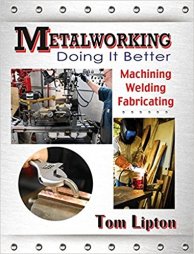 By Tom Lipton
 By Joi Ito and Jeff Howe
 Fort Wayne & Warsaw Library Blogs