
The annual Webby Awards honoring the best content on the internet are coming up. There are hundreds of categories and many educational and cultural institutions are nominated. Search the site by keyword to find nominees and past honorees. See what services are available that you can use for teaching, research, or just for fun. So much innovation is inspiring! You can vote through April 20th for the People’s Voice awards just by registering, and you don’t have to vote in every category, just for what you like.
Category Archives: Library News
Go Fly a Kite!

April is National Kite Month and is a great time of the year to fly them. The American Kitefliers Association has many resources from directories of clubs to instruction videos. Kites are not just toys – kite making and flying can get very scientific and is a fun way to explore math, applied physics, earth science, art, and different cultures.
Kites have been used in scientific experiments like Ben Franklin’s test for electricity in lightning. Kites were used in warfare for observation as late as the second world war; in ancient times they could be flown over fortifications to test how thick walls were, by using triangulation. The classic kite shape of two triangles that share a base has many interesting mathematical properties, and can be convex or nonconvex.
Kites to be flown are not always kite-shaped, however; there are tubular sock and drogue shapes. Constructing a kite also involves tying special knots in the strings, and flying one uses the same technologies and techniques as operating a sail boat. Kites are being tested as a source of energy, as used in kite surfing, snowkiting, and kite sledding. Fighting with kites is an ancient sport taken quite seriously in parts of Asia, described in the acclaimed novel The Kite Runner by Khaled Hosseini (adapted as a movie).
Many kites are made to be beautiful above all. Ancient kites were made of silk, paper, and bamboo. Today, people make them out of Tyvek® and nylon fabric too.
In some places kites are part of religious ceremonies: in India, they are flown on the Hindu festival of Makar Sankranti; in Mexico, fire kites called “little witches” are set off at night around Hallowe’en; in Guatemala, kites are flown above graves to free ancestor spirits on the Day of the Dead; in Japan, kites are released to exorcise evil spirits.
To find more information on the many aspects of kites, search in our databases using – ironically – the subject heading Kites (toys) to filter out resources concerned with the bird species called kite. (Sources: Freeman, C. (2010). Hands on geometry. Waco, TX: Prufrock Press. Rowlands, J. (1989). One-hour kites. New York: St. Martin’s Press. Silvester, H.(2008). Into the wind: the art of the kite. New York: Abrams.)
Edible Book Festival 2016 Report
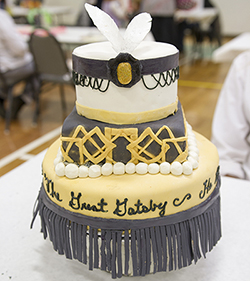
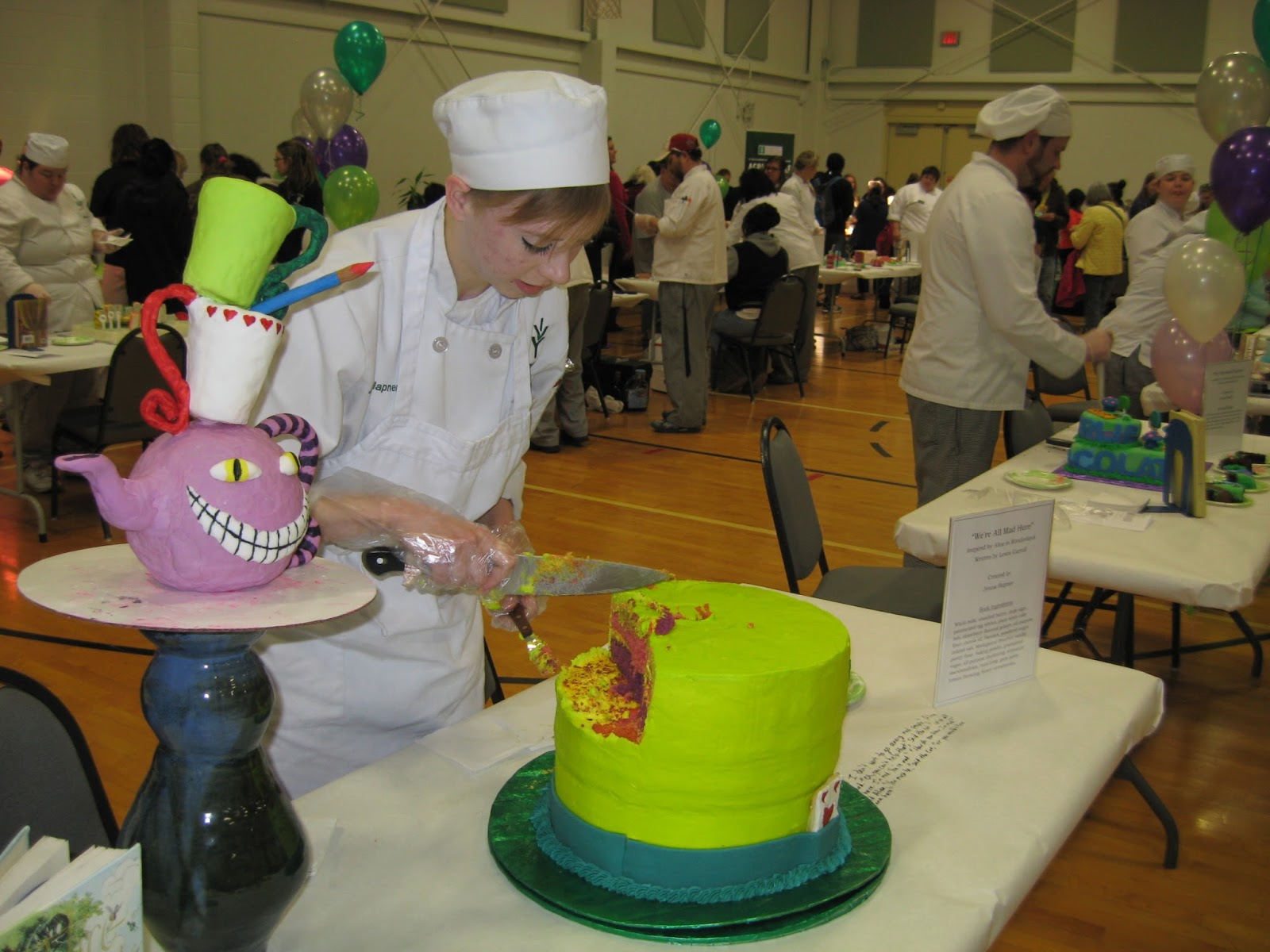
If you were on campus on Monday, April 4th, we hope you had enough time to stop by the Student Life Center and sample all of the wonderful culinary and literary creations at the 10th Annual Edible Book Festival. This event, hosted by the Ivy Tech Northeast Library, brings together students, staff, community members, and local businesses to showcase their edible interpretations of their favorite books. This year’s celebration featured 20 unique creations and brought in 200 attendees.
This year’s edible books covered a wide range of literary favorites, including The Lord of the Rings, Hitchhiker’s Guide to the Galaxy, and The Great Gatsby. Children’s stories were also well represented with delicious renditions of Winnie the Pooh, Chicka Chicka Boom Boom, and The Lorax, as well as some lesser-known children’s tales such as Mean Soup, Creepy Carrots, and Hold the Anchovies! Some participants really flexed their creative muscles by adapting works that aren’t normally associated with food into delicious dishes, such as the Emancipation Proclamation, The Haunted Mesa by Louis L’Amour, and Online Gambling and Crime, an academic text about the controversies involving the online gambling industry. Leave it to a librarian to come up with that last one.
When it comes to edible books, the flavors are just as important as the stories, and this year did not disappoint. Attendees were treated to Edible Books comprised of pizza, barbecue ribs, burritos, soup, and popcorn on the savory side of things. As always, dessert creations were also plentiful, with cookies and cakes coming in flavors from vanilla and chocolate to caramel marble, peach ginger, and oatmeal-carrot.
This year’s Edible Book Festival also featured a performance from professional storyteller Lou Ann Homan whose wonderful narrative flair entertained both children and adults. There was also a craft station where children and their families could make food-based necklaces with a charm representing a well-loved book. Not to leave any sense neglected, the soundtrack to this year’s festivities was an eclectic mix of songs from films that were inspired by literary works.
The winning edible books were selected based on audience voting, and this year’s winners were an impressive bunch. The first place winner was Ivy Tech student, Claudia Hollinger, with an edible book based on Harry Potter and the Sorcerer’s Stone by J.K. Rowling. Second place was taken by community member, Cayla Veach, with her creation based on Just You and Me by Sam McBratney. Taking third place was Ivy Tech student, Adrienne Cottrell, with her entry based on The Great Gatsby by F. Scott Fitzgerald. These three talented participants took the prizes this year, but each entry showed artistic skill and creative thinking. It’s never too early to start thinking about how you can take the top prize next year!
If you didn’t make it out to the 2016 event, be sure to check out the coverage on our local NPR station< WBOI, as well as the story that ran on local Fox affiliate WFFT. The Journal Gazette was also present to cover the event. As always, if you need a good book, or inspiration for your own delicious dishes, stop by the library and browse our collection today!
(By Library Clerk, David Winn)
New Printers
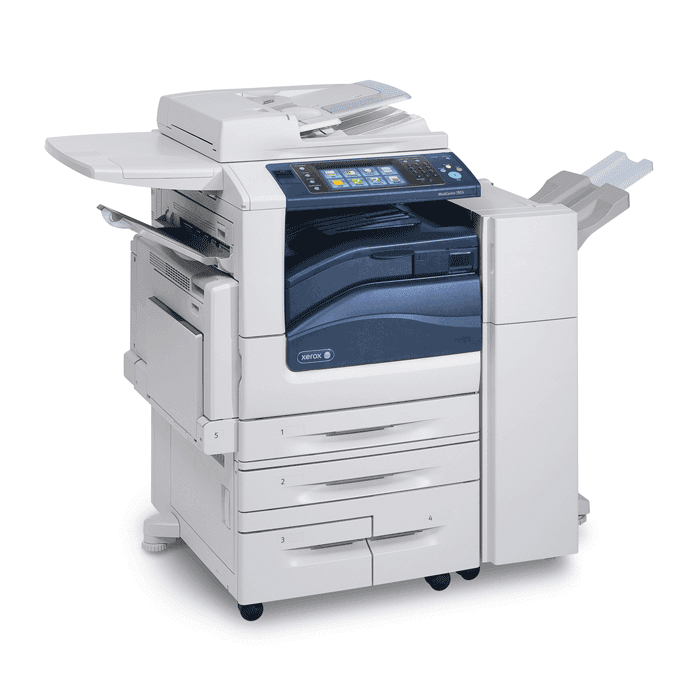

Ivy Tech Northeast has new printers around campus and that includes the Library. The Library has four new printers, each of which is also a photocopier, and even a scanner. When you print a document, you may choose a specific printer where you can get your printout.
Alternatively, you may select one of the “secure release” options and then go to any printer on campus, log in, and release your printout.
The printer setup is still new, so we recommend that you ask a Library staff member for help the first time you print something.
Edible Book Festival 2016 – 10th Anniversary!
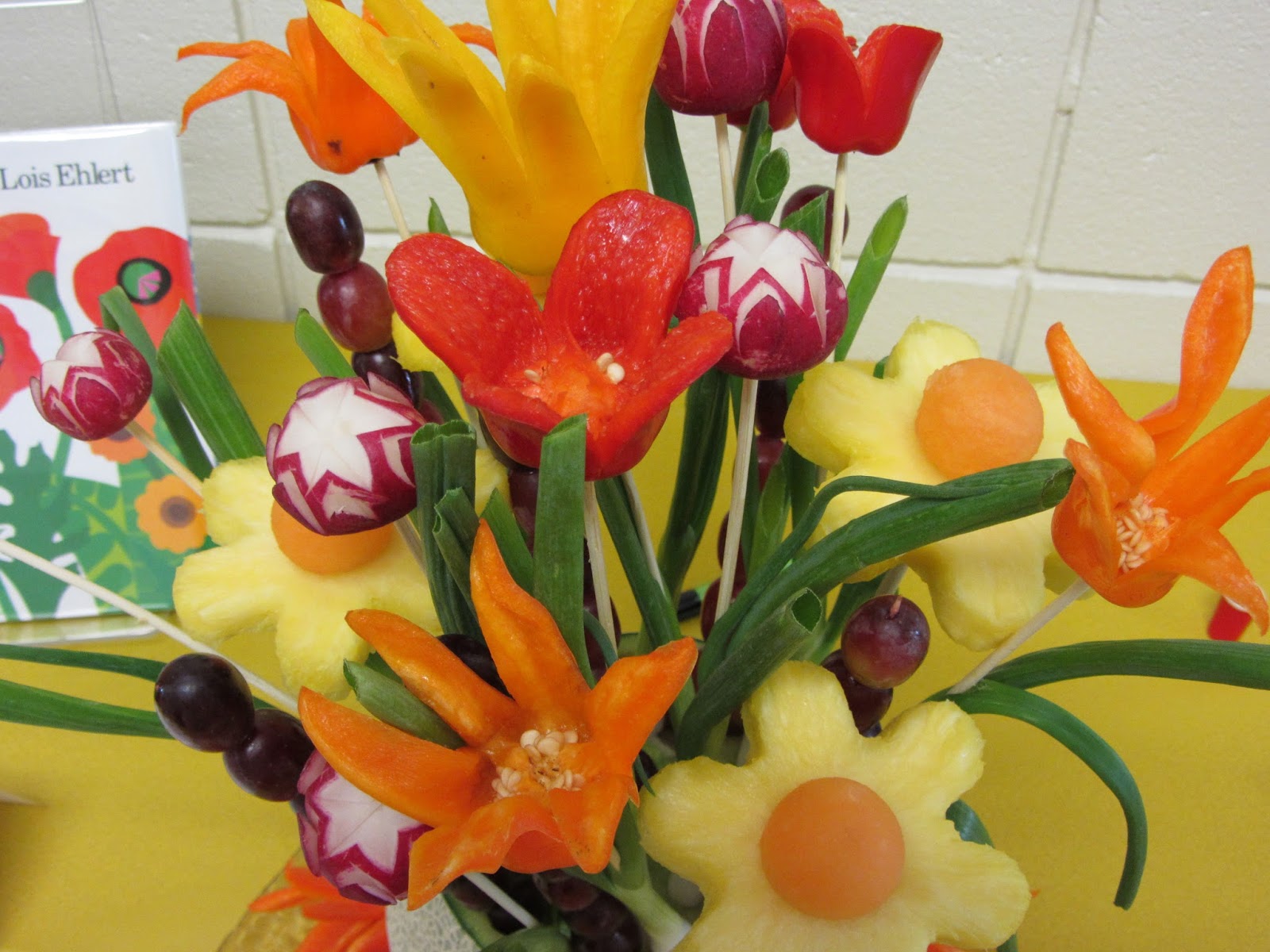
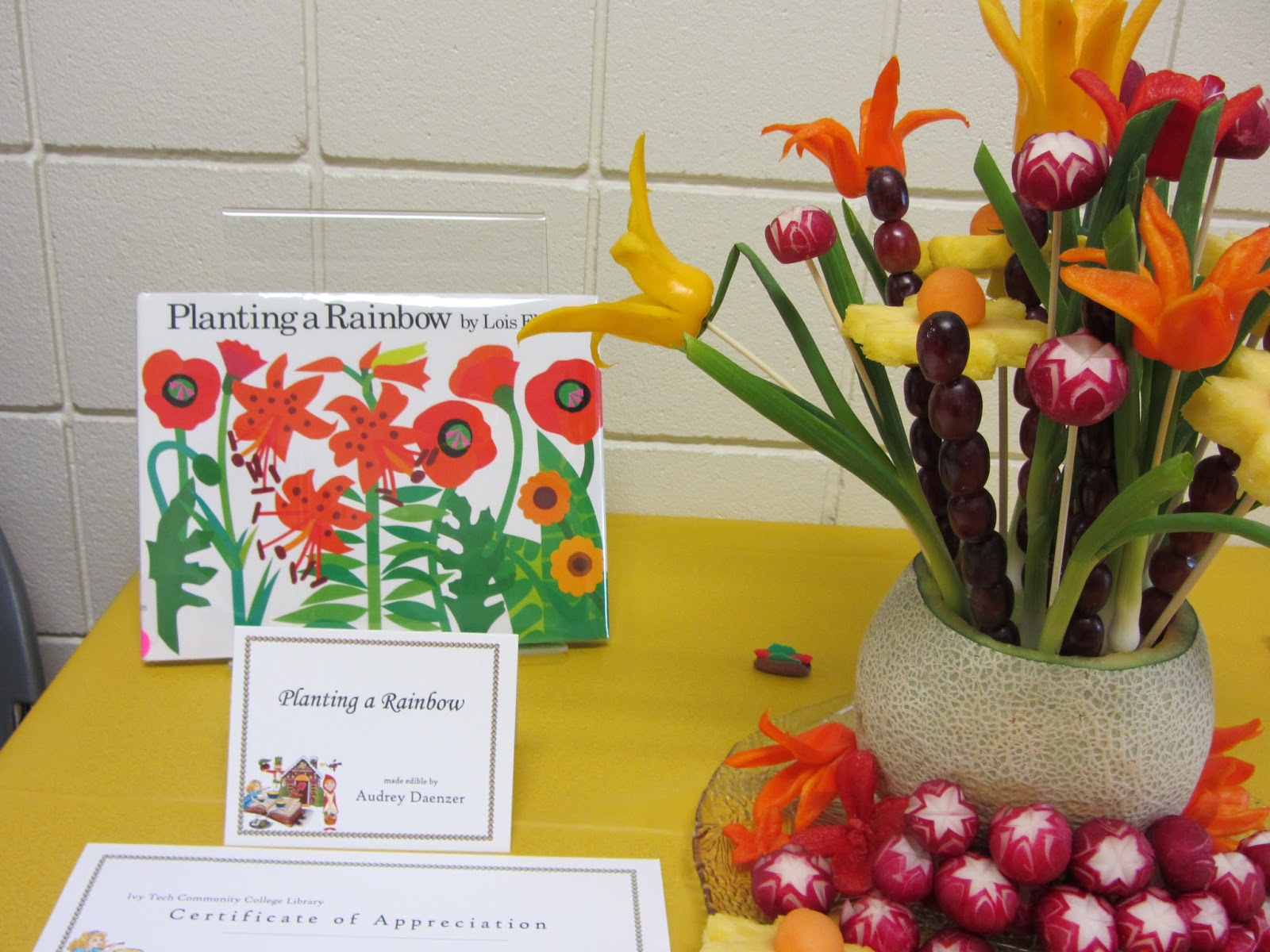
As March brings the fragrant flowers and singing birds of spring ever closer, here at the Ivy Tech Northeast Library we are gearing up for the delicious annual event that is The Edible Book Festival. This year’s festival marks the 10th time that we’ve held this event. We hope for it to be the most successful yet with crafts, prizes, a performance from storyteller Lou Ann Homan, and, of course, all of the fun, creative, and scrumptious dishes that the entrants have put together. For more details, information on how to enter, suggestions for books that may help with constructing a decorative dish, and to view photos of previous years’ Edible Books, click here.
We love that the flavors of Edible Book Festival bring everybody together, and sharing culinary works is a unique way to make books come to life, but let’s take a moment to focus on the other element that makes the Edible Book Festival possible—-the books! The dishes that participants create are a unique way to engage with literature. Another way to engage with your favorite literature, with the help of the Ivy Tech Northeast Library, is with the Bloom’s Literary Reference Online Database.

Based on the canon of famed literary critic Harold Bloom, Bloom’s Literary Reference Online is a collection of author biographies, synopses of works, and articles of literary criticism. There are also a host of pieces that trace themes across different works of literature. This is an invaluable tool for delving deeper into a piece of literature, whether for an assignment or your own personal interest. You may also have some luck with gathering ideas for an edible book. Allow me to demonstrate.

I’m a fan of the works of Edgar Alan Poe, but I’m not sure which one of his works would best translate into a food dish. Luckily, I can use the Bloom’s database to quickly browse synopses of his works. I simply search by author, and once I am on the page of articles related to Poe’s work, I start to browse the “Overviews and Synopses” tab for stories that sound like they may inspire an edible book. One that catches my eye is the story “Bon-Bon.” The story focuses on a French chef named Pierre Bon-Bon who is a lover of philosophy and wine, apparently too ardently on the second count. He is also renowned for his omelets. The story involves a conversation that he has with the devil himself, who, in Poe’s rendition of dark humor, relates that he has tasted the souls of many great men. Bon-Bon then tries to make a bargain with the devil by offering his own soul, and the devil refuses on the grounds that Bon-Bon has become unconscionably drunk over the course of their conversation.

This gave me a few ideas for edible interpretations of this story. The first that popped into my mind was deviled eggs. Chef Bon’s Bon’s deviled eggs would be a great way to combine that mention of Bon-Bon’s famous omelets with a devilish twist. I even found a recipe online that used a little curry powder and cumin to add some spice and a garnish for each egg with a slice of red grape, which you could use as a reference to the chef’s favorite drink. If I was feeling a little bit more daring, I could make chocolate bon-bons and then decorate them with the faces or names of the philosophers mentioned in the story, a way to reference the devil tasting the souls of the great thinkers. This is just an example, but hopefully it goes to show that there are creative ways to make a dish out of a story with just a little interpretation. You also don’t need to be a master in the kitchen to put together a fun display.
I encourage you all to give Bloom’s Literary Reference Online a look and to tuck it into the back of your mind if you ever need a resource for analyzing a story. It is just one of many places to look for inspiration in creating your own edible book, and we encourage everyone who is interested to fill out an entry form and join us to show off and share your creation. Even if you don’t feel like sharing your culinary skills, please join in the festivities at 12pm on April 4th. We hope to see you there!(By Library Clerk, David Winn)
New from CINAHL – Plum Print!

The Plum Print is an article-level widget that visually changes based upon the metrics found in each of the five categories of metrics – Usage, Captures, Mentions, Social Media and Citations. Read below:
 |
||
| We are excited to announce a forthcoming new feature for CINAHL®. Plum™ Print widget will be added to EBSCOhost® Research databases giving users access to a brand new research tool. Plum Print is an article-level widget that visually changes based upon the metrics found in each of the five categories of metrics – Usage, Captures, Mentions, Social Media and Citations. These metrics help users to measure the research impact of an article. 
Users can hover over the Plum Print widget to view a
brief breakdown of available metrics.
 The metrics found in Plum Print are continuously updated and cover articles published from 2013 onward that are found in more than 3,500 premier journals available as full text or indexed in all versions of CINAHL. |
||
Watch Edible Book Festival 2015

Want to see how much we have during Edible Book Festivals? Watch this video and attend on April 4th 2016 and have the fun of your life!!!
Chocolate


As we make our way toward the tail-end of this rather mild winter, you may find yourself celebrating Valentine’s Day. For different couples, this day has various associations. Perhaps it’s an excuse for a romantic getaway. Maybe it’s a vibrant bouquet of flowers to dispel the winter’s dreariness. Or, if you’re anything like me, it’s all about the chocolate. Is it any wonder that we give this delicious, unique, and versatile treat away as a sign of our affection? Let’s dig a bit deeper into the world of chocolate, using the resources available in the Ivy Tech Northeast Library, to help understand what makes this confection so special.
A world without chocolate sounds like a dark place, but depending on where your ancestors hail from, that may have been the case. Made from the seeds of the cacao tree, chocolate was known for centuries as a treat, usually in the form of a drink, to Central American civilizations such as the Maya and the Aztecs. While we have come to associate the food with chocolatiers from Switzerland or Belgium, chocolate didn’t hit European shores until the Spanish conquistador Cortés encountered it during his New World exploration in the 16th century. As this Modern Marvels segment, available from the Films on Demand database, points out, chocolate as we know really came to be in 1828 when Dutch chocolate maker C.J. Van Houten created a press that allowed for the processing of cacao seeds into a dry powder, which in turn allowed in to be pressed into bars or baked into all the delectable treats we know it for today.

Since this development, the uses for chocolate have become many and varied, from the simplest bite-sized chocolate bar to the most elaborate cakes and pastries. The book Chocolate Passion from Tish Boyle and Timothy Moriarty is chock-full of “choc”-full recipes that feature the ingredient in delightful ways. For something relatively simple, the “Pain au Chocolat” is the perfect treat. The light, flaky croissant crust is the perfect way to deliver a rich, melted chocolate filling. If you’re feeling a bit more daring, try the unique fusion of flavors in “Ganache-filled Fried Wontons with Ginger Ice Cream and Chocolate Sorbet.” This recipe teaches you how to make everything, from the ice cream itself made with fresh ginger, to the ganache filling with bittersweet chocolate and cognac. The “Asian-spiced Dipping Sauce,” with its cinnamon, cloves, and anise is a perfect example of the many flavors that can complement and enhance your chocolate eating experience.

If you’re looking for something solely chocolate-focused, try Lisa Yockelson’s “Chocolate Savannahs, Remodeled” from her appropriately Chocolate Chocolate. As Yockelson describes, “The intense flavor reaches a chocolatey plateau in the dough through use of cocoa powder, bittersweet chocolate, unsweetened chocolate, and chocolate chips in the dough.” I’ll take a dozen.
Are you a diagnosed chocaholic? Ok, that may be a made-up condition, but our curiosity about chocolate from a health standpoint is definitely real. From the MedlinePlus database, an article from the National Institutes of Health entitled “Claims about Cocoa: Can Chocolate Really Be Good for You?” explores the various health claims about chocolate and its place in our diet. It details an interesting study about the Kuna people off the coast of Panama whose low risk of cardiovascular disease and blood pressure was found to be inconsistent with their salt intake and weight. Could this be good genetics? Not likely. The article also states that “those who moved away from the Kuna islands developed high blood pressure and heart disease at typical rate.” One unique aspect of their diet that piqued the interest of researchers was the fact that, as Dr. Brent M. Egan said, the amount of cocoa they consume “was easily 10 times more than most of us would get in a typical day.” Of course, this doesn’t mean you should stock up on Hershey’s bars for daily consumption. The Kuna’s chocolate is much closer to the original way that humans consumed it, a drink made from crushed and dried cacao pods that we would probably find much too bitter. Some researchers have tried to find links between chocolate and preventing disease such as diabetes or cancer, but it’s difficult to determine correlation with something as complex as diet, and almost impossible to declare causation. Even if chocolate helps stave off diabetes, most of the chocolate we eat as Americans is delivered in a way that is high in sugar and fat, which almost certainly does more harm than good. Going with darker, less processed chocolates—ideally paired with healthy foods such as fruits and nuts—seems to be the way to go. This is because a compound called flavonols are thought to be responsible for the health benefits of chocolate. Often flavonols, along with the more bitter taste that accompanies them, are removed the more cocoa is processed. By the time that cocoa makes its way into your slice of triple chocolate cheesecake, you probably shouldn’t consider it a health food. We haven’t yet reached a consensus on exactly what the health benefits of chocolate are, but as long as you’re watching the sugar and fat that accompany it, you may very well be doing your body a favor.
Are you going to enjoy any chocolate this month? There’s no wrong way to do so, and with so many interesting flavor combinations, you’ll never run out of interesting and flavorful ways to try this delicious ingredient. If you need more ideas about how to get more chocolate in your life, make sure to stop by the Ivy Tech Northeast Library and get inspired. (By Library Clerk, David Winn)
Blind Date with a Book


This February, spice up your reading life by coming into the Library and taking home one of our available books. There are no awkward questions, no forced conversation, no judgmental looks, no need to call. Just choose one of your possible matches, blind date style, and take it to the circulation desk. If you fall in love with the story, great! If there is no chemistry, just return the book and there are no hard feelings or need to explain why things didn’t work out.
On Civility


The Ivy Tech Northeast Library is collaborating with the Change Action Northeast team as a part of their Setting Our Inner Compass project.
This semester will see CAN focusing on the topic of civility, and the library has procured a collection of books to support this discussion.
The books will be on display in front of the windows to the Presentation Room in the Library. Everyone in the Ivy Tech community is encouraged to participate in this discussion by checking out one or more of these books and reading them.
The CAN team is in the process of scheduling a brown bag lunch discussion date for all to share their thoughts and ideas about civility. The Library is very excited to share in the collaboration of this project and its timely topic! More information will be coming soon.
| Title | Author |
|---|---|
| Choosing Civility: The Twenty-five Rules of Considerate Conduct | Forni, P. M. |
| Civility | Carter, Stephen L. |
| Creating & Sustaining Civility in Nursing Education | Cynthia M. |
| George Washington’s Rules of Civility and Decent Behavior: …And Other Important Writings | Washington, George |
| Hello!: And Every Little Thing That Matters | Edwards, Kate |
| Saving Civility: 52 Ways to Tame Rude, Crude & Attitude for a Polite Planet | Hacala, Sara |
| The Civility Solution: What to Do When People Are Rude | Forni, P. M. |
| The Cosmopolitan Canopy: Race and Civility in Everyday Life | Anderson, Elijah |
 Fort Wayne & Warsaw Library Blogs