Tag Archives: Business

Changing Hours

Our Saturday hours are changing! On September 30th, we will begin opening at 9:00 a.m. and stay open until 1:45 p.m.

We have several new displays. A selection of books relevant to Hispanic Heritage Month are laid out near our north door for you to browse. They include Sonia Sotomayor’s best-selling My Beloved World.  You can check these out, too, right off the table!

Banned Books Week is September 25th -30th this year. We will have shelves of these dangerous items available for you to check out – they are part of our collections.

On our bulletin board outside our south door we are showcasing resources for courses in the School of Business, Logistics & Supply Chain. Did you know we have a dedicated Business Plan Pro workstation in the Library? Plus dozens of recent eBooks and hundreds of specialized articles.

While preparing this display I was temporarily captivated by logistics because there are so many recent innovations in this field. We’ve all heard of GPS but have you used an IPS – indoor positioning system? They are used in malls and other large spaces with many rooms. Each room or area has a transmitter using Bluetooth, WiFi or other medium; and with an app you can be directed to that specific place within the building. Wouldn’t an IPS have made those first days of classes much easier?

I recently read an article by the CMO of What3Words, a company that is providing addresses for the entire world. (Giles Rhys Jones, “Human Friendly Coordinates.” Geoinformatics, vol. 18, no. 5, 2016, pp. 10-12.) What3Words mapped the entire earth into 3-meter squares and assigned each a three-word address. Humans tend to mix up numbers – especially the long ones used by GPS systems – but research shows we can recall three random words. (They are indeed random with no connection to the purpose or neighborhood of the space so tagged.) The words are translated into local languages worldwide. This system has revolutionized humanitarian aid delivery and is allowing civil, legal, and financial services to reach communities that have been underserved. The What3Words app is free for iOS or Android, and the system now has many partners.

See you at dusty.puzzle.ritual!
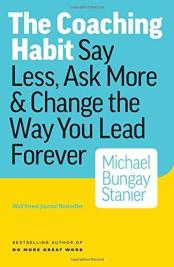
The Coaching Habit

Say Less, Ask More, & Change the Way You Lead Forever

9780978440749-ukBy Michael Bungay Stanier
Call Number: HF5549.5.C53 B86 2016
View in IvyCat

Want to say less, work less, and have more impact? Stanier gives you the seven core questions that will help you provide more effective support to your employees and co-workers. By unlocking their potential, you’ll be able to unlock your own.

Visualize Data

Data visualization is a hot topic in education and research as well as business. We are all swimming in data these days, but the information in that data simply won’t be evident without good visualization techniques, as David McCandless demonstrates in his full TED talk from our Films on Demand collection.

Visualization is a kind of answer, and thus derives from the quality of the questions asked of data, and the quality of the data itself. Columbia University professor Kaiser Fung provides clear explanations of data visualization principles on his blog, Junk Charts.

Explore these inspiring examples: Hans Rosling was a physician who developed brilliant data visualizations to campaign for world health initiatives. Rosling’s best TED Talks are now in a playlist. Edward Tufte is Professor Emeritus of political science, statistics, and computer science at Princeton and a pioneer in making data understandable. On his website are examples of his work and links to some of his essays on visualization, including his famous rants about bad use of PowerPoint.

There are well-known pitfalls to presenting data in graphic format. The website wtf-viz  (also wtf-viz on Tumblr) collects bad graphs of all kinds, crowd-sourced. These include network, flowchart, and block diagrams gone awry, along with poor quantitative representations. The archive is searchable by hashtag (#pie charts) or you can browse thumbnails in the archive by month. There are some great examples here for classroom discussion!

On her blog Storytelling with Data Cole Nussbaumer Knaflic, a former financial risk assessor, shares best practices for presenting and explaining business data. She not only reveals tips for manipulating Excel charts, but also how to lay out data in presentations (not on a single page or slide, usually). Knaflic’s collected blog posts are published in an eponymous book available in our Ebook Central Collection.

We also have manuals and cookbooks for popular programs used to visualize data, from small sets to Hadoop. In IvyCat, do a keyword search for “data visualization” as a phrase, or search the subject “information visualization – computer programs,” to bring up a list. Most of these are eBooks.

The programs discussed include Google Sheets and MicroSoft Excel, which are available to all IvyTech students, faculty, and staff. The program R is free ; and NodeXL is a free social network analysis add-in for Excel.  Many of these are just applications using HTML. D3.js is free and open source. Google Charts allows users to plug in their own data to generate and customize charts, plots, and maps of all kinds for websites.

(Please note, the author, the Library, and Ivy Tech are not responsible for user experiences, and Ivy Tech does not allow the installation of software on college computers without authorization.)

Bridging the Soft Skills Gap

How to Teach the Missing Basics to Today’s Young Talent

9781118725641-usBy Bruce Tulgan
Call Number: HF5381 .T757 2015
View in IvyCat

The number one challenge with today’s young talent is a problem hiding in plain sight: the ever-widening soft skills gap. Today’s new, young workforce has so much to offer new technical skills, new ideas, new perspective, new energy. Yet too many of them are held back because of their weak soft skills. Soft skills may be harder to define and measure than hard skills, but they are just as critical. People get hired because of their hard skills but get fired because of their soft skills. Setting a good example or simply telling young workers they need to improve isn’t enough, nor is scolding them or pointing out their failings in an annual review. However you can teach the missing basics to today’s young talent. Based on more than twenty years of research, Bruce Tulgan, renowned expert on the millennial workforce, offers concrete solutions to help managers teach the missing basics of professionalism, critical thinking, and followership complete with ninety-two step-by-step lesson plans designed to be highly flexible and easy to use. Tulgan’s research and proven approach has show that the key to teaching young people the missing soft skills lies in breaking down critical soft skills into their component parts, concentrating on one small component at a time, with the help of a teaching-style manager. Almost all of the exercises can be done in less than an hour within a team meeting or an extended one-on-one. The exercises are easily modified and customized and can be used as take-home exercises for any individual or group, to guide one-on-one discussions with direct-reports and in the classroom as written exercises or group discussions. Managers and their young employees will find themselves returning to their favorite exercises over and over again. One exercise at a time, managers will build up the most important soft skills of their new, young talent. These critical soft skills can make the difference between mediocre and good, between good and great, between great and one of a kind.

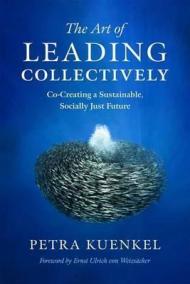
The Art of Leading Collectively

Co-Creating a Sustainable, Socially Just Future

9781603586269By Petra Kuenkel
Call Number: HD2961 .K76 2016
View in IvyCat

A guide to collaborative impact for leaders in industry, government, and social change networks

Our world is facing unsustainable global trends–from climate change and water scarcity to energy insecurity, unfair labor practices, and growing inequality. Tackling these crises effectively requires a new form of leadership–a collective one. But, in a world of many silos, how do we get people to work together toward a common goal? That is one of the most important questions facing sustainability and social-change professionals around the world, and it is a question that Petra Kuenkel answers in The Art of Leading Collectively.

Readers learn how to tackle system change for sustainable development, reimagine leadership as a collaborative endeavor, retrain leaders to work collectively, and manage diverse groups through a change process that has sustainability as a guiding focus. Drawing upon two decades of pioneering, internationally recognized work orchestrating multi-stakeholder initiatives, Kuenkel presents her chief tool, the Collective Leadership Compass, and shows others how to use it with large groups of diverse stakeholders to solve complex, urgent problems–particularly those that enmesh business activities, governance, human needs, and environmental impacts.

The book offers many examples of collective leadership efforts involving corporate, public, and nonprofit sectors around the world. Readers learn about the processes that led to a sustainable textile alliance and set standards for sustainable cocoa and coffee production and trade, as well as those that helped nations rebound from war, develop sustainable infrastructure, and tackle resource conflicts with global businesses, to name a few.

Kuenkel provides a clear roadmap for leaders from multinational companies involved in partnerships, international organizations engaged in cooperative development, public agencies, and interest groups–as well as for citizens seeking solutions to social and sustainability challenge

The 15 Commitments of Conscious Leadership

A New Paradigm for Sustainable Success

51o91lt6ejl-_sx322_bo1204203200_By Jim Dethmer, Diana Chapman & Kaley Warner Klemp.

Call Number: HD57.7 .D494 2015
View in IvyCat

You’ll never see leadership the same way again after reading this book. These fifteen commitments are a distillation of decades of work with CEOs and other leaders. They are radical or provocative for many. They have been game changers for us and for our clients. We trust that they will be for you too. Our experience is that unconscious leadership is not sustainable. It won’t work for you, your team or your organization in the long term. Unconscious leadership can deliver short term results, but the costs of living and leading unconsciously are great. Fear drives most leaders to make choices that are at odds with healthy relationships, vitality and balance. This fear leaves a toxic residue that won’t be as easily tolerated in an increasingly complex business environment. Conscious leadership offers the antidote to fear. These pages contain a comprehensive road map to guide you to shift from fear-based to trust-based leadership. Once you learn and start practicing conscious leadership you’ll get results in the form of more energy, clarity, focus and healthier relationships. You’ll do more and more of what you are passionate about, and less of what you do out of obligation. You’ll have more fun, be happier, experience less drama and be more on purpose. Your team will get results as well. They’ll be more collaborative, creative, energized and engaged. They’ll solve issues faster, and once resolved the issues won’t resurface. Drama and gossip will all but disappear, and the energy and resources that fueled them will be redirected towards innovation and creativity. Any one of these commitments will change your life. All of them together are revolutionary. Leaders who practice the 15 commitments: – End blame and criticism – Speak candidly, openly and honestly, in a way that invites others to do the same – Find their unique genius – Let go of taking everything-especially themselves and their problems-so seriously – Create win for all solutions – Experience a new relationship to time and money where there is always enough What do you need to bring to the table? Be curious. Sounds so simple, and yet in our experience it’s a skill few have mastered. Most of us are far more interested in being right and proving it, than we are in learning, growing and shifting out of our old patterns. By default we gravitate towards the familiar. We’re asking you to take a chance and explore the unfamiliar. You’ll get scared and reactive. We all do. So what? Just stay curious and let us introduce you to a whole new world of leadership.

Books 24×7 – More than just books!

Books 24×7 is an online collection of books and videos tailored for use in the subjects of business, information technology, and engineering, as well as books that address healthy living and well-being, which are useful regardless of your field of study. Whether you’re looking for business management techniques, a coding guide for software design, or information about how civil engineers design with earthquakes in mind, Books 24×7 has a book with the information you need.

In addition to hosting ebooks, Books 24×7 provides convenient tools to help you manage the information you’ve found. With the option to place digital bookmarks, generate notes that are tied to a location in the book, and create folders to help you group texts you’ve used into various categories, Books 24×7 lets you manage your information and easily access it from anywhere.

On the business portion of the database, SkillSoft, the company behind Books 24×7, also hosts both live and archived webinars on various business-related topics, all of which can be accessed through the Books 24×7 main page.

Books 24×7’s video collection contains useful videos that cover a range of computer programs, such as the Microsoft Office Suite and Quickbooks, and the IT and Technical Video Collection contains hundreds of videos that guide the viewer through various systems with helpful audio-visual information. Make sure to browse through the Books 24×7 collection today! (by Library Clerk, David Winn)

New Books 24×7 titles (eBooks and videos)

Read and watch from home, available 24×7 for your ultimate convenience. Books 24×7 has just added 99 IT and Desktop Videos, 5 BusinessPro titles, 9 EngineeringPro titles and 12 ITPro titles. Below are just a few examples. Enjoy!

BABOK: A Guide to the Business Analysis Body of Knowledge, v3
BABOK: A Guide to the Business Analysis Body of Knowledge, v3 by International Institute of Business Analysis
IIBA © 2015 (514 pages)
ISBN: 9781927584026
Whether you are considering starting a career in business analysis, or you are an experienced professional in the field, this book is your key resource to help you and your stakeholders discover opportunities for business success, deliver successful organizational change, and create business value.
Corporate Social Responsibility in a Globalizing World
Corporate Social Responsibility in a Globalizing World by Kiyoteru Tsutsui and Alwyn Lim (eds)
Cambridge University Press © 2015 (514 pages)
ISBN: 9781107098596
Demonstrating the impact of global CSR frameworks on corporate behavior, this book proposes a global approach to understanding the rise and spread of corporate social responsibility, explaining the origin of CSR and the reasons for its growing popularity across the globe.
Freedom to Change: Four Strategies to Put Your Inner Drive into Overdrive
Freedom to Change: Four Strategies to Put Your Inner Drive into Overdrive by Michael Fullan
Jossey-Bass © 2015 (192 pages)
ISBN: 9781119024361
Illustrated and enriched with examples from education, business, and nonprofit sectors, this engaging book offers recommendations for both individuals and organizations seeking to enhance connectedness and independence.
Great Lessons in Project Management
Great Lessons in Project Management by David Pratt
Management Concepts © 2015 (158 pages)
ISBN: 9781567264722
Presenting a collection of stories describing the events surrounding particular challenges a project manager may face, this book will help managers validate their own good practices and help them avoid the pitfalls so many have encountered on their projects.

Google : how Google works / Eric Schmidt and Jonathan Rosenberg

Call number: HD9696.8.U64 G66647 2014

Jack Welch’s Straight from the Gut was once the essential primer for managers, but today’s leaders need a new playbook. In HOW GOOGLE WORKS, Eric Schmidt and Jonathan Rosenberg distill their decades of working in the high-tech industry into a practical and fun-to-read guide for those who want to succeed in an ever-changing business landscape. The book offers how-to advice on strategy, corporate culture, talent, decision-making, innovation, communication and dealing with disruption. The authors explain how the confluence of three seismic changes–the internet, mobile, and cloud computing–has shifted the balance of power between consumer and corporation. The companies that thrive will be the ones that create superior products and attract a new breed of multi-faceted employees whom the authors dub “smart creatives.” The management maxims are illustrated with previously unreported anecdotes from Google’s corporate history. “Back in 2010, Eric and I created an internal class for Google managers focusing on the lessons the management team learned the hard way,” says Rosenberg. “The class slides all said ‘Google confidential’ until an employee suggested we uphold the spirit of openness and share them with the world. This book codifies the recipe for our secret sauce: how Google innovates and how Google empowers employees to succeed. (From Google Books)