Tag Archives: History

What are digital humanities? Find out at THATCamp!

cropped-thatcampbannersmall-3

The Humanities And Technology = THATCamp

We are participating in THATCamp Midwest @ Purdue University Fort Wayne. It will take place Friday October 5th from 9:00 a.m. until 4:00 p.m., followed by optional discussion time. THATCamp Midwest @ Purdue Fort Wayne will function a bit differently than the usual THATCamp as there will be more focus on learning about digital humanities, which means we will have more structure and pre-scheduled sessions. It is perfect for faculty, staff, and students wishing to move into this field.

The day will include brief presentations, panel discussions, and workshops covering topics including: metadata tagging, social networking and data visualization, digital collections, digital project management, animation, augmented reality, and incorporating digital projects in classes/programs. A preliminary schedule is posted here on the website, where you can also register to attend. We hope to see you there!

Secret Lives: What Your Teachers Never Told You

Read this series to discover the secrets behind some of the world’s best-known people, including authors, artists, politicians, and more!


Titles included:

New Children’s Books for February


The Bad Mood and the Stick by Lemony Snicket; Matthew Forsythe (Illustrator)

Call Number: PIC SNI
View in IvyCat

New York Times bestselling author Lemony Snicket sheds light on the way bad moods come and go. Once there was a bad mood and a stick. The stick appeared when a tree dropped it. Where did the bad mood come from? Who picked up the stick? And where is the bad mood off to now? You never know what is going to happen.

How to Find an Elephant by Kate Banks; Boris Kulikov (Illustrator)

Call Number: PIC BAN
View in IvyCat

What to do on a dull gray day? Head into the wilds and look for an elephant. You will need a pair of binoculars, a blanket, a flute, some food, a little imagination, and a lot of curiosity. Look and listen closely, because elephants can be anywhere. And watch out, because if you’re not careful, the elephant may find you first! With pleasing prose and “now you see it, now you don’t” artwork, Kate Banks and Boris Kulikov’s How to Find an Elephant takes readers on a spirited romp that will both challenge and delight.

Before She Was Harriet by Lesa Cline-Ransome; James E. Ransome (Illustrator)

Call Number: E444.T82 C56 2017
View in IvyCat

A lush and lyrical biography of Harriet Tubman, written in verse and illustrated by an award-winning artist. We know her today as Harriet Tubman, but in her lifetime she was called by many names. As General Tubman she was a Union spy. As Moses she led hundreds to freedom on the Underground Railroad. As Minty she was a slave whose spirit could not be broken. An evocative poem and opulent watercolors come together to honor a woman of humble origins whose courage and compassion make her larger than life.

The Littlest Train by Chris Gall

Call Number: PIC GAL
View in IvyCat

In this endearing story of a tiny toy train, the creator of the hit series Dinotrux now breathes life into more than a half-dozen trains that climb, haul, chug, zip, and zoom. In a small room, down a short flight of stairs, there lives a little toy train…about to have a BIG adventure! There’s an endless world to explore, and awe-inspiring new friends to meet. Mighty Max, Chloe Cogs, Sara Speedster, and Farley Freighter can reach all the best sights, lickety-split. But when the day is done and the sun goes down, will the littlest train find his way home? Calling all train lovers: All aboard!

Accident! by Andrea Tsurumi

Call Number: PIC TSU
View in IvyCat

When a clumsy armadillo named Lola knocks over a glass pitcher, she sets off a silly chain of events, encountering chaos wherever she goes. But accidents happen–just ask the stoat snarled in spaghetti, the airborne sheep, and the bull who has broken a whole shop’s worth of china. In the tradition of beloved books like The Dot and Beautiful Oops, this charming, hilarious debut from author-illustrator Andrea Tsurumi shows that mistakes don’t have to be the end of the world.

Happy Birthday USA!

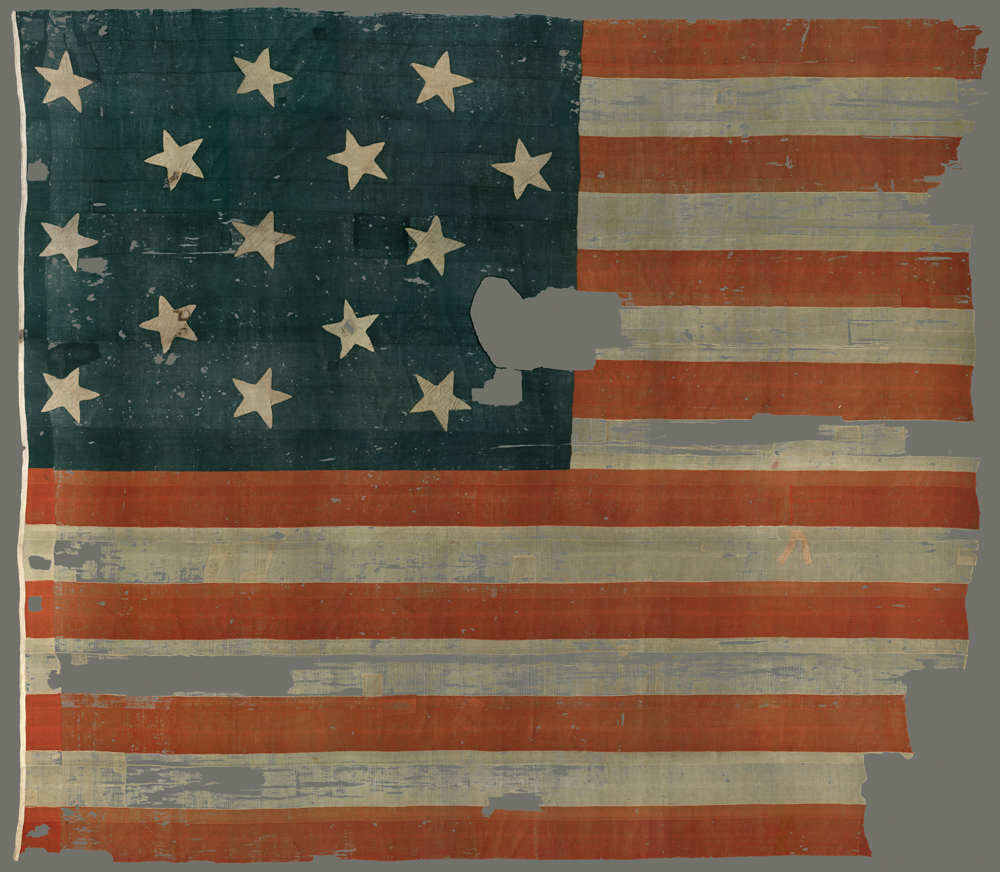
The flag that inspired “The Star-Spangled Banner” (image from the Smithsonian Institution


While fireworks explode as we celebrate the Fourth of July, you can get a blast from the past with these great historical resources! Who isn’t moved by examining Thomas Jefferson’s handwritten draft of the Declaration of Independence, or reading manuscript letters of George Washington, or the reports of eyewitnesses to battles in the Revolution?
The Coming of the American Revolution is a freely accessible, online gallery from the Massachusetts Historical Society containing digitized primary source documents like broadsides and newspaper announcements of meetings of the Sons of Liberty. Documents are presented with extensive scholarly notes and resources for teachers and students. It is clearly organized and offers multiple searching options.
Examine three early versions of the Declaration of Independence in the online gallery of the American Philosophical Society in Philadelphia. The first is Jefferson’s draft, which he sent to a friend before submitting it to the Continental Congress on July 1st, 1776.
Examine correspondence between members of the Continental Congress, digitized by The New York Public Library’s Early American Manuscripts Project. These collections include hand-written letters cross-indexed by names and topics. Keyword searching will find these tags.
Read transcribed accounts of battles from eyewitnesses and soldiers’ diaries of life in the Continental Army in the database American History Online accessible through the Ivy Tech Northeast Library home page. Find it in the A-Z list of databases. From the American History Home page, under “Browse Resources” choose “Primary Sources,” then under “Filter Primary Sources” choose “American Revolution” to see an index of transcriptions. This database also has maps of major battles in the War of Independence. From the Home page, under “Browse Resources” choose “Maps and Charts”, then under “Filter Maps and Charts” choose “American Revolution.”
What was life like in the Federal period after the Revolution? Check out the open database Chronicling America: Historic American Newspapers. Papers from 1789-1924 are keyword-searchable. 1876 was the centennial year of the United States. To see newspaper articles about the celebrations, do an advanced searchof all states for the phrase centennial anniversary or centennial celebration. Choose the date range 1870-1880 for articles about the preparation and aftermath. This is an ongoing project of the National Endowment for the Humanities, coordinated by the Library of Congress. Content is being contributed by local institutions, digitized in a format suitable for keyword searching. This site also provides a directory of newspapers from 1690-present, showing library holdings; this is the expected range of coverage upon completion.
Are you decorating your house for the holiday? Symbols of the United States is a Primary Source Set from the Library of Congress, written for elementary schools but fun for all. View digitized original sources and read the history of the Liberty Bell, our flag, the bald eagle, Uncle Sam, the Star Spangled Banner, and the Statue of Liberty. This set includes a Teachers’ plan, a student guide, and a free ebook for iOS devices.

America’s Historical Newspapers

This year is the bi-centennial of Indiana statehood. Wouldn’t it be interesting to read newspaper accounts about the new state that were written in 1816? Now you can!

America’s Historical Newspapers is a new Library database that has PDF copies of a variety of actual newspapers from around the United States, with issues going back as far as 1690! You can read contemporary newspaper articles from the time of the American Revolution, Civil War, Roaring 20s, and much more.

America’s Historical Newspapers includes hundreds of primary sources. It fosters primary source research skills, offers a variety of perspectives to help students think critically, and facilitates the tracking of trends, issues and events. By offering original documents exactly as they appeared in print, America’s Historical Newspapers complements textbooks in social studies, English, the arts, science and other subjects.

But what if you’re more interested in recent or current news? Don’t worry, this product includes America’s News, which has web-page articles from newspapers in all fifty states. So if you want to find the news that the papers are printing, whether it’s from today or 300 years ago, go to the Library’s A-Z list and click on America’s Historical Newspapers; it has all the news that fits.

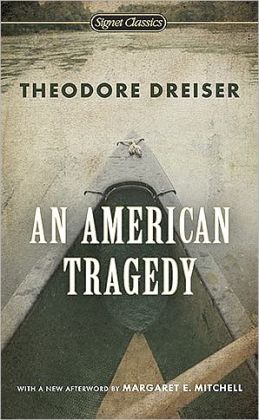
An American tragedy / by Theodore Dreiser

Call number: PS3507.R55 A7 1982

Taking as his point of departure a notorious murder case of 1910, [the author] immersed himself in the social background of the crime to produce a book that is both a … work of reportage and a monumental study of character. [This novel tracks] the process by which an ordinary young man becomes capable of committing a ruthless murder, and the further process by which social and political forces come into play after his arrest. In Clyde Griffiths, the impoverished, restless offspring of a family of street preachers, [the author] created [a] portrait of a man whose circumstances and dreams of self-betterment conspire to pull him toward an act of unforgivable violence. Around Clyde, [the author] builds [a] detailed fictional portrait of early twentieth-century America, its religious and sexual hypocrisies, its economic pressures, its political corruption. (From Google Books)

Icons of African American literature : the Black literary world / Yolanda Williams Page, editor

Call number: PS153.N5 I33 2011

African American literature has a long and fascinating history. This book examines 24 of the most recognizable and popular topics related to African American literature. Each piece is substantial enough to provide more information than a typical encyclopedia entry but not so long as to be tedious or overwhelming. Arranged alphabetically, the entries cover such writers as Maya Angelou, James Baldwin, and August Wilson; major works, such as Invisible Man, Native Son, and Their Eyes Were Watching God; and a range of cultural topics, including the black arts movement, the Harlem Renaissance, and the jazz aesthetic. Entries are written by expert contributors and discuss the enduring significance of these topics in American history and popular culture. Each entry provides sidebars of interesting information and suggestions for further reading, while the set closes with a selected, general bibliography of print and electronic resources for student research. (From Google Books)

What do peanuts, alcohol, and sugar cane have in common?


Did you know…following the arrival of the automobile, scientists immediately turned to biofuels? The German inventor Rudolf Diesel fueled his engine with peanut oil, while Henry Ford predicted that the fuel of choice would be alcohol-based. Now, all these years later, this interest in biofuels has been reawakened among the scientific community. Learn more about the options and our progress toward making them a reality in Achieving Sustainability, available on GVRL.Check it out!

——————————————————————————————-
GVRL (Gale Virtual Reference Library) is a wonderful eReference source available through your Ivy Tech Library. GVRL offers students thousands of full-text proprietary titles Subject areas include:

  • Arts & Entertainment
  • Biography & Genealogy
  • Business& Economics
  • Computing & IT
  • Education
  • Professional Development
  • Fiction
  • General Reference, Interests & Hobbies
  • Health & Nursing
  • History
  • Humanities & Social Sciences
  • Language
  • Law, Government & Politics
  • Literature
  • Mathematics & Science
  • Philosophy & Psychology
  • Religion & Mythology

Keep calm and read on! Ivy Tech Library has you covered. Check these read-alike books we have just received:


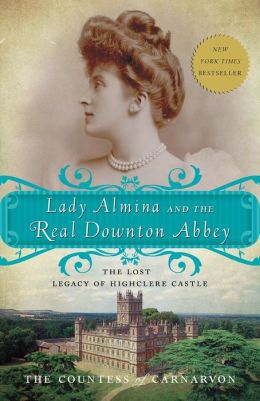
Lady Almina and the Real Downton Abbey: The Lost Legacy of Highclere Castle/ The Countess of Carnarvon
Call number:  DA570 .C37 2011
Lady Almina and the Real Downton Abbey tells the story behind Highclere Castle, the real-life inspiration and setting for Julian Fellowes’s Emmy Award-winning PBS show Downton Abbey, and the life of one of its most famous inhabitants, Lady Almina, the 5th Countess of Carnarvon. Drawing on a rich store of materials from the archives of Highclere Castle, including diaries, letters, and photographs, the current Lady Carnarvon has written a transporting story of this fabled home on the brink of war.
Much like her Masterpiece Classic counterpart, Lady Cora Crawley, Lady Almina was the daughter of a wealthy industrialist, Alfred de Rothschild, who married his daughter off at a young age, her dowry serving as the crucial link in the effort to preserve the Earl of Carnarvon’s ancestral home.  Throwing open the doors of Highclere Castle to tend to the wounded of World War I, Lady Almina distinguished herself as a brave and remarkable woman.
This rich tale contrasts the splendor of Edwardian life in a great house against the backdrop of the First World War and offers an inspiring and revealing picture of the woman at the center of the history of Highclere Castle. (From B&N)
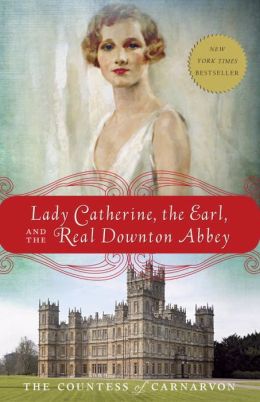
Lady Catherine, the Earl, and the Real Downton Abbey/ The Countess of Carnarvon
Call number: DA578 .C29 2013
 
Lady Catherine, the Earl, and the Real Downton Abbey tells the story behind Highclere Castle, the setting for Julian Fellowes’s Emmy Award-winning PBS show Downton Abbey, and the life of one of its most famous inhabitants, Catherine Wendell.  In this transporting companion piece to the New York Times bestseller Lady Almina and the Real Downton Abbey, Catherine, a beautiful and spirited American woman who married Lady Almina’s son, the man who would become the 6th Earl of Carnarvon, presides over the grand estate during a tumultuous time for the British aristocracy. Following the First World War, many of the great houses of England faded as their owners fortunes declined in the new political and social world of the 1920s and 1930s. As war loomed, Highclere’s survival as the family home of the Carnarvons was again in the balance—as was peace between the nations of Europe.
Using copious materials—including diaries and scrapbooks—from the castle’s archives, the current Countess of Carnarvon brings alive a very modern story in a beautiful and fabled setting, paying particular attention to the staff who provide Highclere Castle with continuity between generations. (From B&N)
 
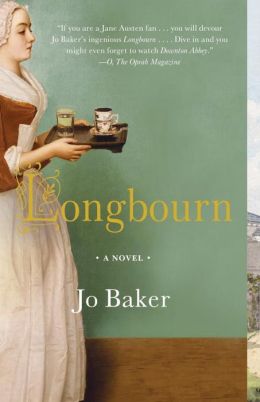
Longbourn/ Jo Baker
Call number:  FIC BAK
 
The servants take center stage in this irresistibly imagined belowstairs answer to Pride and Prejudice. While Elizabeth Bennet and her sisters fuss over balls and husbands, Sarah, their orphaned housemaid, is beginning to chafe against the boundaries of her class. When a new footman arrives at Longbourn under mysterious circumstances, the carefully choreographed world she has known all her life threatens to be completely, perhaps irrevocably, upended. Mentioned only fleetingly in Jane Austen’s classic, here Jo Baker dares to take us beyond the drawing rooms of Regency England and, in doing so, uncovers the real world of the novel that has captivated readers’ hearts around the world for generations. (From B&N)
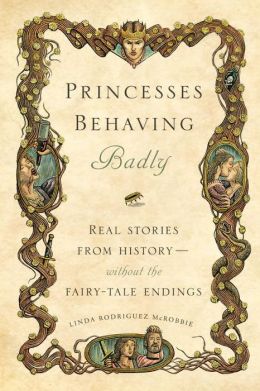
Princesses behaving badly : real stories from history– without the fairy-tale endings / by Linda Rodriguez McRobbie
 Call number: D107.3 .M42 2013 
You think you know her story. You’ve read the Brothers Grimm, you’ve watched the Disney cartoons, and you cheered as these virtuous women lived happily ever after. But real princesses didn’t always get happy endings. Sure, plenty were graceful and benevolent leaders, but just as many were ruthless in their quest for power—and all of them had skeletons rattling in their royal closets. Princess Stephanie von Hohenlohe was a Nazi spy. Empress Elisabeth of the Austro-Hungarian empire slept wearing a mask of raw veal. Princess Olga of Kiev slaughtered her way to sainthood while Princess Lakshmibai waged war on the battlefield, charging into combat with her toddler son strapped to her back. Princesses Behaving Badly offers true tales of all these princesses and dozens more in a fascinating read that’s pefect for history buffs, feminists, and anyone seeking a different kind of bedtime story. (From B&N)

The Library of Congress illustrated time line of the Civil War / Margaret E. Wagner

Call number: E468.3 .W34 2011

With striking visuals from the Library of Congress’ unparalleled archive, The Library of Congress illustrated time line of the Civil War is an authoritative and engaging narrative of the domestic conflict that determined the course of American history. A detailed chronological timeline of the war captures the harrowing intensity of 19th-century warfare in first-hand accounts from soldiers, nurses, and front-line journalists. Readers will be enthralled by speech drafts in Lincoln’s own hand, quotes from the likes of Frederick Douglass and Robert E. Lee, and portraits of key soldiers and politicians who are not covered in standard textbooks. The Illustrated Timeline’s exciting new source material and lucid organization will give Civil War enthusiasts a fresh look at this defining period in our nation’s history. (From Google Books)